
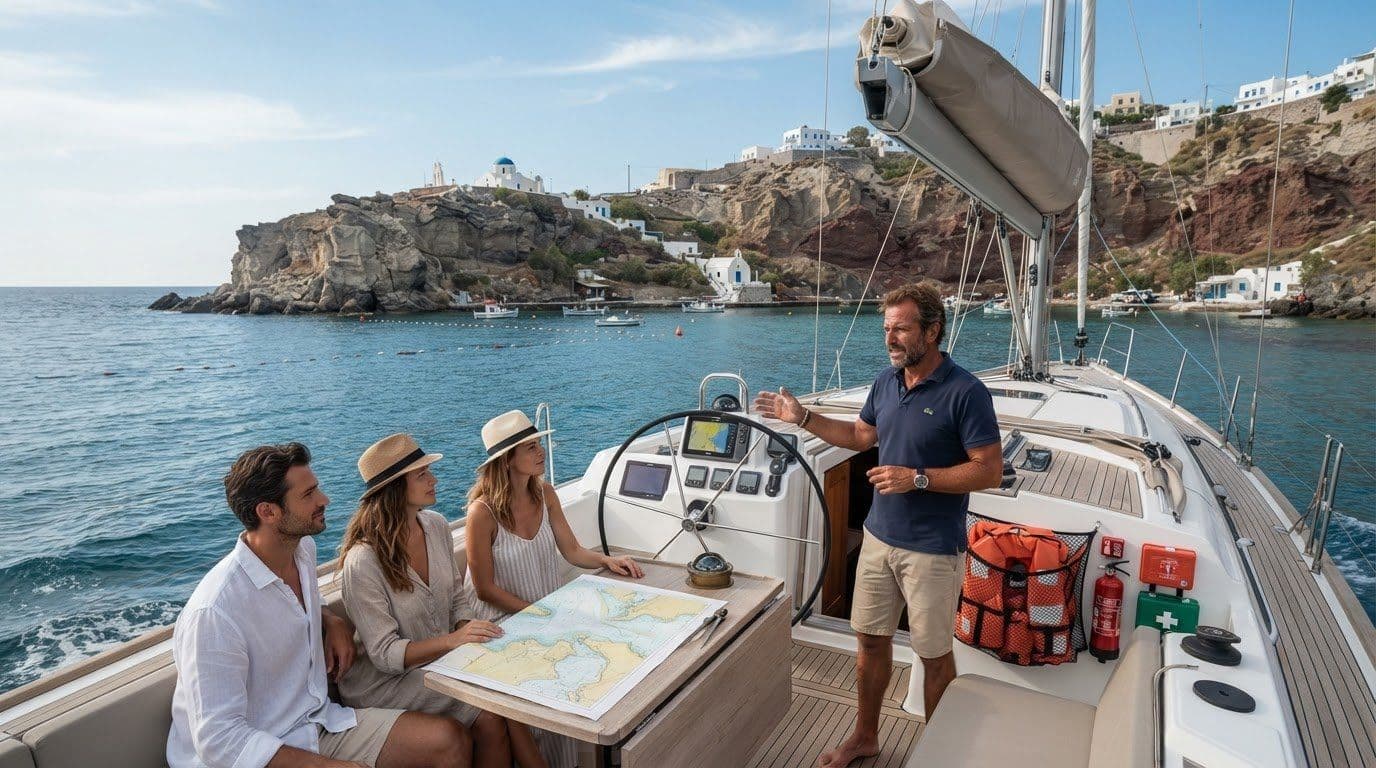
Could your dream island-hopping route change because of a local restriction or a safety decision at sea? It can. Navigating Greek maritime law for charter guests starts with understanding that a yacht charter is more than a holiday itinerary: maritime rules, operating conditions, and your charter agreement all shape the experience.
It’s natural to wonder what you’re expected to do and whether a change of plan means something has gone wrong. On a crewed charter, the skipper manages the vessel and makes operational decisions. Guests help keep the trip safe by following onboard instructions and respecting the rules that apply at sea and ashore. Your contract sets out the charter’s terms, but it doesn’t replace maritime requirements.
This guide explains the practical difference between skipper duties and guest responsibilities, and how safety, environmental, and port rules may affect routes and activities in Greece. It also shows how these requirements differ from contract terms, so you can prepare for a smoother voyage without treating general information as legal advice.
Key Takeaways
- Navigating Greek maritime law for charter guests starts with knowing that requirements can vary by vessel, charter arrangement, route, and circumstances.
- Understand how the skipper, charter operator, and guests each contribute to a safe, well-coordinated trip.
- Safety instructions and local rules can shape where you anchor, swim, land, or explore, so plans may need to adapt.
- Prepare by reviewing guest information, the charter agreement, and the safety briefing, then follow crew instructions onboard.
- Thoughtful route and crew coordination can make a Greek charter smoother while leaving operational decisions with the skipper.
Greek maritime law for charter guests: what rules shape your trip?
Maritime law covers the rules and legal frameworks that govern vessel operations and conduct at sea. For charter guests, it has practical effects: it can shape how a vessel operates, where it may travel, and what guests are asked to do onboard. The requirements that apply depend on factors such as the vessel’s flag, the charter arrangement, the route, and the circumstances of the trip.
In short: guests should follow onboard instructions and behave safely. The people and businesses responsible for operating the yacht handle vessel-operation requirements under the rules that apply.
This overview can help with navigating Greek maritime law for charter guests, but you don’t need to interpret every regulation yourself. A clear guest briefing and attentive crew help make practical expectations easier to understand.
For a visual introduction to sailing in Greece, including bareboat chartering, watch:
Which rules may apply during a Greek yacht charter?
A charter may be affected by Greek national rules, applicable international conventions, and relevant European requirements. The provisions that apply are not identical for every yacht or voyage. The Hellenic Coast Guard and local port authorities are important public institutions in Greece’s maritime setting, and their directions may affect vessel operations or activities in a port or local area. An overview of the Greek Ministry of Maritime Affairs and Insular Policy provides background on the ministry’s maritime role. For current requirements, rely on official information rather than a general overview.
Why vessel details and itinerary matter
A yacht’s flag, its commercial or private status, and the charter terms can affect which requirements need to be considered. Crewed and bareboat arrangements also differ in how operational tasks are handled: a crewed yacht has a professional crew, while a bareboat guest may take on a more direct role in operating the vessel. Exact responsibilities depend on the arrangement and applicable rules.
The route matters, too. An island stop, port call, or planned activity may be affected by local operating conditions or restrictions. Conditions at sea can also make an alternative route more suitable. Explore the Greek Islands and destinations with that flexibility in mind. YAL’OOU coordinates routes, crews, guest services, and local logistics for Greek charters, connecting itinerary planning with practical operating considerations.
For guests, the useful approach is straightforward: understand the charter setup, listen to the crew, and pay attention to official directions that affect the day’s plan. This guide provides general information, not legal advice. Requirements can change and depend on the details of a voyage, so seek qualified, current guidance for legal questions.
Who is responsible onboard: the skipper, charter operator, or guest?
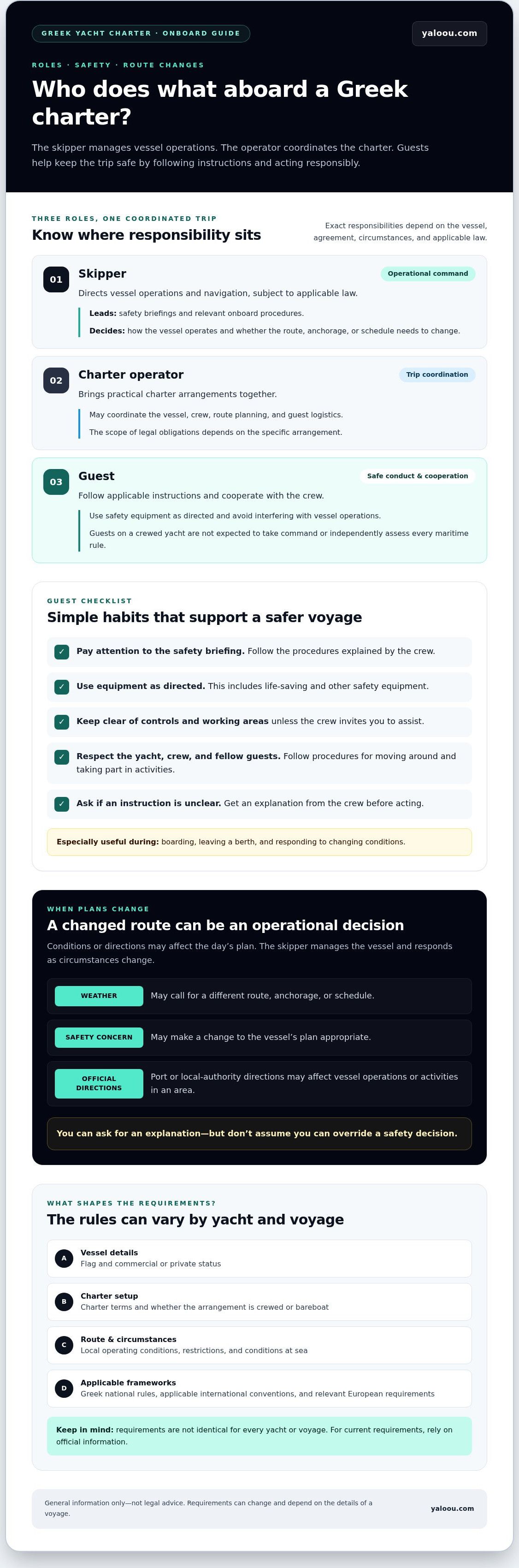
On a crewed charter, the skipper and guests have different roles. The skipper generally directs vessel operations and navigation, while guests are expected to act safely and follow onboard procedures. The charter operator coordinates the charter and related arrangements. These are practical distinctions, not a complete statement of legal duties. Exact responsibilities depend on the vessel, agreement, circumstances, and applicable law.
RolePractical focusWhat it means for the trip
Skipper
Operational command and navigation decisions, subject to applicable law.
Leads safety briefings and makes decisions about the vessel’s operation and route.
Charter operator
Charter coordination, which may include arranging the vessel, crew, route planning, and guest logistics.
Brings the trip’s practical arrangements together. The scope of legal obligations depends on the specific arrangement.
Guest
Safe conduct and cooperation onboard.
Follows applicable safety instructions, uses equipment as directed, and avoids interfering with vessel operations.
A skipper’s operational responsibilities don’t erase a guest’s responsibility for their own conduct. At the same time, guests aren’t expected to take command of a crewed yacht or independently assess every maritime rule. Knowing who to listen to and how to act safely is a more useful starting point for navigating Greek maritime law for charter guests.
What does the skipper control during the voyage?
In practical terms, the skipper manages navigation and vessel operations, explains relevant safety procedures, and responds as conditions change. Weather, official port directions, or a safety concern may call for a different route, anchorage, or schedule. You can ask for an explanation, but don’t assume you can override a safety decision. Public maritime information is available through the Hellenic Coast Guard official website.
What should charter guests do onboard?
Pay attention to the safety briefing, follow safety instructions, and use life-saving or other equipment as directed. Keep clear of controls and working areas unless the crew invites you to assist. Respect the yacht, crew, and fellow guests, and follow procedures for moving around or taking part in activities. If an instruction is unclear, ask the crew to explain it before acting.
These habits are especially useful during busy moments, such as boarding, leaving a berth, or responding to a change in conditions. They help the crew manage the vessel while allowing guests to enjoy the journey. The legal consequences of a particular action depend on the facts and applicable law, so this guide doesn’t speculate about penalties or determine liability.
Clear coordination before departure helps guests understand the crew’s role and the shape of the day. YAL’OOU coordinates crews, routes, guest services, and local logistics for Greek charters. For a sense of the experiences available on the water, explore Greek yacht charter experiences.
Safety, protected waters, and port rules in Greece
Sea conditions and local directions can shape the day’s plans, including whether it’s sensible to swim or continue to a planned stop. Safety briefings explain what to do before the vessel moves, during water activities, and if conditions change. For guests navigating Greek maritime law, the practical point is to follow current instructions rather than assume an activity or route is always permitted.
Local restrictions can vary by location and conditions, so a plan that works in one bay or port may not apply in another. Anchoring, swimming, going ashore, and entering protected waters all depend on location. This general guide isn’t a navigation chart, definitive legal instruction, or legal advice. Follow the skipper’s current directions and applicable official information when making decisions on the day.
Safety instructions and changing sea conditions
Listen to the crew briefing before departure and before activities such as swimming. Ask where to move, what equipment to use, and when it’s safe to enter or leave the water. Conditions can change during a voyage, so the crew may adjust plans or pause an activity. Consult the Hellenic National Meteorological Service’s official updates for weather information, alongside the skipper’s assessment. A forecast can’t guarantee conditions at a specific spot or time.
Official directions may also affect a route or port call. If the skipper changes the plan, wait for an explanation and follow instructions while the crew responds. A revised itinerary isn’t automatically a sign of a problem: safety and local operating conditions may take priority over the original schedule.
Anchoring, marine protection, and port directions
Before anchoring, swimming, or landing, the crew needs to account for the particular location and current conditions. Protected areas and locally regulated zones may limit access or activities. Port directions can also affect where a yacht may go or how it approaches. These considerations vary across Greece, so don’t rely on assumptions based on another island, bay, or previous visit.
For guests, responsible conduct is straightforward:
- Ask the crew before swimming, going ashore, or approaching a sensitive area.
- Follow instructions about where to move and how to use onboard equipment.
- Respect local signs and official directions, and don’t collect natural items or disturb wildlife.
- Be prepared for a stop or activity to change if conditions or local guidance require it.
Specific anchoring restrictions, protected-area rules, and landing conditions should be checked against current information from relevant authorities, including local port authorities where appropriate. Don’t infer a rule from general guidance or apply it to every destination. This section explains why local rules can affect charter plans, but it can’t determine whether a particular yacht may anchor or guests may land at a specific site. Crew coordination and a flexible route help make the experience enjoyable while respecting local conditions.
Practical Checklist for a Greek Yacht Charter
A little preparation gives you more room to enjoy the trip. Use this checklist to distinguish what you can review as a guest from operational decisions the crew manages. You don’t need to interpret every rule yourself. Focus on understanding the charter arrangements, knowing what to expect onboard, and raising questions while there’s time to plan. That makes navigating Greek maritime law for charter guests more practical and less daunting.
Before departure: documents, terms, and questions
Start with your travel readiness. Check current entry and travel-document requirements through official government sources relevant to your nationality and circumstances. Then read the charter agreement and guest information carefully, especially sections on guest conduct, itinerary planning, and onboard procedures. This helps you distinguish contract terms from operational instructions without treating either as legal advice.
- Keep required travel documents accessible and check their validity before departure.
- Review the information provided about the yacht, planned route, and onboard routines.
- Raise route preferences, planned activities, accessibility needs, or unfamiliar wording with the charter team early, rather than waiting until just before departure.
Island routes can involve different ports, local conditions, and possible stops. Explore Greek charter destinations to decide what you’d like from the itinerary and discuss those priorities during planning.
During the trip: follow instructions and adapt
Treat the safety briefing as an introduction to the specific yacht, not a formality. Listen for instructions about moving around, using equipment, and taking part in water activities. If anything is unclear, ask the crew to explain it before acting. Don’t handle controls or interfere with vessel operations unless the crew invites you to assist.
Keep the guest information handy and follow crew directions as conditions change. If plans shift, pause the activity, listen to the explanation, and wait for the next instruction. The skipper may adjust the plan because of weather, sea conditions, or official directions. Guests can share preferences, but should leave vessel-operation decisions to the responsible crew.
If the itinerary changes
A different route, delayed stop, or cancelled activity may be a practical response to local conditions. Ask for a brief explanation when appropriate, then follow the crew’s guidance. Don’t treat the original itinerary as a guarantee that every stop or activity will go ahead. If a change affects a time-sensitive personal plan, tell the crew calmly so they can explain what options are practical within the vessel’s operating constraints.
- Listen for what has changed and what guests should do next.
- Follow updated instructions before moving around or going ashore.
- Keep expectations flexible because safety and local operating conditions can affect the schedule.
This checklist is general guidance, not legal advice or a substitute for current official requirements. For a Greek charter planned around your preferred destinations and activities, explore YAL’OOU’s yacht charter experiences.
Plan a Greek charter with legal and operational details in view
A well-planned Greek charter brings together more than a destination and a yacht. The vessel, crew, route, guest priorities, and local operating conditions all shape how the itinerary works in practice. Considering these elements together helps set clear expectations while leaving navigation and legal questions to people qualified to handle them.
YAL’OOU coordinates daily and weekly crewed yacht charters across Greek destinations, including the Cyclades, with route, crew, guest-service, and local-logistics planning. This coordination connects your preferred pace and activities with practical trip details. It isn’t legal advice and can’t guarantee a particular route, port call, or outcome. For questions about your legal rights or obligations, consult a qualified legal professional.
How thoughtful planning supports a smoother charter
Start by sharing what matters most: the places you hope to visit, how active or relaxed you want each day to feel, and any onboard preferences that may affect planning. Route coordination can then take those priorities into account alongside vessel operations and local conditions. Clear communication between guests, crew, and charter coordinators helps everyone understand the plan, the limits that may affect it, and where flexibility may be needed.
That flexibility matters in Greece, where an itinerary may include different islands, ports, and local conditions. A planned stop might need to change if operating conditions or applicable restrictions affect the route. A thoughtful plan leaves room for that possibility instead of treating every detail as fixed. Browse the crewed yacht charter options in Greece to consider how vessel and crew arrangements fit your trip.
Planning support can make logistics easier, but it doesn’t replace the skipper’s operational decisions or provide a legal interpretation of the rules. If a specific legal concern could affect your plans, seek qualified legal advice before relying on a general guide. Share practical preferences early and keep communication open as the itinerary takes shape.
Choose an experience that fits your plans
A daily charter can suit guests looking for a focused day on the water, while a weekly crewed rental allows more time for an island-hopping rhythm. Neither format guarantees particular stops or activities. The right fit depends on the pace you want, the destinations under consideration, and how much flexibility you’d like in the schedule. Discuss these priorities during planning so they can be considered alongside the vessel and route.
- Set your priorities: Share preferred destinations, activities, and the pace you have in mind.
- Keep the itinerary adaptable: Understand that local operating conditions can shape route decisions.
- Use the crew’s guidance: Rely on onboard instructions for vessel-specific and operational matters.
With the right expectations, navigating Greek maritime law for charter guests becomes part of thoughtful trip planning, not a reason to lose sight of the experience. Explore Greek charter experiences and start shaping a trip around the places and pace you have in mind.
Shape your Greek charter with confidence
Your next step is to turn inspiration into a plan that leaves room for the realities of travel at sea. Note the destinations and activities that matter most, then discuss them early as your itinerary takes shape. Clear priorities make it easier to plan thoughtfully while staying open to changes in local conditions. For questions about your legal rights or obligations, seek qualified legal advice; general guidance can’t determine how a rule applies to a specific voyage.
Navigating Greek maritime law for charter guests doesn’t mean managing the yacht’s compliance yourself. It means understanding the practical framework, communicating openly, and working with the crew as the journey unfolds. YAL’OOU coordinates daily and weekly private yacht charters, including routes, crews, and guest services for Greek trips, helping bring the experience and logistics together.
Ready to turn your ideas into an island-hopping escape? Explore Greek yacht charter experiences and start imagining your time on the water. With thoughtful planning and a flexible outlook, you can look forward to discovering Greece at your own pace.
Frequently Asked Questions
Do Greek maritime laws apply to yacht charter guests?
Yes. Guests should follow applicable rules and lawful crew instructions, though the rules relevant to a trip depend on details such as the yacht’s flag, charter arrangement, and location. A guest’s role on a crewed yacht differs from that of someone chartering a bareboat vessel. This guide offers general orientation for navigating Greek maritime law for charter guests, not a legal determination. Consult a qualified maritime lawyer or relevant authority about a specific issue.
Can a skipper change a Greek yacht charter itinerary?
Yes. A skipper may adjust the route because of safety, weather, port directions, or other operating conditions. A planned stop around Mykonos, Paros, Antiparos, Athens, Aegina, Poros, Spetses, Syros, Tinos, Sifnos, Serifos, Milos, Poliaigos, Kimolos, Santorini, Ios, Koufonisia, Amorgos, Crete, Corfu, or Zakynthos isn’t an unconditional promise. The agreement may explain itinerary changes. Share preferences with the crew or coordinator early enough for them to be considered during planning.
What happens if a guest ignores a safety instruction onboard?
Ignoring an instruction can put people and the vessel at risk, and may conflict with onboard procedures or charter terms. The outcome depends on the specific conduct and applicable rules, so don’t assume a fixed penalty. If you miss or don’t understand an instruction, pause and ask the crew to clarify before acting. If an incident or disagreement follows, record what happened while details are fresh and get qualified advice about the specific situation.
Do guests need special documents for a yacht charter in Greece?
Possibly, depending on your nationality, itinerary, port calls, and current entry requirements. Check official government guidance that applies to your circumstances before travelling, and make sure your travel documents remain valid for the trip. Don’t assume requirements are identical for every guest in a group. The charter team can explain trip logistics, while individual immigration and documentation requirements depend on your circumstances. Seek guidance from the relevant official authority if anything is unclear.
Can a yacht anchor anywhere in the Greek islands?
No. Whether anchoring, swimming, or landing is appropriate can depend on the exact place, protected status, local directions, and conditions at the time. An open-looking cove isn’t automatically available for every activity. Follow the skipper’s guidance and don’t base plans only on photos, maps, or a previous visit. If you have a particular stop in mind, share it with the crew so it can be considered in light of the day’s operating conditions.
Is this guide legal advice for a Greek yacht charter?
No. It provides general orientation, not advice about a particular contract, vessel, incident, or dispute. How a rule applies can depend on detailed facts, and current requirements may change. For example, a guest seeking to understand responsibility after an onboard incident needs advice based on what happened and the applicable law. Check authoritative sources for current information, and consult a qualified maritime lawyer when you need guidance on your rights or obligations.
Disclaimer
The YAL’OOU Travel Guide is curated with care to inspire and inform discerning travelers. While every effort is made to ensure the accuracy and relevance of the information provided, all content is offered for general guidance only and may evolve over time.
Details such as local regulations, availability, pricing, and services are subject to change without prior notice. We encourage guests to seek personalized advice and confirm arrangements directly when planning their journeys.
YAL’OOU accepts no liability for any inaccuracies, omissions, or outcomes arising from the use of this information. The Travel Guide may feature recommendations, insights, and selected third-party experiences, presented solely as a source of inspiration and not as formal endorsements.
By accessing this section of our website, you acknowledge and accept this disclaimer as part of your experience with YAL’OOU.