
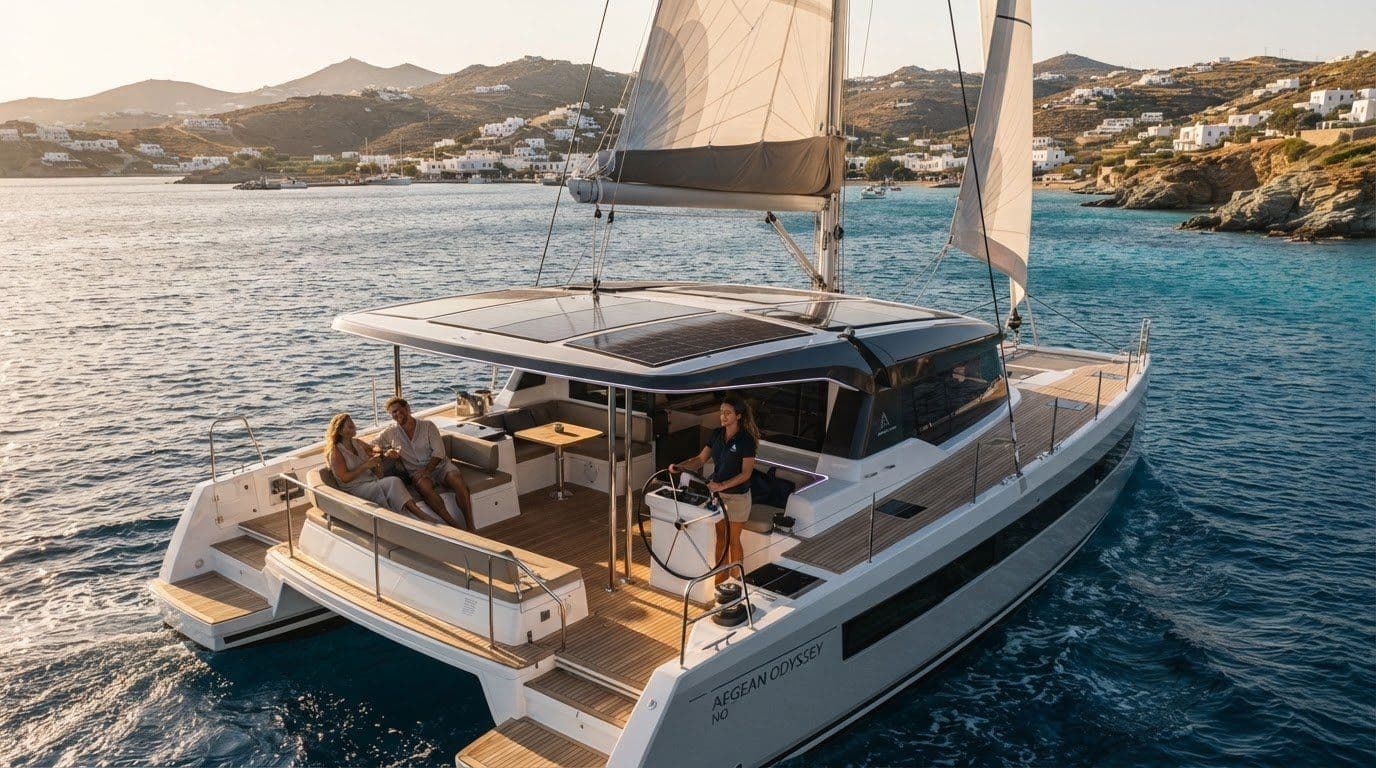
A yacht with solar panels isn’t automatically the best fit for your Greek sailing holiday. If you’re comparing crewed sailing yachts with eco friendly solar hybrid systems Greece has to offer, focus on how each setup suits your route, time at anchor, and preferred onboard comforts.
Choosing a more energy-conscious yacht doesn’t necessarily mean compromising on air-conditioning or other amenities. Solar panels generate electricity, batteries store it, and hybrid propulsion combines power sources for movement. How those systems work together, and what they can support, varies by vessel. Reviewing vessel-specific details helps you distinguish useful features from broad technology claims.
This guide explains the terminology and offers practical ways to compare energy features against your priorities, from relaxed Ionian cruising to the livelier conditions of the Cyclades. Time under sail, nights at anchor, and comfort preferences all shape the decision. YAL’OOU coordinates daily and weekly crewed yacht charters, along with route planning and onboard services, so you can plan around the experience you want. Its Greek destinations include Mykonos, Paros, Antiparos, Athens, Aegina, Poros, Spetses, Syros, Tinos, Sifnos, Serifos, Milos, Poliaigos, Kimolos, Santorini, Ios, Koufonisia, Amorgos, Crete, Corfu, and Zakinthos.
Key Takeaways
- Separate solar generation, battery storage, and hybrid propulsion to understand what each feature does aboard a sailing yacht.
- Compare crewed sailing yachts with eco friendly solar hybrid systems Greece by matching vessel-specific features to your route and time spent at anchor.
- Set comfort priorities before comparing energy systems, so sustainability supports rather than overshadows your holiday experience.
- Use a practical checklist to distinguish documented yacht specifications from general explanations of marine technology.
- Plan the Greek charter around your preferred experience, then align route planning, crew coordination, and vessel choice with it.
Why consider a solar-hybrid crewed sailing yacht in Greece?
A crewed Greek sailing holiday gives you time to explore at your own pace, with a professional crew supporting the trip. Choosing a yacht also means considering how it meets onboard energy needs. For guests comparing crewed sailing yachts with eco friendly solar hybrid systems Greece can offer a range of vessel configurations. The useful question isn’t simply whether a yacht is “green,” but what its systems do and how they fit your route, comfort priorities, and time on board.
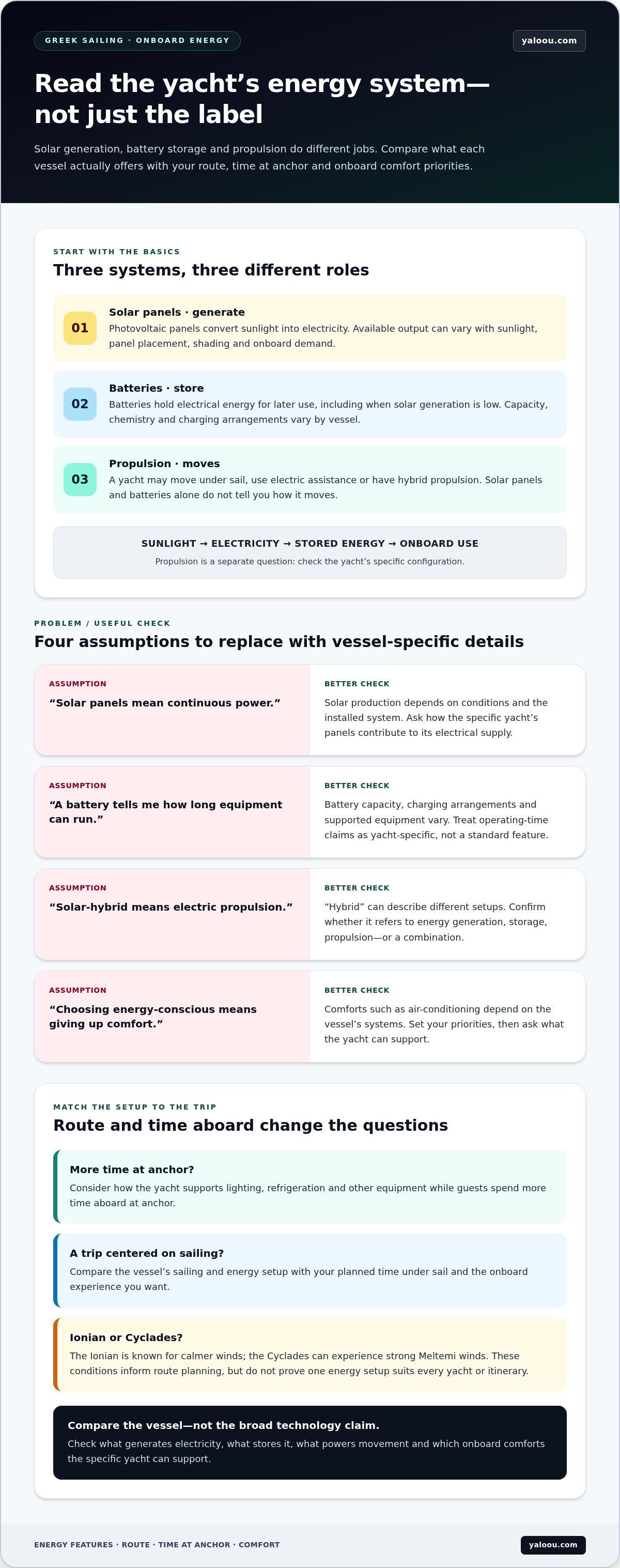
“Solar hybrid” isn’t one fixed specification. Solar panels may generate electricity, batteries store electrical energy for later use, and a hybrid propulsion system may combine different power sources to move the yacht. A vessel can have solar panels and batteries without hybrid propulsion. Distinguishing these features helps you compare yachts without assuming that one technology provides every onboard benefit.
To see the Greek sailing experience that a crewed charter can offer, watch this video:
Think of the systems as related but distinct. Solar generation describes how some electricity is produced; battery storage describes how electricity is kept for use; hybrid propulsion describes how movement may be powered. “Solar-hybrid yacht systems” is best understood as a combination of energy generation, storage, and, on some vessels, hybrid propulsion. It isn’t a promise of zero-impact travel.
What does “solar hybrid” mean on a sailing yacht?
Photovoltaic panels convert sunlight into electricity. Batteries hold that electrical energy for later use. Propulsion is a separate question: a yacht may rely on its sailing rig, use electric assistance, or have a hybrid arrangement. Because “hybrid” can describe different setups, the vessel’s specific configuration matters more than the label.
When comparing yachts, look at the role of each component rather than treating panels and batteries as interchangeable. Solar production depends on available sunlight, while stored energy depends on the battery system and how electricity is used. Neither term alone tells you which comforts or equipment a particular yacht can support.
Why the Greek sailing experience makes system choice relevant
Energy priorities can shift over the course of a trip. Under sail, guests may focus on the sailing experience; at anchor, they may spend more time using lighting, refrigeration, or other equipment. A route with frequent stops and longer stays aboard at anchor can raise different questions from a trip centered on sailing between destinations.
Greek island itineraries vary. The Ionian is known for calmer winds, while the Cyclades can experience strong Meltemi winds. These conditions help shape route planning, but they don’t establish that one energy setup suits every yacht or itinerary. Consider vessel choice alongside the route and onboard experience in YAL’OOU’s Greek yacht options.
Sustainability is one factor alongside comfort, crew, and the kind of holiday you want. Start with your plans, then assess the yacht’s specific systems against them. This makes it easier to weigh technology without assuming that a label guarantees particular performance or an exact experience.
How solar panels, batteries, and hybrid systems work aboard Greek sailing yachts
Think of onboard energy as a simple flow: sunlight can produce electricity, batteries can store it, and electrical equipment uses it when needed. That explains the roles of solar panels and batteries, but not how a yacht moves. For guests comparing crewed sailing yachts with eco friendly solar hybrid systems Greece, separating these functions makes technical descriptions easier to interpret.
Solar generation and onboard battery storage
Photovoltaic panels convert sunlight into electrical energy. While a yacht is sailing or anchored, that energy may contribute to its electrical supply, depending on conditions and the installed system. It isn’t a guarantee of continuous power. Available sunlight, panel placement, shading, and onboard demand can all affect the amount generated.
Batteries serve a different purpose: they store electricity for later use, including when solar generation is low. Battery chemistry, capacity, charging arrangements, and the equipment supported vary by vessel. Treat any figures or claims about operating time as yacht-specific details, not a standard feature of every solar-equipped charter.
For a deeper technical overview, the University of Malta publication Marine solar energy technologies and applications explores solar energy in marine settings. For charter planning, the practical takeaway is to distinguish the system’s components and their intended roles.
Hybrid propulsion, generators, and guest comfort
Propulsion concerns how a yacht moves. A sailing yacht can travel under sail; some vessels may also use electric assistance or a hybrid propulsion arrangement. Solar electricity and battery storage, by contrast, describe parts of the onboard electrical system. They don’t automatically mean the yacht has electric propulsion.
Solar generation makes electricity, batteries store it, and propulsion systems move the yacht. Keeping those jobs separate helps you avoid assumptions based on a broad “hybrid” label. Check what “hybrid” refers to in the description of the individual vessel.
Comfort and navigation equipment are another part of the picture. Refrigeration, lighting, and device charging are examples of electrical loads; air-conditioning can have different demands. Navigation equipment also relies on the yacht’s electrical setup, but its supply and backup arrangements depend on vessel design. Generator use, if applicable, and the ability to run comfort systems depend on installed equipment and operating choices. Solar panels alone don’t establish what amenities can run, or for how long.
- Generation: What role do the solar panels play in supplying electricity?
- Storage: What onboard batteries store energy, and what equipment do they support?
- Propulsion: Does the yacht sail, use electric assistance, or have a hybrid arrangement?
- Comfort: How do the yacht’s systems support the amenities important to your group?
Actual capacity and operating capability depend on the yacht’s installed equipment, conditions, and energy use. Clear, vessel-specific information helps match expectations to the yacht without assuming that one feature guarantees another. As you shape the holiday around your preferred pace and onboard experience, explore Greek sailing experiences as part of planning the wider trip.
Compare solar-hybrid sailing yacht options for Cyclades and Ionian routes
Start with the kind of Greek sailing holiday you want, then compare the yacht’s onboard systems against that plan. The Cyclades and Ionian offer different route-planning contexts, but neither region guarantees particular conditions. Consider where you hope to sail, how you like to spend time at anchor, and which onboard comforts matter most. This keeps a technology label from making the decision for you.
Planning factorCycladesIonian
Route style
Build flexibility into plans and account for changing conditions.
Island-hopping can shape a route with destination-to-destination sailing.
Anchoring preferences
Consider how often you expect to spend extended time aboard at anchor.
Think about how your planned stops and evenings affect onboard routines.
Comfort priorities
Identify the amenities you value during both sailing days and stops.
Consider daily onboard power use alongside your preferred pace.
System questions
Assess how the yacht’s equipment fits the planned itinerary and conditions.
Understand what the installed systems support during your intended trip.
Cyclades sailing: match the yacht to route and conditions
The Cyclades are a group of islands, not a promise of calm or consistent sailing weather. The seasonal Meltemi wind pattern can influence conditions, so route planning should leave room to adapt. Rather than treating a fixed itinerary as certain, discuss the journey’s priorities with the crew and let the captain’s judgement and prevailing conditions guide decisions.
That flexibility also puts onboard energy needs in context. A change to the day’s route may affect how long guests sail, where they stop, and how they use the yacht’s amenities. Consider comfort expectations across the whole trip, not only an idealized day at anchor. No solar or hybrid feature guarantees a particular performance in changing conditions.
Ionian sailing: consider island-hopping and time at anchor
The Ionian offers a distinct setting for island-hopping, which may suit guests who want to connect several destinations within one sailing holiday. Sheltered cruising can be part of the region’s appeal, but conditions still vary. Think about your preferred daily distances, how much time you want ashore, and whether quiet evenings or regular use of onboard equipment are priorities.
These preferences help frame practical system questions. Guests planning longer stays aboard at anchor may want to understand how the yacht’s installed equipment supports their comfort needs. Guests focused on moving between islands may weigh the itinerary and sailing experience more heavily. Neither approach points to one universal “best” system.
For travelers comparing crewed sailing yachts with eco friendly solar hybrid systems Greece offers, route and vessel belong in the same conversation. Consider YAL’OOU’s Greek yacht options alongside a tailored itinerary, crew coordination, and your preferred comfort level. Match the trip first, then assess each yacht’s specific features in that context.
A practical checklist for choosing an eco-conscious Greek yacht charter
A clear shortlist starts with your holiday, not a technology label. Decide where you’d like to sail, how you want to spend your days, and which onboard comforts matter most. Then compare each yacht’s documented features against those priorities. This keeps sustainability in the picture without assuming that a particular system guarantees an environmental outcome or a specific onboard experience.
Questions that make yacht features easier to compare
Separate your comparison into three areas: how the yacht moves, how it stores and supplies electricity, and what its systems support for guests. A plain-language explanation should make each feature’s role clear. Use vessel-specific details rather than applying general marine-technology descriptions to every yacht.
- Itinerary: Which Greek islands or regions interest you? How much flexibility do you want in the route and daily pace?
- Energy-system purpose: Are you most interested in propulsion, stored electrical power, or the equipment that supports onboard comfort?
- Time aboard: Will your plans focus on sailing between destinations, spending time at anchor, or balancing both?
- Comfort: Which amenities are important to your group during the day and in the evening?
- Specifications: Which features are documented for this individual yacht, and which descriptions are general explanations of marine technology?
Align the crewed charter with your travel priorities
System details are only one part of a successful charter. Consider how much privacy you prefer, whether you want a relaxed or active pace, and how open you are to adjusting the itinerary as conditions and the captain’s judgement shape the day. Crew coordination helps bring your route, onboard routines, and guest preferences together into a coherent experience.
For crewed sailing yachts with eco friendly solar hybrid systems Greece, use a consistent comparison: note the route, your comfort priorities, and the vessel-specific information that addresses them. Translate unfamiliar specifications into practical questions, such as which equipment a system is designed to power. Don’t treat broad labels as proof of performance, energy independence, or a particular environmental benefit.
Before settling on a yacht, picture a typical day on your preferred itinerary. Consider the time spent sailing, the length of stops, the amenities you expect to use, and how much flexibility you want. This gives route planning and vessel selection equal weight. It also helps distinguish an appealing sustainability feature from one that genuinely fits your group’s plans.
Use the checklist to shape your charter around the experience you want, with route planning and crew coordination considered alongside vessel features. Explore tailored Greek yacht experiences as you plan your trip.
Plan a crewed solar-hybrid sailing holiday in Greece with YAL’OOU
Make the holiday itself the starting point. Choose the islands you’d like to explore, the pace that feels right, and the comforts you want on board. Then compare each yacht’s documented energy features with that plan. This keeps the technology in perspective and helps you choose a charter for the overall experience, not simply for a broad label.
Bring your route, comfort, and sustainability priorities together
Share the details that will shape your days: preferred destinations, time for swimming or shore visits, how much flexibility you want, and which amenities matter to your group. Include your sustainability priorities, too. YAL’OOU brings yacht selection, route planning, crew coordination, and onboard services together around your preferences.
If you’re weighing island routes, consider how destination choice affects the rhythm of the trip. A route focused on a few favorite stops may call for a different pace from one built around discovering several islands. Consider YAL’OOU’s Greek yacht options alongside your itinerary and preferred onboard experience.
For guests researching crewed sailing yachts with eco friendly solar hybrid systems Greece, keep the comparison grounded in the individual vessel. Separate general explanations of solar panels, batteries, and hybrid propulsion from yacht-specific details. Focus on documented features and what they mean for your planned time sailing, at anchor, and enjoying the yacht.
- Route: Which islands or region would you like to experience, and how much flexibility should the itinerary allow?
- Comfort: Which onboard amenities are priorities during sailing days and evenings at anchor?
- Energy features: What do the vessel’s documented specifications say about generation, storage, propulsion, and supported equipment?
- Charter experience: What pace, privacy, and crew-supported services will make the trip feel right for your group?
Take the next step toward a Greek sailing charter
A considered choice connects the actual trip with the yacht’s specific features. It doesn’t rely on the word “hybrid” to imply a particular level of comfort, capability, or environmental impact. With route planning and crew coordination aligned to your priorities, technical details become part of a bigger picture: a personal way to experience the Greek islands.
Bring together the route you’re dreaming of, the onboard experience you value, and the sustainability considerations that matter to you. Discover your Greek yacht experience.
Shape your Greek sailing plans around the experience you want
Turn your preferences into a clear charter brief. Picture the places you want to visit, the pace you’d enjoy, and the onboard comforts that matter to your group. Then let those priorities guide your choice of yacht and the vessel-specific energy details you compare. For crewed sailing yachts with eco friendly solar hybrid systems Greece, the best fit is the one that supports your holiday plans without relying on assumptions about a technology label.
YAL’OOU coordinates daily and weekly crewed yacht charters across Greek destinations, bringing route planning, crew, and onboard services together around the trip. This coordination connects the details you care about with the wider experience you’re looking forward to.
Set your priorities, imagine the islands ahead, and take the next step toward a Greek sailing escape. Explore tailored Greek yacht experiences, and start shaping a holiday that feels considered, comfortable, and distinctly yours.
Frequently Asked Questions
Can solar panels power all the systems on a sailing yacht?
Not necessarily. Solar panels generate electricity, but the amount available varies with sunlight and the yacht’s installed equipment. Batteries can store some generated power, while onboard systems draw energy at different rates. A setup that supports lighting or device charging may not cover every comfort or navigation load at once. Compare the vessel’s documented capacity with the equipment you expect to use.
Can a yacht’s solar system provide power overnight?
It may, if electricity generated during daylight has been stored in the yacht’s batteries. How much stored energy is available overnight depends on battery capacity, prior charging, and what guests and crew use. Lighting and overnight refrigeration, for example, create different demands from running several high-energy appliances. Solar equipment alone doesn’t guarantee uninterrupted power through the night, so consider the vessel’s actual setup and your expected onboard routine.
Does a solar-hybrid yacht mean the charter has zero emissions?
No. The term “solar-hybrid” doesn’t establish that a yacht or an entire charter has zero emissions. Solar panels may contribute electricity, and hybrid propulsion may use more than one power source, but the vessel’s overall operation depends on its design and use. Treat eco-conscious technology as one possible part of a lower-impact approach, not proof of a specific environmental result or emissions level.
Can solar-hybrid systems run air conditioning while the yacht is at anchor?
Sometimes, but the answer depends on the yacht’s installed electrical equipment, battery arrangement, and operating conditions. Air conditioning can place different demands on onboard power than lighting or charging a phone. The presence of solar panels doesn’t by itself show whether air conditioning can run at anchor, or for how long. Compare vessel-specific information with your comfort priorities, especially if climate control is essential to your group.
How does the Meltemi affect a sailing yacht charter in Greece?
The Meltemi is a seasonal wind pattern that can influence sailing conditions in parts of Greece, particularly around the Cyclades. Its effect on a specific trip depends on prevailing conditions and the route. Keep plans flexible rather than treating a proposed itinerary as fixed, and rely on the captain’s judgement when deciding how to proceed. That adaptability helps the crew shape a comfortable trip as conditions change.
Are solar-hybrid sailing yachts suitable for a family charter?
They can be, if the yacht’s layout, onboard amenities, and itinerary suit your family. Consider practical needs such as sleeping arrangements, shade, meal routines, and the equipment children may use during time aboard. Then compare those priorities with the vessel’s documented features, rather than assuming that solar or hybrid technology determines comfort. A crewed charter plan can bring family preferences, route choices, and onboard coordination together.
Is the Ionian or the Cyclades better for an eco-conscious sailing holiday?
Neither is universally better; your preferred route and trip style should guide the choice. The Cyclades may appeal if you’re drawn to island-hopping among Mykonos, Paros, Antiparos, Syros, Tinos, Sifnos, Serifos, Milos, Poliaigos, Kimolos, Santorini, Ios, Koufonisia, or Amorgos. Ionian options include Corfu and Zakinthos. Athens, Aegina, Poros, Spetses, and Crete offer other regional possibilities. If researching “crewed sailing yachts with eco friendly solar hybrid systems Greece,” match documented yacht features to your itinerary.
Disclaimer
The YAL’OOU Travel Guide is curated with care to inspire and inform discerning travelers. While every effort is made to ensure the accuracy and relevance of the information provided, all content is offered for general guidance only and may evolve over time.
Details such as local regulations, availability, pricing, and services are subject to change without prior notice. We encourage guests to seek personalized advice and confirm arrangements directly when planning their journeys.
YAL’OOU accepts no liability for any inaccuracies, omissions, or outcomes arising from the use of this information. The Travel Guide may feature recommendations, insights, and selected third-party experiences, presented solely as a source of inspiration and not as formal endorsements.
By accessing this section of our website, you acknowledge and accept this disclaimer as part of your experience with YAL’OOU.