

A remote luxury travel planner can shape a trip around your preferences, coordinate key details, and stay in touch as plans evolve. Building trust with a remote luxury travel planner starts with clear communication, relevant expertise, and a shared understanding of the journey you want. The result should feel personal, not like a standard itinerary sent through a screen.
It’s natural to expect attentive service when planning a special trip from a distance. You should understand how recommendations are chosen, what the planner will coordinate, and how you’ll communicate before and during travel. A thoughtful planning relationship makes those expectations clear from the start.
This article explains how a planner can tailor an itinerary to your priorities, demonstrate expertise through practical recommendations, and connect you with local experiences. You’ll also learn what ongoing support can look like if plans change, and why communication matters when you’re away from home. A clearer picture of the process helps you recognize a reliable, well-matched partnership.
Key Takeaways
- Share your priorities, preferred pace, and room preferences so the itinerary reflects how you want to travel.
- Look for clear, thoughtful recommendations that explain a planner’s destination knowledge and service approach.
- Ask how local relationships can shape access to private transfers, guides, and distinctive experiences.
- Agree on communication channels and understand how the planner will help manage changes during your trip.
- For a yacht-focused escape, explore how a daily yacht charter can fit into your travel plans.
Personalized trip planning based on clients’ preferences
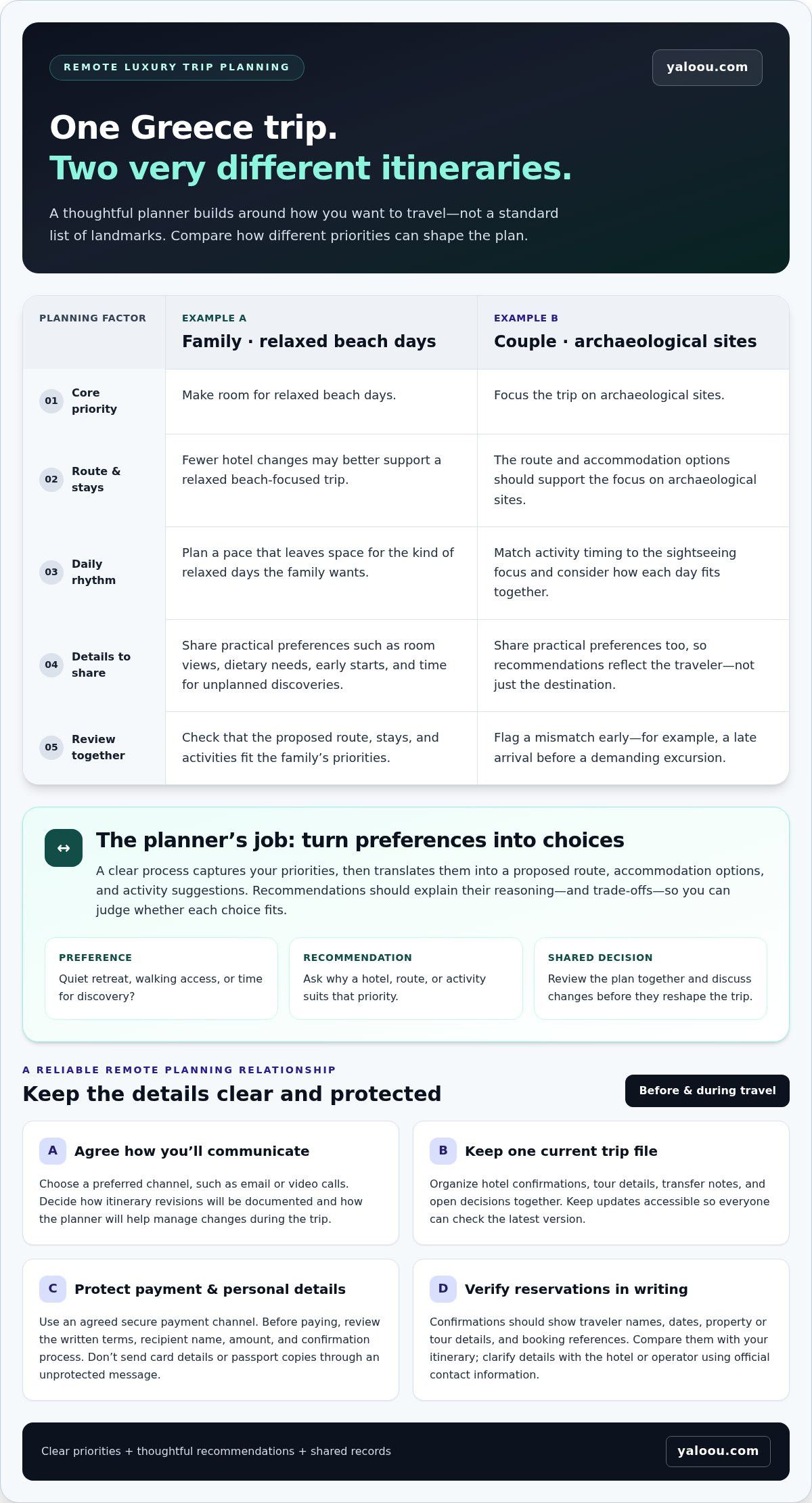
A personalized Greece itinerary should reflect how you want each day to feel, not just which landmarks appear on a map. Tell the planner whether you prefer Athens’ museums, a quiet stay in Crete, or a slower island-hopping pace. Share practical preferences too, such as early starts, dietary needs, room views, and time for unplanned discoveries. These details help shape recommendations around your priorities rather than a generic package. Building trust with a remote luxury travel planner begins when the questions are specific and the proposed choices respond to your answers.
Look for a clear planning process. The planner should capture your priorities, then turn them into a proposed route, accommodation options, and activity suggestions. For example, a family seeking relaxed beach days may prefer fewer hotel changes than a couple focused on archaeological sites. Flight timing and activity pace also affect how each day fits together. Review the itinerary together and flag mismatches early, such as a late arrival before a demanding excursion. This exchange creates a working partnership, with decisions recorded and changes discussed before they reshape the trip.
Protect payment details and personal information by using a secure payment channel and sharing only what is needed for booking. Before paying, review the written terms, recipient name, amount, and confirmation process. Avoid sending card details or passport copies through an unprotected message. Ask how sensitive documents will be transmitted and stored, then use the agreed secure method.
Request written reservation confirmations showing traveler names, dates, property or tour details, and booking references. Compare each confirmation with your itinerary, then contact the hotel or tour operator through its official contact details if anything needs clarification. Keep confirmations and updates together in an accessible folder, so you can compare the latest version with your travel plans.
Testimonials and case studies can show how a planner responds to real preferences, but context matters. Look for examples that describe the traveler’s needs, planning choices, and how changes were managed. A story about a couple’s island stay may reveal more than a polished destination photo. Travel advisors should share client stories only with permission. Treat feedback as evidence of a process, not proof that every trip will unfold the same way.
Good client account management makes the relationship easier to follow. Agree on a preferred channel, such as email or video calls, and decide how itinerary revisions will be documented. A shared trip file can organize hotel confirmations, tour details, transfer notes, and open decisions. For a Greece trip involving Athens and Santorini, one up-to-date itinerary helps everyone see which nights are booked and what still needs attention. Clear records reduce confusion across planning conversations.
Trust grows through consistent, two-way communication. Explain what matters most, then expect recommendations to come with a reason: one hotel’s location may suit walking, while another may be better for a quiet retreat. Ask about trade-offs when options differ, and give direct feedback when a suggestion misses the mark. This helps the planner understand your preferences and makes each decision part of a more personal, collaborative trip plan.
Essential experience and customer service skills
Strong planning combines destination knowledge, clear communication, careful research, and organized follow-through. For a Greece trip, assess how an advisor explains recommendations for Athens, Crete, or the Cyclades, not just how polished the itinerary looks.
Expertise Through Content
Useful content demonstrates expertise by explaining why a destination suits a particular traveler. Specific reasoning helps you judge whether an advisor’s approach matches your travel style. For example, a Greece guide might compare a history-focused stay in Athens with a slower island itinerary, explaining how each shapes the trip’s pace and daily plans.
Look for practical detail across the advisor’s website, biography, and social profiles. A post about a hotel should explain its setting, atmosphere, and ideal traveler, rather than offer only a photograph. Compare those claims with your priorities, such as quiet evenings or easy access to archaeological sites. Consistent explanations give you a clearer sense of the advisor’s expertise and point of view. Notice whether the content adds useful context or simply repeats familiar destination descriptions.
Firsthand Destination Knowledge
Firsthand destination knowledge comes from direct experience with places, properties, and local operators. On-the-ground familiarity can make recommendations more useful than a list of popular names. Ask what an advisor learned from visiting a particular area of Santorini, for example, and how that knowledge informs hotel or activity choices.
Listen for details that connect to your plans. An advisor might explain why one base suits travelers seeking village walks, while another works better for beach time. They should also describe trade-offs between options, such as travel time and the experience each supports. Specific, relevant answers help distinguish destination insight from general descriptions. Ask how firsthand knowledge of Paros informs a suggested stay or activity.
Professional Credentials
Professional memberships and certifications can support an advisor’s expertise, but assess what each credential represents. Ask which organization issued it, what training or standards it involves, and how it relates to luxury travel or the destinations you’re considering. A badge alone doesn’t show how well an advisor listens, communicates, or manages details. Consider credentials alongside relevant experience and clear explanations.
There isn’t one credential you need to select an advisor. Instead, assess whether the advisor can explain their qualifications plainly and connect them to your needs. For a Greece itinerary, ask how their training or professional affiliations inform their recommendations, and notice whether they answer directly. Strong service also shows in organized research, clear answers, and an ability to explain why a recommendation fits. Consider how clearly they respond to a practical question about a hotel or guide.
Use a short conversation to test those skills: describe your preferred pace, name one must-see destination, and ask for a tailored suggestion with its reasoning. Then compare the answer with your priorities. If local food is central to your plans, explore curated travel experiences as one way to shape a more personal Greece itinerary.
What Can You Expect When You Use a Luxury Travel Planner?
Evaluate a planner through destination-specific recommendations, clear booking practices, and credible local relationships. For Greece, ask how those relationships shape your proposed itinerary.
Destination Expertise and Supplier Relationships
Destination expertise combines practical knowledge of places with relationships among local suppliers. Those connections can help shape a trip around your interests. Ask why a suggested hotel suits your plans in Athens, or how a local guide could add context to a visit to the Acropolis. Clear, specific explanations show how recommendations connect to your itinerary.
Ask how the planner works with Greek hotels, guides, and tour operators. Find out who will confirm a boat excursion, communicate schedule changes, and share final booking details. Relationships with local suppliers can support coordination, but you should still receive clear information about each reservation. Before booking, ask: Which local partners suit my itinerary? Who handles each reservation? How will changes be communicated?
Written Agreements and Cancellation Policies
A written agreement records the planning service, responsibilities, payment terms, and cancellation process. It lets you review what happens if your plans change or a supplier cancels. Read it alongside supplier-specific terms for hotels, tours, and transfers. Check deadlines, refund conditions, change procedures, and who handles each request. Keep the signed agreement with your booking confirmations.
Warning signs of a possible travel scam in the United States include pressure to pay immediately, unclear business details, and requests to use an unusual payment method. Be cautious if the planner avoids written terms or cannot explain who receives your payment. Compare the name on the payment instructions with the business and reservation documents before sending funds.
Planner Fees and Inclusions
Planner fees and inclusions should be explained in writing before work begins. Ask whether the arrangement uses a planning fee, commissions, or another structure, and what each covers. Written terms should clarify whether itinerary research, booking coordination, and revisions are included, and identify any separate supplier charges. Fees depend on the trip’s scope and planning work, and are provided after a quote request.
Before hiring, ask who makes reservations, how the planner is compensated, and what support continues after booking. Request examples of how the planner evaluates a Greek hotel or excursion and how supplier relationships influence recommendations. Compare the answers with your itinerary’s needs, such as coordinating a private guide in Athens and a hotel stay on an island. Direct answers make the working arrangement easier to understand.
Access to exclusive activities and local guides
In Greece, local guides and distinctive activities can make a familiar route feel more personal. A planner can arrange private transfers and reserve experiences, matching them to your interests and schedule. For example, a guide-led visit to the Acropolis in Athens can suit a history-focused day, while a village walk on Naxos offers a different pace. The value lies in how each choice fits your trip, not in a promise of special access.
Ask how an experience fits with the rest of your plans. If you’re staying in Athens before traveling to an island, the planner should consider departure timing, transfer arrangements, and how much energy the activity requires. A private guide can add context to a site visit, while a local food experience can bring a different perspective to a day in Crete. Your itinerary should show where each activity fits and what it adds.
Local knowledge is most useful when it answers a specific need. Tell the planner whether you want archaeological context, time outdoors, or a relaxed introduction to Greek food. Then ask why a particular guide or activity suits that preference. For instance, a family visiting the Acropolis may value an engaging, history-focused tour, while travelers interested in everyday food culture may prefer a market visit. The recommendation should explain its fit clearly.
Ask practical questions to understand what a guided experience involves. Find out where the meeting point is, how to identify the guide, what the activity includes, and how the schedule fits with other bookings. For a walking tour in Athens, consider the route, pace, and time needed before a restaurant reservation. Clear details help you compare experiences and spot timing conflicts before they disrupt the day.
Private transfers can connect activities with hotels, ports, and restaurants, reducing the need to coordinate each leg separately. For an island stay, ask how a transfer fits your arrival point and planned excursion. The planner can bring these arrangements into one itinerary, considering the travel between experiences as well as the experiences themselves. Review the pickup location and timing in your written trip details.
Before confirming an activity, make sure its description matches your expectations. Compare the guide’s focus, meeting instructions, duration, and cancellation terms with your itinerary. If an experience in Santorini is described as private, ask what that means for the guide and group arrangement. Keep the final confirmation with your travel documents. These checks make local experiences easier to understand and help ensure each one supports the kind of Greece trip you want.
Communication and disruption support during travel
Remote planning works best when communication stays clear after you leave home. Before traveling to Greece, agree on preferred channels, expected updates, and how the planner handles changes. A missed connection in Athens, a sudden illness, or a tour change in Santorini can affect several bookings. Knowing the communication process helps you understand whom to contact and what information to share.
Discuss support before departure. Ask which contact method to use for a time-sensitive change, who will respond, and which bookings the planner can help coordinate. Keep these details in your itinerary alongside hotel names, transfer instructions, and reservation references. If a ferry schedule change affects an island transfer, an organized trip record helps identify which arrangements need attention.
Disruptions can have different effects. A delayed arrival might affect hotel check-in, while a canceled tour could leave the rest of the day unchanged. Share the booking reference, updated timing, and immediate concern in one message. The planner can then assess the affected arrangements and help you consider practical options, such as contacting the hotel or coordinating with the tour operator.
Agree on communication expectations that fit the trip. Email can hold detailed itinerary updates, while a call or messaging channel may suit an urgent change. Clarify how to reach the planner during travel and what support covers. Don’t assume every supplier issue is handled in the same way. Written expectations make the planner’s role clear if a hotel, driver, or local guide changes a confirmed arrangement.
- Before departure: Save the current itinerary, booking references, and agreed contact details.
- During a disruption: Send the affected reservation, location, and change in timing.
- After a change: Keep the revised confirmation with your trip documents.
Simple habits help keep decisions coordinated. If a tour in Crete moves to another day, check how the new timing affects transfers, meals, and other reservations. Ask the planner to explain any proposed adjustment and identify which supplier needs to confirm it. Keep the latest written update, so you and the planner are working from the same itinerary.
A successful trip isn’t defined by the absence of changes. It depends on clear roles, useful information, and communication that helps you respond without losing sight of the experience you planned. For a Greece itinerary shaped around distinctive activities, explore curated travel experiences that can complement your time in each destination.
YAL’OOU Exclusive Yachting & More: Daily Yacht Charters
YAL’OOU Exclusive Yachting & More offers Daily Yacht Charters for travelers who want time on the water to shape their Greece itinerary. A charter can complement a stay on land, adding a private yacht experience to a trip focused on coastal scenery and time together. For a longer escape, Weekly Crewed Yacht Rentals offer another way to plan around life at sea. High-End Villa Rentals and VIP Ground Transfers can also support a land-based stay and its transportation needs.
Consider a daily charter when you want a yacht experience as part of a broader vacation, rather than making it the focus of the whole trip. Choose an option that fits your itinerary and the kind of getaway you have in mind. Visit yaloou.com to explore YAL’OOU’s yacht experiences or get in touch with YAL’OOU Exclusive Yachting & More.
Shape the Journey You Want to Take
Let your next planning conversation turn your priorities into a clear vision for the trip. Name the experiences you want to include, the pace that feels right, and the details you’d like handled with care. Building trust with a remote luxury travel planner is an ongoing partnership, strengthened when recommendations and decisions stay connected to what matters to you.
If time on the water belongs in your plans, YAL’OOU Exclusive Yachting & More offers Daily Yacht Charters and Weekly Crewed Yacht Rentals. For a stay on land, its High-End Villa Rentals offer another accommodation option. These experiences can help shape a Greece escape around the setting and style you have in mind.
Explore the possibilities and choose what feels like the right next step. Explore curated travel experiences from YAL’OOU Exclusive Yachting & More, and start imagining a journey that feels personal from the outset.
Frequently Asked Questions
Can’t AI or travel apps personalize trips the same way?
AI and travel apps can tailor suggestions to the preferences you enter, but a planner can interpret the reasons behind them and coordinate the details. For example, “quiet island stay” could mean a secluded hotel, fewer transfers, or relaxed days near Paros. Ask how the planner turns your priorities into recommendations and adapts them when plans change. Use digital tools to organize ideas, then judge the itinerary by how well it fits your needs.
How can you verify a remote luxury travel planner's credentials and experience?
Review the planner’s stated qualifications, ask which organization issued each credential, and request examples of relevant Greece planning experience. Look for specific knowledge of places you may visit, such as Mykonos, Paros, Antiparos, Athens, Aegina, Poros, Spetses, Syros, and Tinos. Ask how that experience shaped a recommendation for a similar itinerary. A credential can support a planner’s profile, but clear, relevant answers help you assess their judgment.
How can you check reviews and references for a remote travel planner?
Compare reviews across more than one public platform and look for details about the planning experience, not just general praise. A useful review might explain how an itinerary connected Santorini with Sifnos, Serifos, Milos, Poliaigos, or Kimolos. You can also request a reference from a traveler with similar priorities. Respect client privacy: trip stories should be shared with permission, and references should choose what they’re comfortable discussing.
What communication and support should you expect from a remote luxury travel planner before and during a trip?
Agree on communication channels, what support covers, and how to report a change before departure. For travel involving Ios, Koufonisia, Amorgos, Crete, Corfu, or Zakinthos, keep the latest itinerary and supplier confirmations accessible. If a connection or activity changes, send the affected booking details and your immediate concern. Ask how the planner coordinates with suppliers and what steps you should take directly, so responsibilities remain clear during the trip.
What professional memberships or certifications should a luxury travel advisor have?
There isn’t one required membership or certification. Ask which organization issued a credential, what training or standards it represents, and how it relates to luxury travel or your destination. Consider it alongside relevant experience and clear recommendations.
Disclaimer
The YAL’OOU Travel Guide is curated with care to inspire and inform discerning travelers. While every effort is made to ensure the accuracy and relevance of the information provided, all content is offered for general guidance only and may evolve over time.
Details such as local regulations, availability, pricing, and services are subject to change without prior notice. We encourage guests to seek personalized advice and confirm arrangements directly when planning their journeys.
YAL’OOU accepts no liability for any inaccuracies, omissions, or outcomes arising from the use of this information. The Travel Guide may feature recommendations, insights, and selected third-party experiences, presented solely as a source of inspiration and not as formal endorsements.
By accessing this section of our website, you acknowledge and accept this disclaimer as part of your experience with YAL’OOU.