
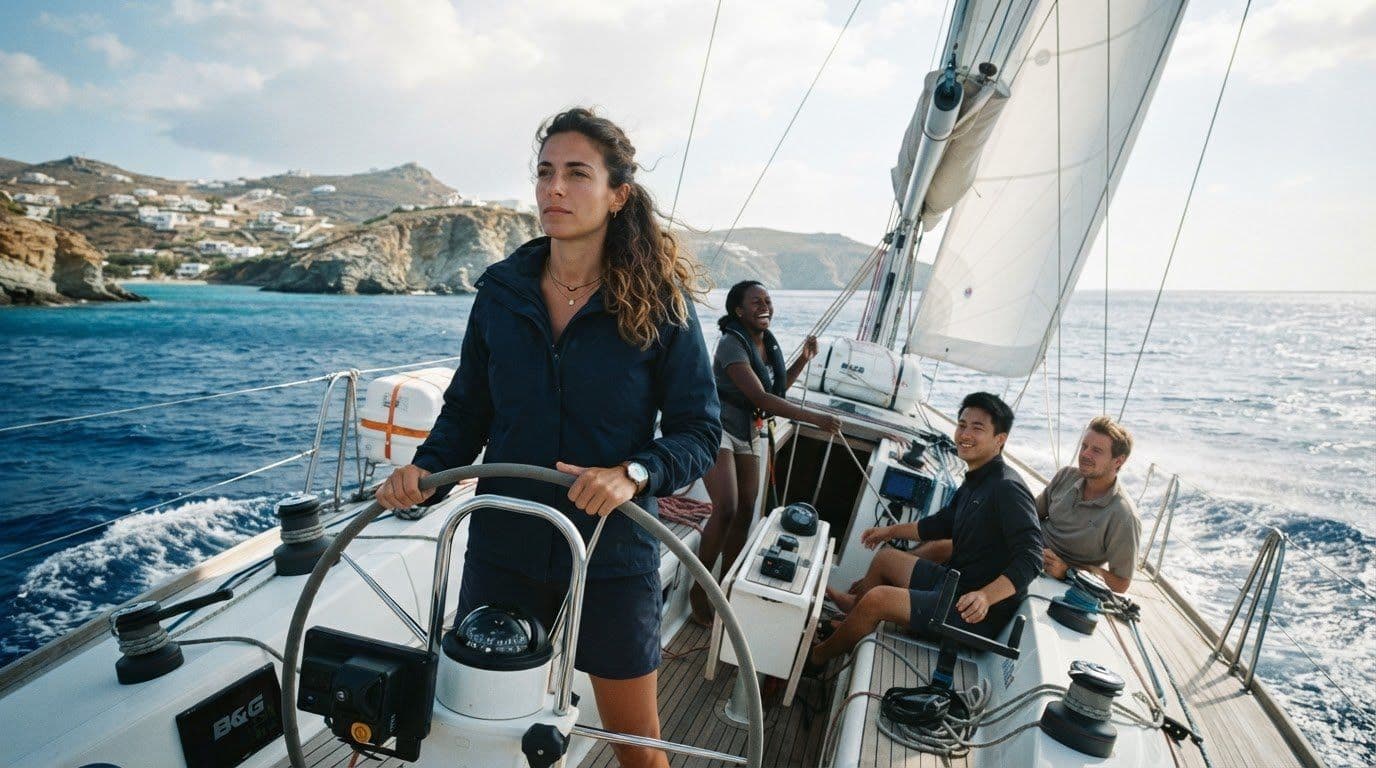
Confidence offshore doesn’t come from waiting for fear to disappear. For one sailor, overcoming the fear of sailing in the open sea began with gradual exposure, practicing at the helm, and noticing when conditions pushed her toward her personal threshold, including winds above 15 knots and a heel of 15° or 20°. She also learned to accept what she couldn’t control and trust her preparation, boat, and crew.
It’s understandable to feel uneasy when the coastline fades and the boat moves beneath you. Fear can sharpen your attention, but it can also make decisions feel harder, especially when the wind builds or something unexpected happens. You don’t need to become fearless to sail with more confidence.
This guide explains how to recognize your anxiety, build familiarity gradually, and prepare practical routines for time offshore. You’ll learn how to respond when fear rises, what to focus on during a watch, and how taking manageable steps can make open-water sailing feel more approachable.
Key Takeaways
- Notice which conditions and tasks raise your anxiety, then use those cues to set manageable practice goals.
- Build confidence through gradual exposure and repeated time at the helm rather than expecting fear to vanish first.
- Before a voyage, make a simple plan for the route, crew roles, and how you’ll adapt if conditions change.
- When fear spikes, return to the immediate task, use a calming routine, and take events one at a time.
- Confidence grows when you focus on what you can prepare for and accept what’s beyond your control.
Overcoming the fear of sailing in the open sea
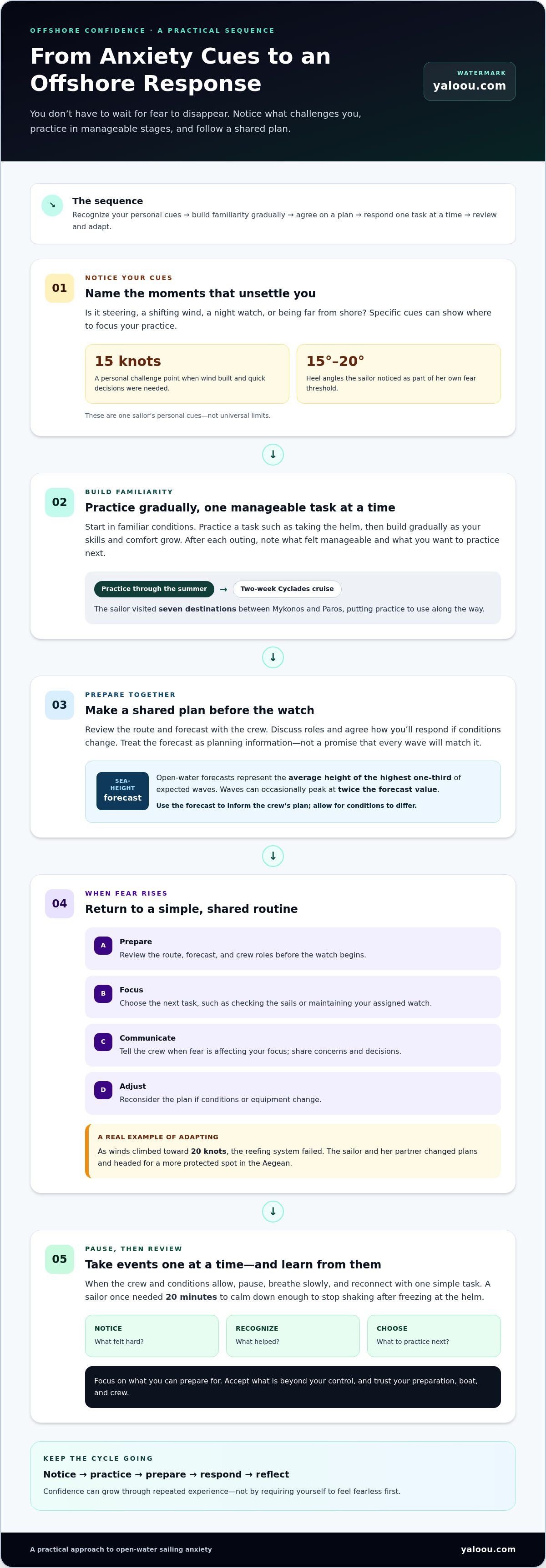
Open-water anxiety can ease through practice, clear routines, and gradual exposure. One sailor identified her fear threshold as taking the helm when winds built past 15 knots and quick decisions were needed. She also noticed her response when the boat heeled at 15° or 20°. Those concrete cues helped her recognize which situations felt challenging and where to focus her practice.
Start by naming the moments that unsettle you. Is it steering, shifting wind, a night watch, or being far from shore? One sailor practiced helming because she believed practice was necessary to overcome her fear of steering. Begin with manageable tasks in familiar conditions, then build gradually as your skills and comfort grow. After practicing through the summer, she took a two-week cruise through the Cyclades, visiting seven destinations between Mykonos and Paros with YAL’OOU Exclusive Yachting & More. Each stage gave her a chance to put her practice to use.
Use forecasts as planning information, not as a promise that every wave will match the reported figure. According to maritime safety guidelines, open-water sea-height forecasts represent the average height of the highest one-third of expected waves; waves can occasionally peak at twice the forecast value. For an Aegean sailing plan, review the forecast with the crew, discuss the route, and agree on how you’ll respond if conditions change. Preparation gives everyone a shared reference point.
Before sailing, write down a simple routine to follow when anxiety rises:
- Prepare: Review the route, forecast, and crew roles before the watch begins.
- Focus: Choose the next task, such as checking the sails or maintaining your assigned watch.
- Communicate: Tell the crew when fear is affecting your focus, and agree on how to share decisions.
- Adjust: Reconsider the plan when conditions or equipment change, as one crew did near the Greek islands.
Open-water passages show why flexibility matters. As winds climbed toward 20 knots, the reefing system failed. The sailor and her partner changed plans and headed for a more protected spot in the Aegean. Their response did not depend on pretending the situation felt easy. They considered the wind and equipment problem, then chose a practical next step. Changing an Aegean route when conditions call for it can also be a deliberate decision, not a personal failure.
Fear may take time to settle after a difficult moment. During a challenging sailing incident, one sailor froze at the helm and needed 20 minutes to calm down enough to stop shaking. When the crew and conditions allow, pause, breathe slowly, and reconnect with one simple task. Accepting that some things at sea are outside your control can go alongside trust in your preparation, boat, and crew.
Gradual practice builds familiarity without requiring you to feel fearless first. Set a clear focus for each outing: practice one task, notice what feels manageable, and reflect afterward on what you learned. On an Aegean voyage with YAL’OOU Exclusive Yachting & More, that might mean discussing crew roles before departure from Athens and choosing a small, purposeful task during the trip. Use each experience to decide what you want to practice next. This steady approach can help you overcome the fear of sailing in the open sea.
Maritime authorities define the open ocean as waters above and beyond the continental shelf. The scale of that setting can make uncertainty feel especially vivid, so separate what you can influence from what you cannot. You may not control how the sea changes, but you can focus on your immediate responsibilities: notice conditions, follow the agreed routine, and tell the crew when you need support. Pausing to breathe, check your bearings, or ask another sailor to confirm a decision is part of seamanship, not evidence that you are failing. A brief review after each watch can also make progress visible: identify what felt hard, what helped, and what you want to practice next time.
The author dealt with sailing anxiety by accepting that some things at sea were outside her control and trusting herself, the boat, and the crew. You don’t have to wait for fear to disappear before acting. Instead, you can make a careful choice while unsettled, then reassess as circumstances develop. Before setting out, agree on how crew members will share concerns and decisions. Afterward, talk through any moment when anxiety narrowed your attention. Keep the discussion specific and kind, and let each sailor describe what would make the next outing feel manageable. Confidence can grow through repeated evidence that you can recognize your limits, ask for help, and respond thoughtfully, even when conditions are not fully predictable.
YAL’OOU Exclusive Yachting & More: Daily Yacht Charters
YAL’OOU offers Daily Yacht Charters for travelers who want to experience time on the water before planning a longer holiday at sea. A shorter outing can help you become familiar with a yacht’s movement and notice which parts of the experience feel comfortable. Take it at your own pace. A charter is a travel experience, not a substitute for professional support with severe or persistent anxiety.
If you’d prefer a longer trip with a crew, Weekly Crewed Yacht Rentals offer another way to enjoy time at sea. Choose the format that fits your plans and comfort level, and keep your expectations realistic: a yacht trip doesn’t guarantee that fear will disappear. For a complete getaway, High-End Villa Rentals and VIP Ground Transfers can complement your travel arrangements.
To discuss a yacht experience for your plans, contact YAL’OOU Exclusive Yachting & More.
Make Your Next Sailing Goal Your Own
Your next sailing goal doesn’t need to be a dramatic passage. Set a personal benchmark for confidence: staying present as the breeze changes, taking part in a planned task, or enjoying the journey without comparing yourself with another sailor. Keep the goal specific. Afterward, reflect on what helped and what you’d like to practice next. This turns each outing into useful information for your next decision.
Overcoming the fear of sailing in the open sea can be a personal, gradual process. Give yourself permission to choose a pace that supports learning rather than pressure. You might keep a short sailing journal, recording the conditions, the moments that felt manageable, and the questions you want to discuss with your crew before another trip. Over time, those notes can help you recognize your progress and choose a meaningful next step.
When you’re ready to shape a trip around your interests, explore experiences with YAL’OOU Exclusive Yachting & More. Let curiosity guide the next step, and give confidence room to grow.
Disclaimer
The YAL’OOU Travel Guide is curated with care to inspire and inform discerning travelers. While every effort is made to ensure the accuracy and relevance of the information provided, all content is offered for general guidance only and may evolve over time.
Details such as local regulations, availability, pricing, and services are subject to change without prior notice. We encourage guests to seek personalized advice and confirm arrangements directly when planning their journeys.
YAL’OOU accepts no liability for any inaccuracies, omissions, or outcomes arising from the use of this information. The Travel Guide may feature recommendations, insights, and selected third-party experiences, presented solely as a source of inspiration and not as formal endorsements.
By accessing this section of our website, you acknowledge and accept this disclaimer as part of your experience with YAL’OOU.