

What percentage should you leave after a Greek yacht charter, and what amount should you calculate it from? The typical crew gratuity percentage on Greek charters is commonly cited as 10% to 15% of the base charter fee, while some guidance gives a broader 10% to 20% range. These figures can help with planning, but a gratuity is easy to confuse with charter expenses or a required charge.
Treat percentage guidance as a reference, not an obligation. MYBA’s August 2026 guidance no longer suggests a set percentage and emphasizes that gratuities are at the charterer’s discretion. Greek charter guidance generally applies any percentage to the base charter fee alone, not to the total including APA, VAT, or other expenses.
This guide explains how to interpret the commonly cited ranges, calculate a gratuity on the right basis, and reflect on the service you received. It also covers how to offer thanks thoughtfully, commonly as one amount for the captain to distribute among the crew. With those details clear, your decision can feel personal and considered.
Key Takeaways
- Use the typical crew gratuity percentage on Greek charters as a reference, then weigh current guidance against your own experience.
- Consider the crew’s attentiveness, communication, and overall service rather than letting the yacht category or trip length dictate your decision.
- Review your charter agreement and distinguish crew appreciation from the APA and other charter expenses.
- Choose an amount that feels appropriate to you, and arrange any handover discreetly before the charter ends.
- A shared gratuity can recognize the work of the full crew, including team members guests may not see as often.
What Does Crew Gratuity Mean on a Greek Yacht Charter?
Is a crew gratuity expected, already included, or an extra charge? Start by separating appreciation from payments that cover the charter itself. Current guidance describes gratuities as discretionary, while your charter agreement sets out the terms and payments for your specific booking.
A crew gratuity is an optional thank-you from the charterer for the service received, not a standard operating expense or a universal Greek requirement. It recognizes the team’s contribution to your experience. A gratuity is separate from the charter fee and from operating funds such as the Advanced Provisioning Allowance (APA), which cover agreed charter expenses like fuel, food, and port fees. Any unused APA funds are handled separately from a gratuity.
This distinction prevents a common misunderstanding: a payment associated with a charter is not automatically a tip. Read the agreement’s payment terms and labels carefully. Operating expenses, taxes, and other agreed charges serve a different purpose from a voluntary gesture of appreciation.
Is a Greek charter gratuity customary or compulsory?
Current industry guidance characterizes gratuities as being at the charterer’s discretion, not as legally required or universally compulsory. The Mediterranean Yacht Brokers Association’s August 2026 guidance revision removed its suggested percentage and says crew must not solicit gratuities. A tip is therefore a personal choice, not an automatic addition to the bill.
Still, read your agreement. It identifies the payments and terms for your charter, so distinguish any specified contractual charge from a suggested or voluntary gratuity. If the wording is unclear, resolve the distinction before the trip ends rather than assuming every additional amount is a tip.
Why Greek charter guidance needs careful context
Advice can vary by destination, charter arrangement, and source. Some recommendations describe Greek practice, while others provide a broader Mediterranean benchmark. Both can be useful reference points, but neither is a rule for every yacht, itinerary, or guest.
The typical crew gratuity percentage on Greek charters is market guidance, not a legal rate. MYBA’s current position reinforces that distinction: it no longer endorses a set percentage, even as brokers and charter resources continue to publish customary ranges. Check the date and geographic scope of a recommendation before relying on it.
The type and rhythm of a charter can shape the guest experience, but the sources reviewed do not establish a separate compulsory tipping rule for shorter trips versus weekly charters. Understanding how routes, crew, and arrangements fit together can help set expectations. YAL’OOU’s Greek yacht destinations offer context for planning a private experience around places such as Mykonos and Paros, while the gratuity decision remains yours.
What Typical Crew Gratuity Percentage Applies on Greek Charters?
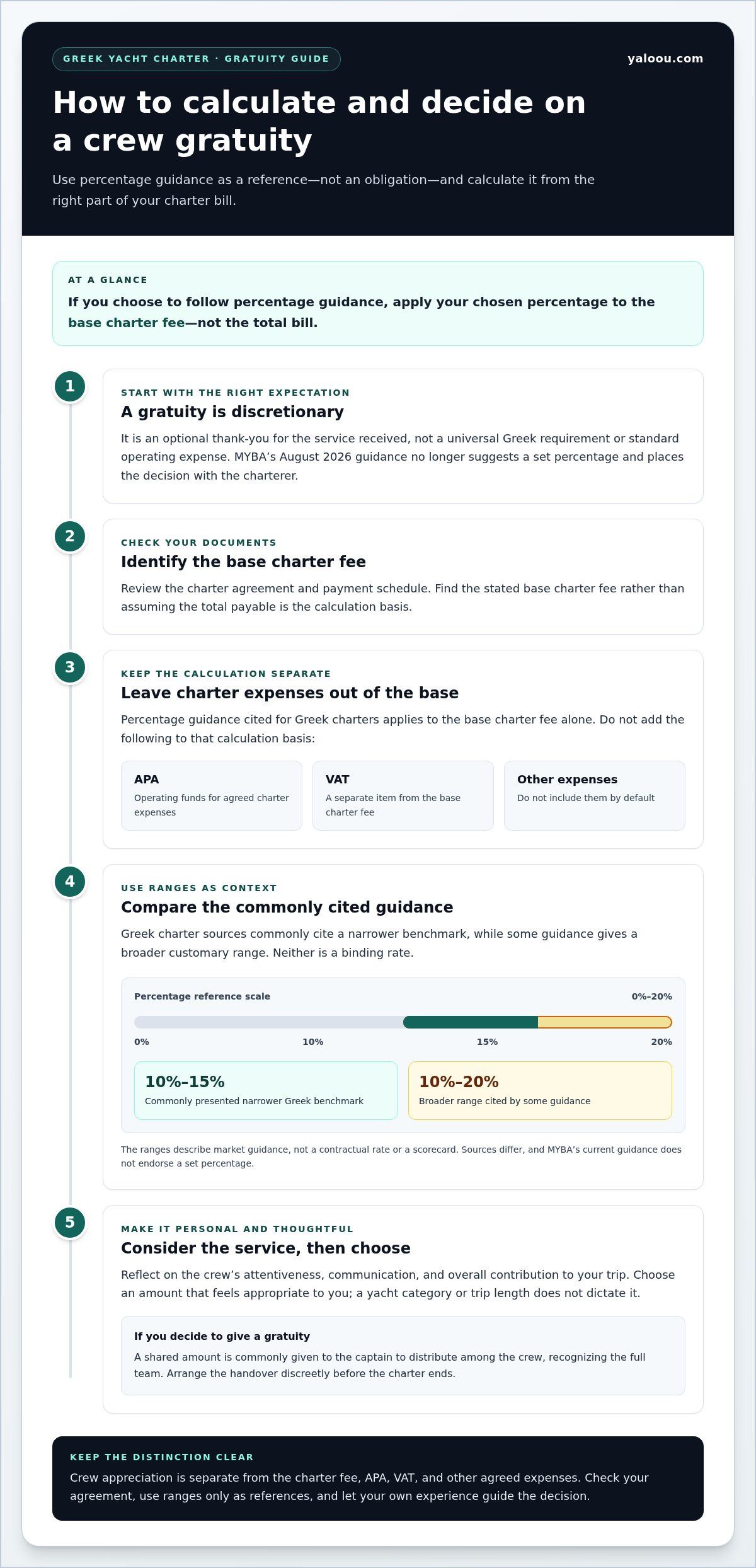
For planning, Greek charter guidance most often points to a gratuity of 10% to 15% of the base charter fee, while some sources give a wider range. YAL’OOU’s May 2026 guidance and George Yachts’ September 2026 Greek Charter Index cite 10% to 20% as a broader customary range, with 10% to 15% commonly presented as the narrower Greek benchmark. These figures describe market guidance, not a contractual rate.
The typical crew gratuity percentage on Greek charters is not set by one binding industry standard. Some resources recommend 10% to 15% for Greece, while broader Mediterranean guidance can extend beyond that. The Greek Yachting Association represents professional companies in the Greek yachting sector, but its role as an industry organization should not be mistaken for an endorsement of a specific tipping percentage. Treat published rates as reference points, and check their date and geographic scope.
What amount should a percentage be calculated against?
Where percentage guidance applies, the cited basis is the base charter fee. YAL’OOU, George Yachts, and myGreekCharter.com specify that guests should not calculate a suggested gratuity against the total charter bill. Their guidance excludes the Advanced Provisioning Allowance (APA), Value Added Tax (VAT), and other extra expenses from the calculation basis.
That matters because a total payable may combine several different items. The APA covers operating costs, not crew appreciation. A quoted total can also include taxes or other expenses, depending on the agreement. Don’t apply a percentage from a guide to every line of your invoice by default. Instead, identify the stated base charter fee in your payment schedule and agreement. If you choose to follow percentage guidance, multiply that fee by the percentage you have chosen. If the agreement describes a different basis or treatment, pay attention to its wording before deciding.
How should guests interpret a suggested range?
A range provides context, not an automatic obligation or a scorecard. It can help you understand common practice, but it does not measure service or dictate what you must give. Consider it alongside your experience of the crew’s care, communication, and contribution to the trip.
Sources do not establish a single Greece-specific consensus. In August 2026, MYBA removed its suggested gratuity percentage and emphasized that the decision rests with the charterer. That differs from broker and charter-resource guidance that continues to cite ranges. Keep the distinction clear: an association guideline, a broker recommendation, and an individual charter agreement are not interchangeable.
For a fuller picture of how crewed yacht arrangements shape a trip, explore the private Greek yacht experiences available through YAL’OOU. Clear expectations around the charter itself make it easier to consider any gratuity calmly and personally.
How Should You Compare Service and Charter Circumstances?
A memorable charter can leave you weighing more than a percentage. Think about what the crew did, how they communicated, and how the experience felt overall. These are personal reflections, not a scoring system. Your assessment of the service should inform your gratuity, not mechanically determine it.
Keep that assessment separate from the yacht category, trip length, and way an experience is advertised. Those details describe the charter; they do not tell you how attentive, thoughtful, or professional the service felt. The typical crew gratuity percentage on Greek charters is a reference point. Your decision can reflect the experience itself without turning the range into a rating scale.
Consideration: Care and attentiveness. Reflect on whether the crew listened, anticipated reasonable needs, and helped the trip feel comfortable. Look at the pattern of service rather than one isolated moment.
Consideration: Communication. Consider whether information was clear and questions or changes were handled thoughtfully. Good communication can shape the experience, even when it happens quietly in the background.
Consideration: Professionalism and overall experience. Think about how the team worked together and whether the charter felt well cared for from your perspective. One highlight need not outweigh the rest of the trip.
Consideration: Charter circumstances. Note whether the guidance you have read addresses a weekly charter or a shorter experience, and whether it refers to Greece specifically. Treat those details as context, not a verdict on service.
How does crew service shape a personal decision?
Look back at the experience as a whole. Was the crew considerate? Did they communicate with care and handle their responsibilities professionally? Your answers can help you decide what feels appropriate, without scoring individual team members or assuming how a gratuity will be distributed. A gratuity is appreciation after the experience, not a payment that guarantees a particular standard of service.
Does charter length change how guidance applies?
Check the scope of the source before applying its advice. A recommendation written for a weekly charter may not explain how to approach a shorter trip, and the available guidance does not establish that one percentage formula transfers directly between them. Likewise, a yacht’s category or advertised experience does not determine the quality of service. Let the source frame expectations, then make your own considered decision.
Compare like with like: service with service, and guidance with the kind of charter it actually covers. If your trip differs from the source’s example, don’t force a direct comparison. Use the recommendation as background, reflect on the care and communication you experienced, and choose an amount that feels considered rather than automatic. That keeps your appreciation personal and grounded in the trip you took.
How to Decide and Give a Crew Gratuity Respectfully
A calm decision starts before the final moments onboard. Review the terms, identify guidance that fits your charter, and consider the experience as a whole. You do not need to settle on an amount under pressure or treat a suggested percentage as a fixed bill.
A calm checklist before deciding
Use these steps to keep the decision clear and personal:
- Review the agreement. Note which amounts are contractual charges and which, if any, are described as a voluntary gratuity. Keep operating expenses separate from crew appreciation.
- Consult relevant guidance. If you use a percentage, check that the source is current, Greece-specific where possible, and clear about the charter type and calculation basis.
- Reflect on the service. Consider the crew’s care, professionalism, communication, and the overall guest experience. Look at the full trip rather than one isolated moment.
- Choose freely. Decide whether to give a gratuity and what feels appropriate to you. Guidance can provide context, but it does not make the choice for you.
- Plan a discreet handover. Current Greek charter guidance describes giving one amount to the captain at the end of the charter so it can be shared with the crew. Cash in euros is often preferred; some sources say a wire transfer may be arranged. Follow the practical arrangements that apply to your charter.
YAL’OOU and George Yachts describe the captain handover as common practice, not a universal rule. A single envelope with a brief thank-you note can be a considerate option, but it is not compulsory. The aim is to express appreciation without singling out crew members or creating an uncomfortable moment.
What if service did not meet expectations?
You are not obliged to follow an unsupported fixed percentage. Consider what fell short and how it affected the overall experience, then decide according to your own judgment. If you want to raise a concern, describe it calmly to an appropriate charter contact, such as the person coordinating your arrangements. Keep the gratuity decision separate from any conversation about service, and do not assume a particular resolution.
If you are uncertain, think it through before the charter ends so you can act without rushing. The typical crew gratuity percentage on Greek charters may offer a reference, but your agreement, relevant guidance, and personal experience all matter. Explore YAL’OOU’s Greek yacht experiences to plan a private sailing experience shaped around your preferences.
Plan a Greek Yacht Experience with Clear Expectations
A considered gratuity decision starts with clear expectations, not a fixed formula. Before departure, understand the written terms of your charter. During the trip, notice how the crew’s care and communication shape your experience. If you use percentage guidance, make sure it is current and relevant to your charter. The typical crew gratuity percentage on Greek charters offers context, but your agreement and personal judgment matter more than treating a range as an automatic charge.
What to clarify in your own charter planning
Read the payment terms before you set sail. Identify the base charter fee, any stated operating expenses, and whether the agreement says anything about gratuity. These categories serve different purposes. General industry guidance can help frame a voluntary gesture, but it does not replace the terms of your individual charter.
- Know which payments are specified in the agreement and which are discretionary.
- Check that any gratuity reference applies to Greece and to a comparable charter arrangement.
- Leave room for your own assessment of the crew’s service and the experience as a whole.
This planning step removes guesswork later. It also lets you enjoy the trip without trying to interpret an invoice or make a rushed decision at the end. Clear terms support a relaxed charter, while a personal gratuity decision can remain just that: personal.
Make expectations part of a thoughtful experience
Charter planning involves more than payments. Understanding the itinerary, onboard arrangements, and crew coordination can help you settle into the experience with confidence. YAL’OOU coordinates crews and charter logistics with a focus on personal service and authentic Greek hospitality. The aim is an unhurried experience, without prescribing how guests should express appreciation.
As your trip unfolds, let your own experience guide any gesture. Notice the attentiveness, communication, and care you receive, then decide freely. There is no need to turn appreciation into a transaction or decide before you have experienced the charter. A thoughtful thank-you can reflect the character of your trip, while clear expectations keep practical details in perspective.
If you are beginning to plan time on the water, explore private yacht experiences in Greece and find an experience that fits the way you want to discover the islands. Thoughtful planning leaves more space to enjoy the journey, connect with the crew, and make any final decision with ease.
Set Sail with Confidence and Space to Enjoy
Keep the typical crew gratuity percentage on Greek charters in perspective as you plan. A thoughtful charter is not defined by a tip calculation. It is shaped by the moments you share, the places you discover, and the care that helps you feel at ease onboard. Give yourself room to be present, then decide how you would like to express appreciation based on the experience you actually had.
With YAL’OOU coordinating crews and charter logistics, each private yacht experience is shaped around personal service, privacy, and authentic Greek hospitality. That thoughtful foundation can help make the journey feel unhurried, from the first planning details to time spent exploring Greece by sea.
Explore private yacht experiences in Greece and start imagining a trip that feels distinctly yours. A little clarity before departure leaves more space for discovery, connection, and the freedom to enjoy the journey.
Frequently Asked Questions
Can gratuity expectations change if a Greek charter itinerary changes?
A route change can affect how you interpret advice, but it does not automatically create a new gratuity rule. If weather or logistics shift a planned journey between places such as Mykonos and Paros, consider whether the charter arrangement itself changed and whether the guidance you are using fits the revised trip. Keep any discussion of amended terms separate from your personal decision to recognize the crew.
What should guests do if they disagree about a shared crew gratuity?
Discuss the difference privately before anyone presents a shared amount. Guests can explain what feels comfortable, agree on whether to contribute together, or keep their decisions separate without pressuring one another. If the group chooses a collective gesture, a designated guest can deliver it discreetly. Avoid presenting disagreement to the crew as a dispute they are expected to settle.
Can guests recognize one crew member while still considering the whole team?
Yes. You can personally thank a crew member or write a note recognizing a specific kindness while keeping any gratuity intended for the crew separate. Greek charter guidance commonly describes handing a shared gratuity to the captain for distribution, rather than tipping individuals in a way that could affect team dynamics. Do not assume how an individual amount will be divided; express specific thanks directly instead.
Is it appropriate to discuss crew gratuity privately during a charter?
Yes. Guests can discuss their plans discreetly, away from the crew, especially if they are coordinating a shared contribution. Keep the conversation respectful and free of pressure. Current MYBA guidance says gratuities are at the charterer’s discretion and must not be solicited by the crew. If you need to understand the practical handover, raise the question tactfully with the captain or charter contact.
What happens if the charter agreement and general tipping advice differ?
Read the agreement closely and distinguish its specified payments from voluntary gratuity advice. General recommendations describe customary practice, while your signed terms relate to your particular booking. If a clause appears to make a gratuity compulsory or the wording is unclear, do not rely on a general article to interpret it. Seek clarification through the appropriate charter contact before the final handover.
Should guests use the same gratuity approach for every Greek charter?
No. The typical crew gratuity percentage on Greek charters is a reference, not a formula that must fit every trip. Your experience, the charter arrangement, and the scope of the source can differ from one booking to another. Revisit the relevant guidance and terms each time, then decide independently. A familiar route or returning crew does not make the same gesture automatic.
Disclaimer
The YAL’OOU Travel Guide is curated with care to inspire and inform discerning travelers. While every effort is made to ensure the accuracy and relevance of the information provided, all content is offered for general guidance only and may evolve over time.
Details such as local regulations, availability, pricing, and services are subject to change without prior notice. We encourage guests to seek personalized advice and confirm arrangements directly when planning their journeys.
YAL’OOU accepts no liability for any inaccuracies, omissions, or outcomes arising from the use of this information. The Travel Guide may feature recommendations, insights, and selected third-party experiences, presented solely as a source of inspiration and not as formal endorsements.
By accessing this section of our website, you acknowledge and accept this disclaimer as part of your experience with YAL’OOU.