
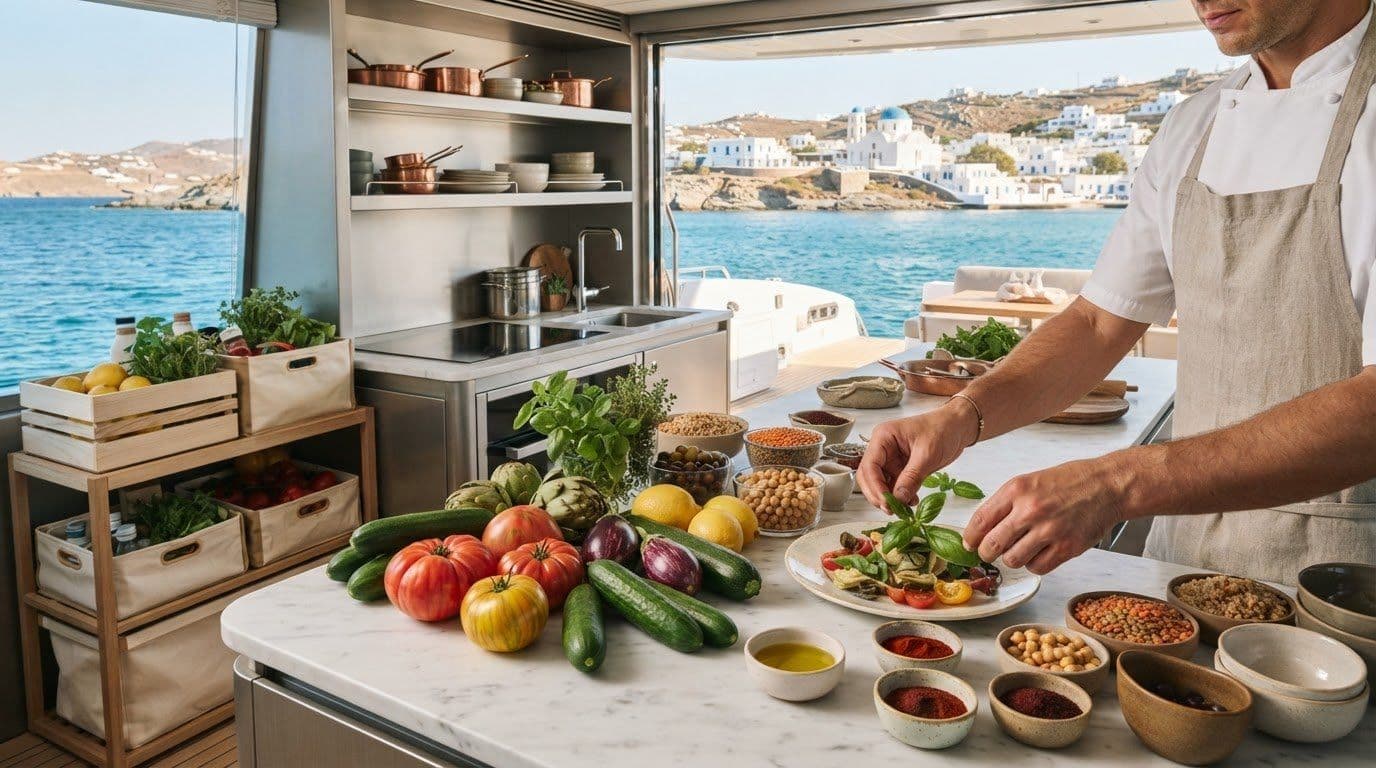
What if a vegan yacht menu could feel as varied and rooted in place as the Greek island route itself? Guests may worry that plant-based meals will become repetitive, while chefs must balance personal preferences with limited galley space and changing local availability. A memorable menu needs more than substitutions. It starts with the guest.
This yacht chef provisioning guide for bespoke vegan Mediterranean menus shows how to build satisfying meals around individual tastes, Greek ingredients, the yacht’s storage and equipment, and the charter itinerary. You’ll learn what to plan ahead, what to source along the way, and how to adapt a dish when a particular ingredient isn’t available.
From olive-oil-rich laderá and legumes to fresh produce, Greek cooking offers plenty of inspiration for menus with genuine Mediterranean character. Provision flexibly: plan for specialty and long-life items in advance, then let suitable local finds shape the days ahead. Whether you’re planning private chef services or considering the wider rhythm of a Greek yacht charter, thoughtful food planning can make each meal feel personal, relaxed, and connected to the journey.
Key Takeaways
- Use the yacht chef provisioning guide for bespoke vegan Mediterranean menus to turn guest preferences into a practical, personal menu plan.
- Build variety across meals with flexible dishes that draw on Mediterranean staples and adapt to ingredient availability.
- Compare advance ordering, island-market shopping, and a hybrid approach to match sourcing with the route and onboard storage.
- Follow a clear workflow from preference brief to onboard adjustments, separating allergies from ethical or culinary preferences.
- Coordinate the menu, provisioning approach, itinerary, and galley realities for a more considered Greek yacht experience.
What yacht chef provisioning means for a bespoke vegan Mediterranean menu
Menu planning decides what to serve; provisioning turns that plan into ingredients that can be sourced, stored, and used onboard. It includes planning, sourcing, organising, and managing food for meals throughout a charter. For a vegan menu, start with the people at the table, not a standard shopping list. A guest may love bright citrus and crisp textures but dislike creamy dishes, or prefer relaxed shared plates to formal courses. Those details guide useful choices before sourcing begins.
A practical yacht chef provisioning guide for bespoke vegan Mediterranean menus also accounts for the galley’s space and equipment. Fresh produce needs suitable storage and a clear order of use; dry goods offer more flexibility but still take up cupboard space. Choose ingredients that can work across multiple dishes where practical. A basket of herbs, for example, might bring freshness to a salad and depth to a cooked dish, rather than taking up space for only one recipe.
What makes vegan yacht provisioning different?
Vegan requirements define which ingredients to exclude. Preferences add another layer: favourite flavours, desired textures, spice tolerance, and whether guests enjoy light lunches, substantial breakfasts, or dishes made for sharing. Keeping these categories distinct helps turn a dietary requirement into a menu that feels individual rather than restrictive.
Check labels on packaged ingredients such as stocks, sauces, breads, and condiments, whose recipes can vary. Look for animal-derived components and identify suitable alternatives before building them into a dish. When substituting, preserve the ingredient’s role, whether it brings savouriness, richness, crunch, or binding. The Mediterranean diet offers a useful culinary reference, with an emphasis on plant foods such as vegetables, legumes, grains, herbs, and olive oil. Use that broad palette to create variety across meals instead of repeating the same format with minor changes.
Why the Greek island route belongs in the menu brief
The itinerary can guide a menu’s mood. A journey through Mykonos, Paros, or Antiparos might inspire relaxed shared plates, bright vegetable dishes, and meals that reflect the rhythm of the day. Treat these as creative cues, not promises that a particular ingredient will be available at a specific stop. Season, delivery timing, and local stock all affect what is practical to source, so keep the plan adaptable.
Discuss the route alongside preferences and galley limits, then separate ingredients to plan for in advance from dishes that can respond to local discoveries. The journey’s character can inform the dining experience while the sourcing plan stays realistic. That balance makes provisioning more than shopping: it turns the menu into a thoughtful part of a personal, unhurried charter.
How to design a satisfying vegan Mediterranean yacht menu
A compelling menu needs rhythm, not a parade of unrelated dishes. Plan for different moments throughout the day: a relaxed breakfast, a lighter meal between activities, something colourful to share, and a dinner with enough substance to feel complete. Then vary the ingredients and preparation methods so the menu doesn’t rely on one familiar plant-based substitute.
Menu variety comes from thoughtful combinations, not a single substitute. Pair creamy beans with crisp vegetables, tender grains with fresh herbs, or roasted produce with olives and citrus. Across the planned meals, balance freshness with richness, and soft textures with crunch. This helps simple ingredients feel considered and lets each dish contribute something distinct.
- Breakfast: Offer options such as fruit with oats, savoury toast with olives, or a grain-based bowl, guided by the guests’ tastes.
- Lighter meals: Build around salads, pulses, vegetables, and dressings that add brightness without making lunch feel insubstantial.
- Shared dishes: Combine dips, seasoned vegetables, legumes, and bread or grains, checking packaged ingredients for vegan suitability.
- Dinner: Give the meal a satisfying centre through pulses, grains, or vegetables prepared with depth, then add contrasting herbs, acidity, or crisp elements.
Think in components, too. A cooked pulse can appear in a warm dish one day and a chilled salad another, with different seasonings and textures. This kind of variation creates a distinctive menu while making each ingredient work harder.
How can Greek and Mediterranean flavours shape vegan dishes?
Greek cooking offers inspiration, but not every traditional recipe is vegan. Build from ingredient categories instead: pulses for substance, grains for a satisfying base, vegetables for colour, herbs for freshness, and olives or olive-based preparations for savoury depth. These familiar elements can take many forms, from a warmly spiced bean dish to a crisp vegetable plate with citrus and herbs. Keep the menu adaptable to the ingredients sourced for the route.
How should a chef tailor the menu to guest preferences?
Keep dietary requirements separate from dislikes and dining style. A guest may need strictly vegan meals, avoid a particular ingredient, prefer mild flavours, or simply favour informal shared plates over composed courses. These are different planning cues. Use them to guide dishes and substitutions: replace a disliked ingredient with one that brings a similar texture or flavour, while preserving the character of the meal.
Ask about favourite cuisines and meal patterns, too. Vegan guests don’t share one set of preferences. One may enjoy hearty lentil dishes; another may prefer lighter vegetable-led plates. A thoughtful yacht chef provisioning guide for bespoke vegan Mediterranean menus turns individual cues into a flexible menu rather than a generic list of plant-based dishes.
Dining is one part of a personal Greek yacht escape. Explore YAL’OOU’s curated yacht experiences for inspiration as you shape the wider journey around the moments that matter to you.
Advance orders, Greek island markets, or both: comparing provisioning approaches
Provisioning for a vegan charter along Mykonos, Paros, and Antiparos involves a choice: secure ingredients ahead, shop as the route unfolds, or combine both. The best fit depends on how tightly the menu needs to be controlled, how much storage the yacht can dedicate to provisions, and how the itinerary may change. No approach guarantees a particular ingredient, so build room to adapt into the menu.
Use this comparison to match the sourcing method to the menu and route:
ApproachPlanning flexibilityMenu controlRoute fitStorage demands
Advance ordering
Lower once choices are set
Greater control over planned items
Useful when the itinerary is clear
Needs space for provisions brought onboard
Destination-based shopping
High, with choices shaped by local finds
Less control over specific ingredients
Can respond to stops along the route
Can limit advance stock, but requires adaptable menus
Hybrid sourcing
Balances a planned foundation with in-route adjustments
Protects core menu needs while leaving room for changes
Can suit island-hopping itineraries
Requires a deliberate balance between core items and fresh purchases
A flexible sourcing plan keeps the menu anchored in guest preferences while letting the route shape what comes next. This is especially useful when a vegan dish depends on particular components: plan a reliable base, then leave room to change the garnish, vegetable, or preparation to suit what can be sourced.
When does advance provisioning make sense?
Advance planning helps establish core ingredients and reduces uncertainty around dishes that rely on specific packaged goods or pantry staples. It also lets the chef map ingredients to several meals instead of buying for isolated recipes. The yacht’s storage capacity matters: a carefully planned list is more useful than a broad stock competing for limited space. Route details matter, too, since they influence what can be carried and when the menu can respond to local shopping.
What can local markets contribute to the menu?
Shopping along the route can bring Greek island food culture into the menu through discovery and inspiration. Avoid assuming what any market will carry. Adaptable formats, such as a grain bowl or shared vegetable plate, can change with the ingredients found at each stop. Destinations such as Mykonos, Paros, and Antiparos can shape the journey’s culinary character, while the menu remains responsive to what can be sourced.
For a yacht chef provisioning guide for bespoke vegan Mediterranean menus, the hybrid approach offers a useful planning framework: secure essential ingredients in advance, then adapt the details as the journey moves between islands. It gives the menu structure without locking the route to a shopping list.
A practical yacht provisioning workflow for vegan menus
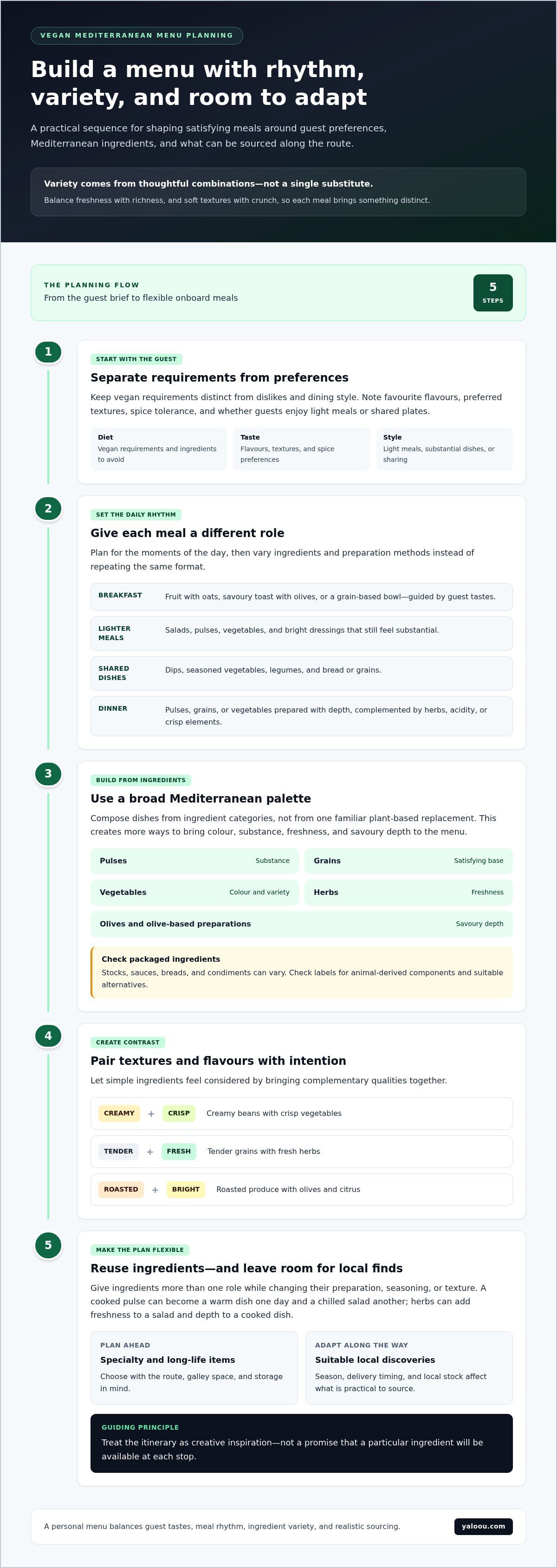
A reliable provisioning workflow connects the guest brief to the menu, sourcing choices, available storage, and the itinerary. Each stage informs the next. That way, a change in route or ingredient availability can prompt a considered adjustment rather than a scramble or a dish that no longer suits the guest. Use this sequence to keep the plan personal and workable onboard.
- Build the preference brief. Record vegan requirements, allergies, disliked ingredients, favourite flavours, and preferred cuisines as separate details.
- Clarify the dining rhythm. Note whether guests enjoy leisurely breakfasts, light lunches, shared plates, or more composed dinners, along with any occasions that may shape a meal.
- Turn preferences into dishes. Draft a varied menu, then check that each meal suits the brief and the overall plan offers satisfying textures and flavours.
- Map ingredients to the itinerary. Identify core provisions to source in advance and ingredients that could be chosen along the route. Keep alternatives beside any item that may be difficult to find.
- Fit the plan to storage. Group provisions by storage needs and meal use. Prioritise versatile ingredients and organise them so planned dishes remain practical to prepare.
- Review and adjust onboard. Revisit the menu as the itinerary and available ingredients become clearer. Make substitutions that respect guest needs and preserve each meal’s character.
What belongs in a useful vegan menu brief?
Make allergies a clear checkpoint, distinct from ethical requirements, dislikes, and culinary preferences. An allergy is not interchangeable with a preference, so record the specific allergen and the guest’s stated needs rather than relying on a broad label. Then note flavour likes, ingredients to avoid, preferred cuisines, and meal style. This detail lets the chef make deliberate menu decisions instead of assuming every vegan guest wants the same dishes.
Translate each point into an action: a disliked ingredient needs an alternative, while a preference for bright, fresh flavours can guide seasoning and dish style. The yacht chef provisioning guide for bespoke vegan Mediterranean menus works best as a planning tool, not a fixed menu template.
How should the plan adapt to galley space and route changes?
Sort ingredients by how they need to be stored and when they’ll be used. Prioritise components that can serve more than one dish, but don’t let versatility flatten the menu into repetition. For a hard-to-source ingredient, choose a backup that plays a similar role, such as adding freshness, substance, or texture. If the route shifts, reassess sourcing options and adjust dishes while keeping the guest brief at the centre.
Thoughtful onboard dining is one part of a personal Greek yacht experience. Explore YAL’OOU’s yacht experiences as you plan a journey shaped around your preferences and the pace of the itinerary.
Make bespoke vegan dining part of a personal Greek yacht experience
A considered vegan menu brings together the guest brief, the route, the sourcing approach, and what the galley can comfortably support. Each part shapes the others. A destination can inspire a dish, but the sourcing plan should stay adaptable; a guest’s preference can guide the menu, while available space influences which ingredients are practical to carry. When these decisions work in step, dining feels like a natural part of the journey rather than a separate checklist.
That attention to detail reflects YAL’OOU’s approach to Greek hospitality: private, authentic, and unhurried. A meal might reflect the mood of a day on the water without making assumptions about which local ingredients will be available. The aim is not to make every course a statement. It’s to make the overall experience feel personal, from the style of dining to the flavours guests enjoy.
How does dining connect with the charter route?
The itinerary can inform the menu’s character. A route through the Greek islands may suggest lighter, relaxed meals between stops or a leisurely shared dinner at the end of the day. Treat these as inspirations, not sourcing promises. Keep recipes flexible, and let available ingredients shape the final details. YAL’OOU’s curated yacht experiences in Greece offer a starting point for considering how destinations and pace might influence dining plans.
Pair the route with a practical provisioning approach: identify the menu elements that need planning ahead, then leave room for suitable finds along the way. This balance protects the guest-led menu while allowing the itinerary to feel open and unhurried.
What should guests consider when exploring a charter?
Start with the experience you want. Consider how much privacy matters, which destinations appeal, and whether you prefer a lively schedule or a slower pace. Share dining requirements clearly, including allergies, vegan preferences, dislikes, and favourite flavours. These details help shape a menu that fits the charter rather than relying on a standard idea of vegan dining.
On a crewed yacht, the itinerary and onboard experience are considered together. If you’re weighing up that format, a Greek yacht experience can help you picture how the route and rhythm might suit your plans. YAL’OOU offers private chef services to help shape the dining experience as part of the wider journey.
Explore YAL’OOU’s yacht experiences and start imagining a Greek escape shaped around your preferences, your pace, and the moments you want to share.
Let your Greek journey take shape around you
Let dining be part of the experience you’re designing, not a detail added at the last moment. A clear sense of the atmosphere you want onboard can guide choices about your route, the pace of each day, and the kind of meals that feel right. This yacht chef provisioning guide for bespoke vegan Mediterranean menus can be a starting point for turning those preferences into a more personal Greek escape.
YAL’OOU curates yacht experiences across Greek destinations with a focus on personal, unhurried hospitality. Its private chef services can help shape the dining experience around your plans. The right combination is the one that feels true to your group and the journey you want to take.
Explore YAL’OOU’s private yacht experiences and imagine a Greek journey shaped around your preferences. A thoughtful plan leaves room for the unexpected while making space for the moments you’ll remember.
Frequently Asked Questions
What is the difference between a vegan menu and a plant-based menu?
A vegan menu excludes animal-derived ingredients, while “plant-based” can describe a way of eating centred on plants and may be used less precisely. For charter planning, don’t rely on the label alone. Clarify whether the guest wants every dish fully vegan, whether honey is acceptable, and how they approach items such as wine or packaged foods. Clear definitions help prevent mismatches in cooking and provisioning.
Can Greek and Mediterranean cuisine be adapted into a fully vegan menu?
Yes, Greek and Mediterranean flavours can inspire a fully vegan menu, but traditional recipes need to be checked individually. A preparation that appears vegetable-led may use animal-derived stock, cheese, or another ingredient. A chef can adapt the flavour profile with olive oil, herbs, citrus, and suitable plant-based ingredients. For packaged items, read the ingredient information rather than assuming a product is vegan from its name.
How can a yacht chef make vegan meals varied and satisfying?
Vary the cooking method and the role each ingredient plays, not just the recipe name. For instance, serve beans as a warm, seasoned centrepiece in one meal and a cool, herb-forward side in another. Add contrast with crisp elements, acidity, or a richer sauce. A yacht chef provisioning guide for bespoke vegan Mediterranean menus can help turn guest preferences into a plan with distinct flavours and textures across the charter.
What happens if a planned vegan ingredient is unavailable on a Greek island?
Adjust the dish around the missing ingredient’s purpose. If it provides crunch, choose another suitable crisp element; if it adds substance, reconsider the dish’s base. Along a route that includes Mykonos, Paros, or Antiparos, keep a backup idea for any ingredient that may be difficult to source. For allergy-related exclusions, substitutions must also respect the guest’s stated requirements.
How should guests communicate vegan preferences and food allergies before a charter?
Share preferences in writing before menu planning, and separate allergies from ethical choices, dislikes, and favourite flavours. Name each allergy clearly and include any relevant information about cross-contact concerns, rather than grouping it under “dietary preferences.” Then add useful details such as preferred cuisines, ingredients to avoid, and whether guests enjoy shared plates or individual courses. This gives the chef specific guidance for planning and ingredient checks.
Can local Greek ingredients be used in a bespoke vegan yacht menu?
Yes, local ingredients can inspire the menu when sourcing conditions allow, but don’t assume a particular item will be available. Planning may centre on Mykonos, Paros, or Antiparos, or involve destinations such as Athens, Aegina, Poros, Spetses, Syros, Tinos, Sifnos, Serifos, Milos, Poliaigos, Kimolos, Santorini, Ios, Koufonisia, Amorgos, Crete, Corfu, or Zakinthos. Keep the menu responsive to the route and what can be sourced.
How does yacht galley storage affect vegan provisioning?
Galley storage affects which ingredients are practical to carry and how the menu should use them. Keep chilled, fresh, and dry provisions organised according to their storage needs, and prioritise ingredients that can support more than one planned dish. A clear use order can help the chef manage delicate items alongside longer-lasting staples. Let the yacht’s actual storage space guide the provisioning plan, not an assumed capacity.
Disclaimer
The YAL’OOU Travel Guide is curated with care to inspire and inform discerning travelers. While every effort is made to ensure the accuracy and relevance of the information provided, all content is offered for general guidance only and may evolve over time.
Details such as local regulations, availability, pricing, and services are subject to change without prior notice. We encourage guests to seek personalized advice and confirm arrangements directly when planning their journeys.
YAL’OOU accepts no liability for any inaccuracies, omissions, or outcomes arising from the use of this information. The Travel Guide may feature recommendations, insights, and selected third-party experiences, presented solely as a source of inspiration and not as formal endorsements.
By accessing this section of our website, you acknowledge and accept this disclaimer as part of your experience with YAL’OOU.