
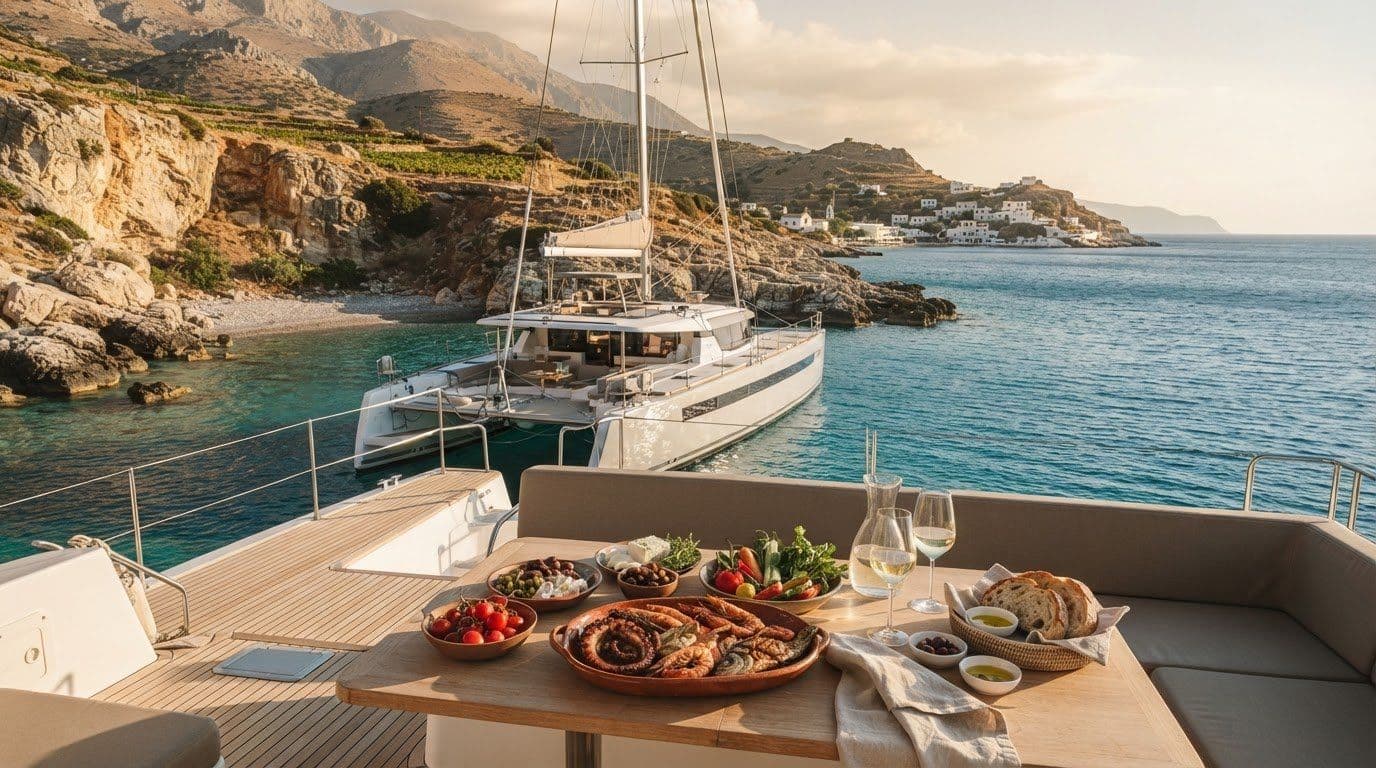
A yacht charter for a gastronomy and wine tour of Crete can follow a seven-day itinerary covering 198.8 nautical miles, with an average of 1 hour and 25 minutes of cruising per day. That leaves room to shape the experience around the coast as well as the table. But the boat and what’s excluded from the charter matter as much as the route.
A yacht charter for a gastronomy and wine tour of Crete can bring coastal sailing, local meals, and shore visits into one itinerary. What’s served aboard depends on the specific charter: one listed Greek charter includes prepared breakfast and lunch, while evening meals are excluded. This guide covers how to plan dining around sailing, what to check in the inclusions, and how to fit food and wine stops into a Crete route.
Key Takeaways
- Match the route to the experience you want, from Crete’s food-focused stops to wine tastings among the Cyclades.
- Choose a crewed yacht or catamaran based on your group’s preferred onboard space, pace, and atmosphere.
- Plan meals around sailing and shore time so dining feels like part of the journey, not a scheduling squeeze.
- Separate included meals and drinks from restaurant dinners and other possible charter supplements before you set your budget.
- Use the article’s planning guidance to shape a daily charter or a longer crewed escape around your travel style.
Crewed charter destinations in Greece and the Mediterranean
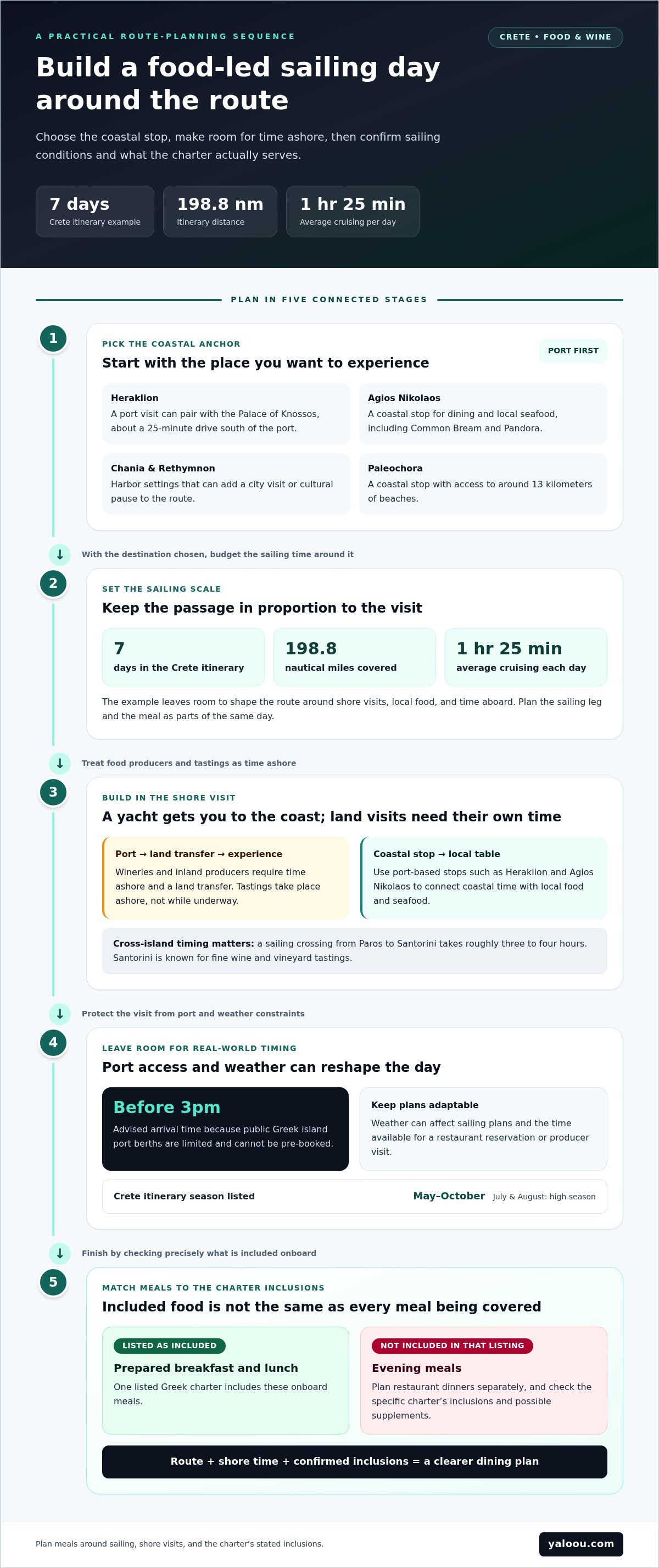
A Crete yacht itinerary can cover 198.8 nautical miles in seven days, averaging 1 hour and 25 minutes of cruising per day. That pace leaves room to build the route around shore visits, local food, and time aboard. Heraklion, Agios Nikolaos, Rethymnon, and Paleochora each offer a different starting point for exploring Crete’s coastline.
Greek yacht itineraries can link destinations across the islands, but allow for the time between them. Santorini is known for fine wine and vineyard tastings, while Paros and Antiparos offer options for island-hopping routes. A sailing crossing from Paros to Santorini takes roughly three to four hours, so account for travel time when planning visits and meals.
For a visual introduction to food-focused travel at sea, watch Culinary Discovery Tours | Food and Wine Trail Tour from Oceania Cruises:
On a crewed charter, the skipper operates the vessel and guests follow the onboard safety briefing. To plan a booking, prepare your travel dates, party size, route preferences, and dietary needs. Anyone taking command instead of traveling as a guest must meet the applicable qualification rules for that vessel.
Heraklion is a practical stop for combining a port visit with local culture: the Palace of Knossos lies about a 25-minute drive south of its port. Agios Nikolaos suits a route focused on coastal dining and seafood, with Common Bream and Pandora among fish found in its waters. Rethymnon adds a historic harbor setting, while Paleochora brings access to around 13 kilometers of beaches.
For a food and wine route, use Heraklion and Agios Nikolaos as port-based stops, then shape the sailing legs around weather and desired time ashore. Rethymnon can add a cultural pause, and Imeri Gramvousa offers a striking landmark: its Venetian fortress stands 137 meters high. The shipwreck near the island dates to 1968.
Season also shapes the experience. A Crete yacht itinerary lists May through October as the best time to visit, with July and August as high season. Choose the route first, then align port calls, meals, and shore visits with the sailing plan. That leaves time to enjoy a meal ashore without squeezing it between stops.
For a crewed option, Greek motor yacht Pareaki II is 39.08 meters long. Greek sailing catamaran Serenity accommodates 8 guests in four cabins and has a crew of three.
Private crewed yacht and catamaran charters in Greece
Private crewed charters across Greece include sailing yachts, motor yachts, and catamarans. The right vessel depends on your group size, preferred pace, and how you plan to spend time aboard.
Crewed Yacht and Catamaran Options
A crewed charter combines a private vessel with a professional crew, leaving guests free to focus on sailing, island visits, and meals. Sailing yachts typically suit four to eight guests, while gulets and crewed motor yachts accommodate six to twelve. Compare cabin layouts, shared spaces, and the kind of journey you want before choosing.
Greek fleets include sailing and power catamarans, along with sailing and motor yachts. For a smaller party, a sailing yacht may suit the group; a larger gathering may prefer the capacity of a gulet or motor yacht. Consider whether you value time under sail, relaxed evenings aboard, or quicker travel between Aegean islands.
Charter Types and Prices
Daily charters suit a focused outing, while weekly crewed rentals leave room for multiple island stops. Vessel category, trip length, dates, guest count, crew arrangements, and inclusions all affect the charter price. The amount is provided after a quote request and depends on those details.
Compare the full arrangement, not just the vessel name. Check which meals, drinks, and onboard services are covered, and separate those inclusions from shore dining and other extras. This helps you plan a food-led sailing holiday without assuming that every evening meal or tasting is included.
Timing also changes the character of a Greek charter. Late June through September is presented as the most reliable season for Cyclades sailing conditions and warm evenings for deck tastings. July temperatures in Greece can reach 90ºF, with an average around 81ºF, so plan outdoor dining with shade and flexible timing in mind.
Summer weather deserves attention, especially in the Cyclades. The meltemi can reach 10-45 knots, peaks in July and August, and occasionally reaches Force 9. These conditions can influence a vessel’s route and time under sail. Keep the day’s plan adaptable, and let sailing conditions guide whether an island stop or a relaxed evening aboard makes more sense.
Choose your dates and group size first, then compare vessel styles and inclusions against your priorities. To explore options for shaping a Greek island trip around your interests, browse curated island experiences.
Coordinating dining with the route and schedule
Plan meals around the day’s sailing, time ashore, and places you want to experience. On Crete, Heraklion, Chania, and Agios Nikolaos can serve as anchors for a food-led itinerary.
Routes to Culinary Destinations
For food producers and culinary stops, choose a port call first, then plan the land visit from there. Heraklion can pair a city stop with the Palace of Knossos, about a 25-minute drive south of the port. Chania and Rethymnon offer different harbor settings, while Agios Nikolaos connects a coastal stop with local seafood.
A yacht reaches coastal ports and anchorages; wineries and inland producers require time ashore and a land transfer. Public Greek island port berths are limited and cannot be pre-booked, so arriving before 3pm is advised. Weather can also affect sailing plans and the time available for a restaurant reservation or producer visit.
Wineries and Wine-Tasting Stops
Treat a vineyard visit as a shore-based stop, with the port call and land transfer shaping the day. A yacht offers access to coastal towns, but tastings take place ashore, not while underway. Allow time for the journey, the tasting, and a relaxed return to the vessel.
Choose a wine experience that fits the route and schedule, then coordinate it with sailing and meals. Santorini, elsewhere in Greece, is known for fine wine and vineyard tastings. For a Crete-focused trip, plan a wine stop around a Crete port call instead of adding a long crossing between islands.
Local Foods, Markets, and Restaurants
Use local stops to bring regional food into the itinerary. Common Bream and Pandora are among the fish found in waters around Agios Nikolaos, making seafood a natural topic for a local restaurant meal. In Heraklion, Kirkór pastry shop has operated since 1922; in Chania, Iordanis bakery has operated since 1924.
Plan a market visit or restaurant meal as a shore activity, with time to return aboard. A prepared meal on the yacht can suit a sailing day, while a restaurant reservation makes for a dedicated evening ashore. Share dietary preferences and preferred meal times when planning the schedule.
Itinerary Length
A seven-day Crete yacht itinerary gives the route time for multiple port calls and culinary stops. One listed itinerary covers 198.8 nautical miles, with an average cruising time of 1 hour and 25 minutes per day. Use that structure as a planning example, not a requirement for every trip.
A shorter charter can focus on one coastal area and fewer shore visits. Longer plans allow more flexibility for dining, ancient sites, and producer visits, but each extra stop requires sailing and transfer time. Keep the schedule flexible so weather or port conditions don’t compress a tasting, meal, or return to the vessel.
Included meals and drinks
Meal inclusions shape the rhythm of a Crete cruise, especially when shore visits compete with time aboard. One listed Greek yacht charter includes prepared breakfast and lunch, while evening meals are excluded. Use this as an example, then review the specific charter’s meal and beverage inclusions separately.
Prepared breakfast can simplify the start of a sailing day, and lunch aboard may leave more time for a swim stop or coastal passage. On a western Crete route, decide whether lunch should be served before departure, during a quiet stretch, or after arriving near shore. The skipper’s schedule and sailing conditions influence the timing.
Plan evening dining separately. In the listed Greek charter example, evening meals are excluded, while restaurant reservations featuring local gastronomy are included. The reservation and the meal itself are separate. On a Crete itinerary, coordinate restaurant timing with the port call and return aboard rather than assuming dinner will be served on the yacht.
Review drinks separately. A prepared meal doesn’t indicate which drinks are available or included. Before departure, map out onboard provisions, drinks served with meals, and bottles planned for a tasting. This helps avoid assumptions about wine, water, coffee, or other refreshments.
Share dietary preferences and meal times in advance. If a guest avoids particular ingredients, that can guide meal planning before provisions are arranged. A private chef can align prepared dishes with the group’s preferences and sailing schedule. For a wine-focused stop, distinguish shore tastings from drinks intended to be served aboard.
A practical planning sequence keeps the food schedule clear:
- Separate breakfast, lunch, and evening dining in the itinerary.
- Identify which meals are prepared aboard and which are planned ashore.
- List drinks by type and by when they’ll be served.
- Match restaurant reservations and tastings to port calls and sailing time.
The same planning approach works whether a charter starts near Athens or focuses on Crete. An Athens departure may involve a different route and provisioning plan, so don’t assume arrangements carry over from one cruise to another. On a long sailing day, meal times may also need to shift around the vessel’s schedule.
For a food-led trip, build the menu and beverage plan around the itinerary. Mark restaurant evenings, prepared meals, and tastings as distinct experiences. Planning these details before boarding helps guests enjoy each meal without confusing onboard service with shore dining or assuming every drink is included.
Charter exclusions and supplements
A charter’s headline rate may not cover every expense along the itinerary. For a Crete food and wine trip, distinguish the yacht arrangement from port charges, dining ashore, and any supplements. This makes it easier to plan costs without assuming every stop or service is included.
Start with the written inclusions and exclusions. Mark each item as included, excluded, or charged separately, then group it by when it may arise: before departure, aboard, at a marina, or ashore. For example, prepared meals may be included while restaurant dinners are excluded. Treat each item as specific to that charter, not as a universal rule for Greece.
Port and Mooring Costs
The amount depends on the stop and vessel, so include port calls in your itinerary review. A Cyclades route may involve different port arrangements from a Crete-focused cruise.
Public berths are limited and cannot be pre-booked; arriving before 3pm is advised. This can affect the day’s timing, especially if a restaurant reservation or tasting follows arrival. Build a sensible buffer between reaching a marina and any shore plan instead of scheduling each activity back-to-back.
Supplements and Excluded Items
A 40% single supplement is excluded from the listed Greek yacht charter inclusions. That example shows why occupancy terms deserve a close read: a solo traveler’s supplement is separate from the base inclusions. Check how the charter defines occupancy and which charges apply to the arrangement you’re considering.
Review dining and drinks separately from port costs. The listed Greek charter includes prepared breakfast and lunch, but excludes evening meals. It also includes evening restaurant reservations featuring local gastronomy. A reservation and the dinner bill are separate, so list them as distinct expenses.
For an Alimos departure or a Crete itinerary, use a simple planning checklist:
- Record the meals, drinks, and onboard services included in the charter.
- Separate marina and mooring charges from meals and tasting expenses.
- Identify supplements, including any single-occupancy charge.
- Match each expected expense to a route stop or service.
This approach makes exclusions visible before they disrupt a wine tasting or evening ashore. For help shaping the experience around your itinerary, explore tailored Greek island experiences.
YAL’OOU Exclusive Yachting & More: Daily Yacht Charters
YAL’OOU Exclusive Yachting & More offers Daily Yacht Charters for guests who want to explore by sea, with time for coastal stops and meals ashore. For a longer island itinerary, Weekly Crewed Yacht Rentals provide a different format for combining sailing days with food and wine experiences.
Choose a daily charter for a focused outing, or a weekly rental when you want more time to shape the route. YAL’OOU also offers high-end villa rentals and VIP ground transfers to complement a stay split between land and sea. The right fit depends on your pace, destinations, and dining plans.
To discuss a yacht experience tailored to your travel plans, contact YAL’OOU Exclusive Yachting & More or visit yaloou.com.
Shape Your Crete Escape Around What Matters Most
Start with the moment you most want to remember: a vineyard visit, a long lunch ashore, or a quiet evening aboard. Let that priority guide your route and the balance of sailing and time on land. A yacht charter for a gastronomy and wine tour of Crete feels more personal when it reflects your pace, tastes, and travel style.
For a day at sea, YAL’OOU Exclusive Yachting & More offers Daily Yacht Charters. A longer journey can take shape through Weekly Crewed Yacht Rentals, while High-End Villa Rentals can complement time spent ashore. Choose the experience that fits how you want to explore, then build the details around it.
Ready to turn your ideas into a Greek island escape? Contact YAL’OOU Exclusive Yachting & More to explore your experience, and take the next step toward a Crete journey made your own.
Frequently Asked Questions
What is the boat like?
Crete charters can use different vessel types, so the onboard setup depends on the boat selected. As one concrete Crete day-cruise example, a Beneteau cruiser built in 2016 has two 200-horsepower engines and a toilet aboard. Children on that cruise must wear life vests. For a gastronomy-focused outing, consider how the boat’s layout supports dining, relaxing between stops, and moving comfortably around the deck.
What yacht charter options are available in Crete, and what are their prices?
Options include a focused daily charter or a longer crewed rental, depending on the trip you want to plan. Charter prices depend on factors such as vessel type, dates, duration, guest count, and inclusions; the price is provided after a quote request. Compare the route and inclusions alongside the vessel, especially for a private food and wine experience around Crete.
What are the best months and weather conditions for a yacht charter around Crete?
May through October is listed as the best time to visit Crete by yacht, with July and August as high season. Plan your route around the day’s wind and sea conditions, which affect sailing comfort and the time available ashore. A flexible itinerary leaves room to adjust port stops, tastings, and restaurant plans.
Do yacht charters in Crete offer chefs, wine pairings, or food and wine excursions?
YAL’OOU offers Private Chef Services for guests who want dining planned around their charter. A yacht charter for a gastronomy and wine tour of Crete can also include shore-based food or vineyard visits as itinerary activities, rather than treating them as onboard catering. Share dietary preferences, wine interests, and the occasion when planning, so meals and stops can be considered together. Keep onboard dining separate from restaurant meals and tastings ashore.
What licenses, safety rules, and booking requirements apply to yacht charters in Crete?
On a crewed charter, the skipper operates the vessel and guests follow the onboard safety briefing. Anyone taking command must meet the qualification rules that apply to the vessel. To plan a booking, prepare your travel dates, party size, route preferences, and dietary needs.
What are the best wineries and wine-tasting experiences accessible by yacht in Crete?
Plan a vineyard visit as a shore-based stop from a Crete port, allowing time for the land transfer, tasting, and return to the yacht. No specific Crete wineries are identified here; Santorini is noted for vineyard tastings, but it lies elsewhere in Greece.
Disclaimer
The YAL’OOU Travel Guide is curated with care to inspire and inform discerning travelers. While every effort is made to ensure the accuracy and relevance of the information provided, all content is offered for general guidance only and may evolve over time.
Details such as local regulations, availability, pricing, and services are subject to change without prior notice. We encourage guests to seek personalized advice and confirm arrangements directly when planning their journeys.
YAL’OOU accepts no liability for any inaccuracies, omissions, or outcomes arising from the use of this information. The Travel Guide may feature recommendations, insights, and selected third-party experiences, presented solely as a source of inspiration and not as formal endorsements.
By accessing this section of our website, you acknowledge and accept this disclaimer as part of your experience with YAL’OOU.