
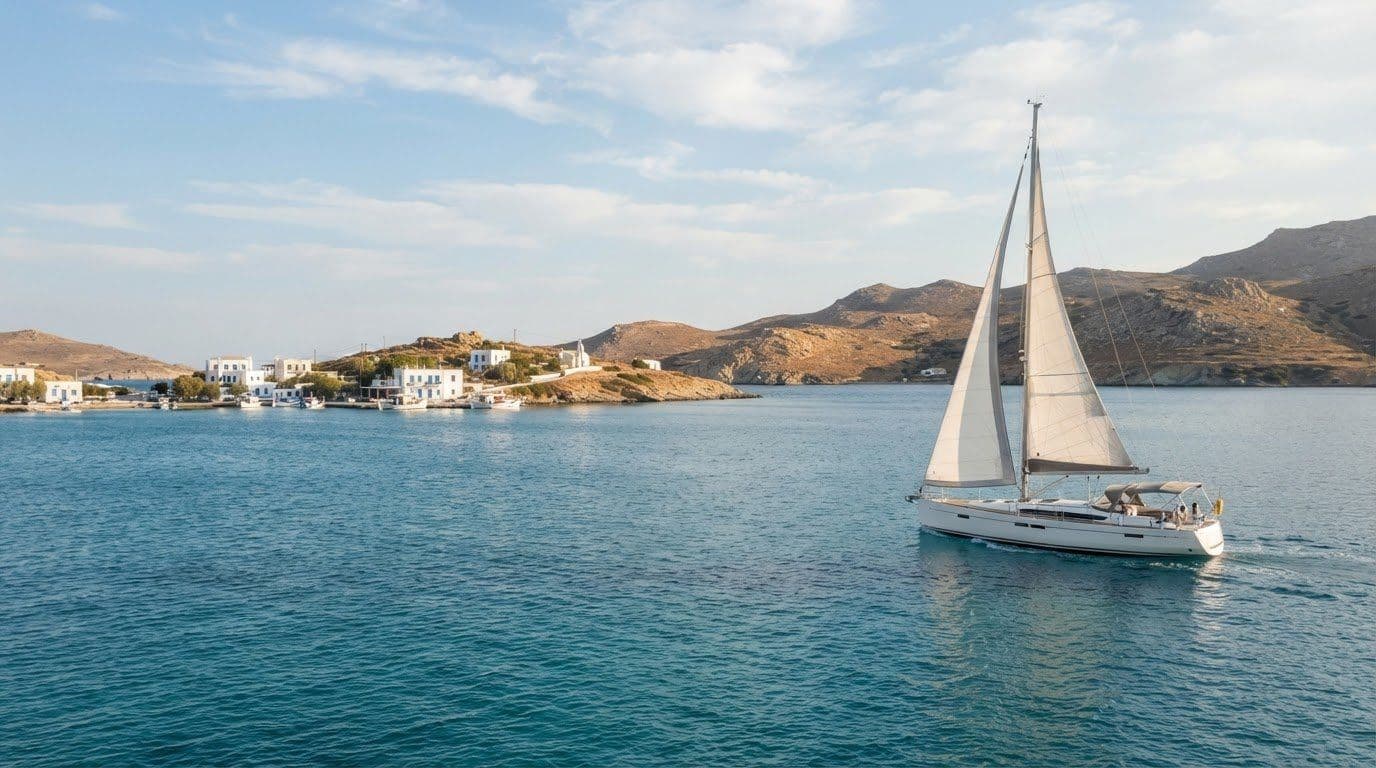
For quieter sailing, the best time to visit Greece is usually April to May or September to October. The shoulder season benefits for yachting in Greece include fewer crowds and, compared with peak summer, generally lower charter rates. June can also be a useful transition month, though weather and seasonal activity vary across the islands.
Peak summer brings hot weather and lively harbors. But if you prefer more breathing room on board and ashore, the months around summer can offer a rewarding balance of sailing time, sunshine, and a calmer pace.
Here, you’ll find when Greece’s shoulder season falls and what to expect from the weather and sailing conditions. We’ll also explain how flight prices and yacht charter costs compare with peak summer, helping you weigh the trade-offs and choose a time that suits your trip.
Key Takeaways
- Compare April-May and September-October to find a quieter sailing window that suits your plans.
- Factor in the Meltemi: its strength and timing can shape routes, crossings, and how comfortable sailing feels.
- Autumn can bring calmer anchorages and lighter crowds, while conditions differ between Greek island regions.
- Season affects charter costs and travel planning; weigh those changes against the weather and experience you want.
What are the sailing conditions in Greece?
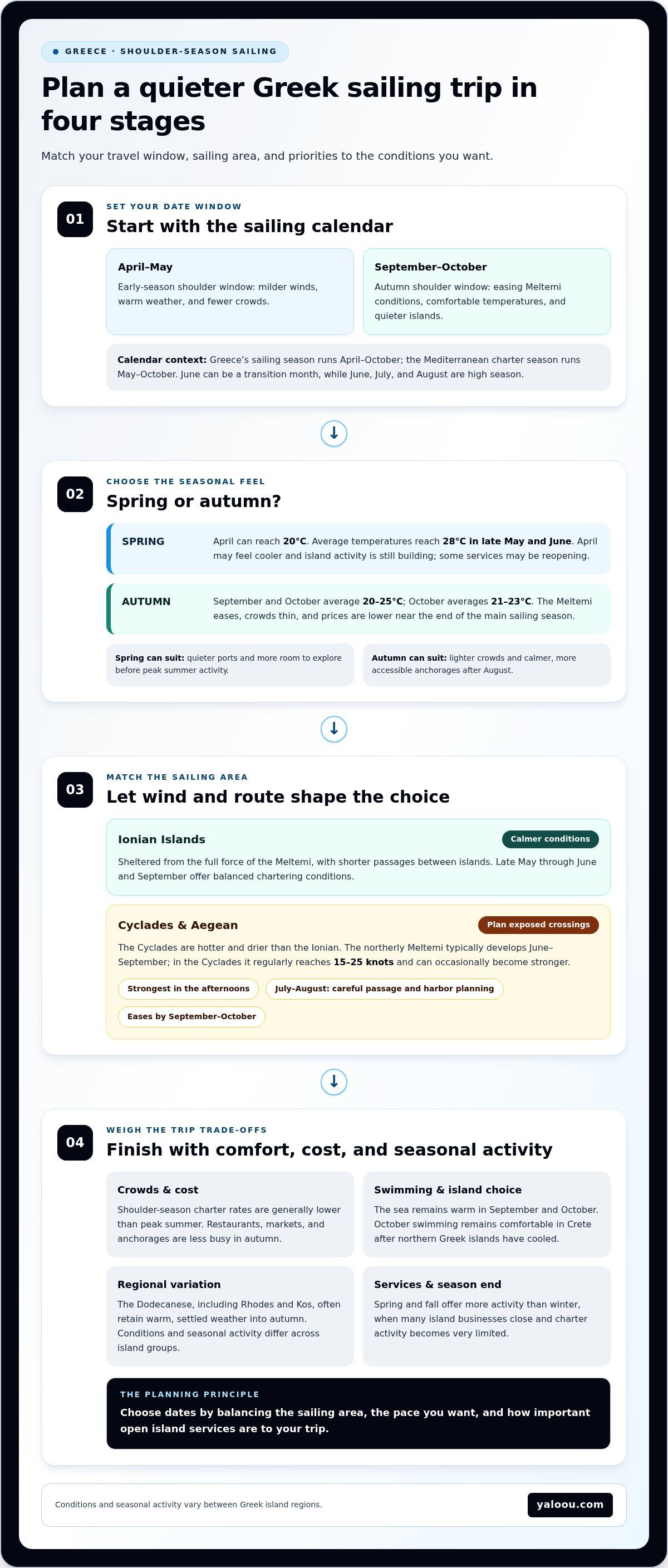
During shoulder season, Greece offers milder winds in spring and easing Meltemi conditions in autumn, with warm weather and quieter islands. From November through March, conditions turn colder, wetter, and windier; winter temperatures are 10-15°C from December through February.
Meltemi Winds and Sailing Conditions
The Meltemi is a strong northerly wind across the Aegean that typically develops from June through September. It matters most when planning exposed crossings, especially in the Cyclades, where it regularly reaches 15-25 knots and can occasionally become stronger. The winds sweep across the Aegean from July onward and are strongest in the afternoons. July and August offer consistent sailing winds, but need more careful passage and harbor planning.
Cyclades Weather, Seas, and Swimming
The Cyclades are hotter and drier than Greece’s Ionian Islands, and September brings relatively light winds for sailing. The Meltemi has eased by September and October, while temperatures remain comfortable and the islands grow quieter. Average temperatures in September and October are 20-25°C, and the sea remains warm for swimming and water sports. Clear waters during April-May and September-October also support snorkeling, giving crews options beyond time under sail.
Spring Sailing and Quieter Islands
April, May, and early June bring milder winds, warm weather, and fewer crowds across Greece. April temperatures can climb to 20°C, while average temperatures reach 28°C in late May and June. These conditions make spring appealing for sailors who want to explore islands before peak summer activity. Harbors and restaurants are generally less crowded than in high summer, creating more room to linger ashore between sailing days.
Autumn Sailing and Reduced Crowds
By September and October, the Meltemi has eased, temperatures remain comfortable, and islands are quieter. October averages 21-23°C, with lighter crowds and lower prices near the end of the main sailing season. Anchorages packed in August become quieter and more accessible as winds subside. October swimming remains comfortable in Crete after northern Greek islands have cooled, so the sailing area can shape the balance between warm-water stops and quieter routes.
What is the weather like in Greece?
Spring and fall are generally quieter than Greece’s July and August high season. Conditions vary by island group: the Ionian tends to have calmer sailing conditions, while the Cyclades and eastern Aegean are hotter and drier. Choose your destinations with both comfort and crowds in mind.
Popular sailing destinations are generally less crowded in spring and fall than during peak summer. In September, restaurants and markets are less busy, and anchorages that filled in August become quieter and more accessible as the Meltemi eases. That can make exploring beaches and island towns feel more relaxed.
For calmer waters, consider the Ionian Islands, which are sheltered from the full force of the Meltemi and have shorter passages between islands. Late May through June and September offer balanced yacht-chartering conditions there. In the Aegean, the Cyclades suit travelers drawn to open-water island hopping, but wind conditions matter when planning exposed crossings.
Marinas, restaurants, and island services follow the seasons. Berths are easier to book during the Mediterranean low season, and restaurants and markets tend to be less crowded in September. Many Greek island businesses close in winter, so spring and fall offer more activity than the off-season.
Local culture adds another dimension to an itinerary. Athens hosts a September food festival with over 300 street food vendors, offering a lively city stop before or after time on the water. On the islands, quieter beaches and dining spots give travelers more space to explore at their own pace.
Pack for changeable days: bring light layers for cooler evenings, a light rain jacket, sun protection, and swimwear. This covers time on deck, a breezy stop ashore, and a swim when conditions invite it. Keep an extra layer within easy reach, rather than buried in your luggage.
For a trip shaped around island stops and time on the water, explore Greek island experiences that fit your preferred pace.
Shoulder-season timing in Greece
Greece’s shoulder season sits between the busiest summer weeks and the quieter winter shutdown. For yacht travel, the clearest windows are April to May and September to October, though some seasonal calendars also include June or early October.
That variation reflects the difference between the sailing season and its peak. Greece’s sailing season runs from April through October, and the Mediterranean charter season runs from May to October. June, July, and August are the high season for sailing in Greece. June may feel like a transition month, while late June can overlap with summer’s busier pattern.
In spring, April and May offer an early-season alternative to July and August. April can be cooler, and island activity is still building. May and early June bring warm, settled sailing conditions with fewer crowds than peak summer. Choose spring if you value quieter ports and more room to explore, while allowing for cooler evenings and services that may be reopening.
In autumn, September and October extend the opportunity to charter in Greece after summer demand eases. September remains popular for private yacht charters in the Cyclades, while October can suit travelers seeking lighter crowds near the season’s end. The Dodecanese, including Rhodes and Kos, often retain warm, settled weather into autumn. Island choice matters: conditions and seasonal activity differ across the Aegean, Ionian, and southern islands.
The shoulder season benefits for yachting in Greece come from matching your dates to your priorities, not chasing one perfect month. Compare the sailing area, the pace you want, and how important open restaurants and island services are to your trip. Winter is different: many island businesses close, yachts undergo annual upkeep, and charter activity becomes very limited.
For a quieter itinerary, consider April to May or September to October. Choose June if warmer conditions matter more and you’re happy with a livelier season. This distinction helps you balance the Mediterranean setting with the sailing conditions and island atmosphere you want.
What months are shoulder season for yachting in Greece?
For yacht travel, Greece’s shoulder season usually means April and May, then September into October. Some charter calendars also include June, especially early in the month. The distinction matters: Greece’s sailing season runs from April through October, while June, July, and August form the high season. Dates near seasonal boundaries can feel different from the months at their center.
April and May make up the spring shoulder-season window. April marks the start of the sailing season, but falls outside the June-to-August high season. May offers a useful middle ground for travelers seeking spring conditions before summer activity builds. Early June can extend that window, though it is closer to high season. Consider whether quieter islands or the livelier summer rhythm matters more for your plans.
September and October make up the autumn window. September is popular for private yacht charters in the Cyclades, while early October is near the end of the main sailing season. The Dodecanese, including Rhodes and Kos, can remain warm into autumn. For a later trip, the island group shapes the experience: Crete, Rhodes, and Kos offer different routes and seasonal rhythms.
There isn’t one boundary used by every seasonal description. Some include April through May and September into October; others extend the shoulder season to June or early October. A practical approach is to decide whether you want spring or autumn, then choose dates within that window. Match the sailing area and trip length to the seasonal activity you want, rather than treating every shoulder-season month as interchangeable.
These timing differences help you weigh quieter travel against the fuller summer calendar. If you’re considering a day on the water around your chosen dates, explore Greek island yacht experiences for inspiration.
YAL’OOU Exclusive Yachting & More: Daily Yacht Charters
YAL’OOU Exclusive Yachting & More helps turn your preferred Greek shoulder-season dates into time on the water. Choose a Daily Yacht Charter for a day exploring nearby islands, or a Weekly Crewed Yacht Rental for a longer itinerary shaped around your pace.
A day charter can suit travelers with limited time or plans based around one island. A longer yacht journey gives you more room to explore several stops and shape the route around the season. High-End Villa Rentals and VIP Ground Transfers can complement your time on the water with land-based accommodation and transportation.
Once you’ve chosen your travel window and the kind of sailing experience you want, explore yacht charter options. Contact YAL’OOU Exclusive Yachting & More to discuss your Greek island plans, or visit yaloou.com.
Shape a Greek escape around your own pace
Start planning with the feeling you want from the trip, not just a date on the calendar. Decide whether you want unhurried time ashore, longer stretches on the water, or a balance of both. That choice can guide your route, the rhythm of each day, and how much room you leave for spontaneous island stops.
The shoulder season benefits for yachting in Greece are greatest when your itinerary reflects your priorities. A flexible plan makes space for quiet moments, memorable meals, and discoveries that don’t need to be scheduled. Think beyond the yacht: consider how you want each day to begin, where you’d like to pause, and what would make the journey distinctly yours.
Ready to turn your ideas into a Greek island escape? Explore experiences with YAL’OOU Exclusive Yachting & More, and take the next step toward a trip that feels personal from the start.
Frequently Asked Questions
When is the best time of year to sail in Greece?
May and September suit travelers seeking warm conditions without the busiest summer atmosphere. Choose May for a spring itinerary around Paros or Antiparos, or September for Cyclades routes as the Meltemi begins easing. June, July, and August suit travelers who prefer the lively peak-season rhythm. Your ideal month depends on whether you value quieter stops, warmer swimming conditions, or summer energy most.
Why are June, July and August considered to be the peak season in Greece?
June, July, and August are Greece’s high season for sailing, with hot, dry summer weather and consistent sailing winds in the Aegean. Those conditions draw visitors to popular islands and harbors, making summer busier than spring or fall. July and August bring the strongest Meltemi conditions, so exposed crossings and crowded ports call for careful itinerary planning.
How much do yacht charter prices in Greece drop during shoulder season?
Shoulder-season charter rates are generally more moderate than summer premium rates, but there’s no single reduction that applies to every trip. The difference depends on the yacht category, travel dates, charter length, and itinerary. For a useful comparison, consider equivalent yacht types and trip durations across seasons. This shows how timing affects the overall cost without confusing seasonal changes with differences in the charter itself.
Are yacht availability and booking flexibility better in Greece’s shoulder season?
Berths are easier to book during the Mediterranean low season, which can leave more room to adapt your itinerary. Flexibility in yacht selection comes from considering different departure dates, island bases, and yacht categories. A route centered on Mykonos, for example, may suit different dates than one around Paros and Antiparos. Build your preferred route first, then allow alternatives for timing or yacht type.
What are the wind conditions and sailing risks in Greece during shoulder season?
Spring generally brings milder winds, while autumn sees the Meltemi ease. The Aegean Meltemi typically develops from June through September, and in the Cyclades it regularly reaches 15-25 knots, sometimes stronger. Wind exposure varies by route, so distinguish sheltered passages from exposed crossings when shaping an itinerary. In the Ionian, sailing conditions tend to be calmer than in other Greek regions.
What are the water temperatures and swimming conditions in Greece during shoulder season?
The sea remains warm for swimming and water sports in September and October, while the water starts warming in late May and June. Conditions vary across Greece: October swimming can remain comfortable in Crete after northern islands have cooled. For a spring trip, plan swimming as one part of the day rather than its sole focus. In autumn, southern stops can extend your time in the water.
Disclaimer
The YAL’OOU Travel Guide is curated with care to inspire and inform discerning travelers. While every effort is made to ensure the accuracy and relevance of the information provided, all content is offered for general guidance only and may evolve over time.
Details such as local regulations, availability, pricing, and services are subject to change without prior notice. We encourage guests to seek personalized advice and confirm arrangements directly when planning their journeys.
YAL’OOU accepts no liability for any inaccuracies, omissions, or outcomes arising from the use of this information. The Travel Guide may feature recommendations, insights, and selected third-party experiences, presented solely as a source of inspiration and not as formal endorsements.
By accessing this section of our website, you acknowledge and accept this disclaimer as part of your experience with YAL’OOU.