

Could seasickness prevention medication for yacht passengers in Aegean waters be the difference between a comfortable passage and a day spent feeling unwell? Yacht motion affects passengers differently, and Aegean conditions can change, particularly during the Meltemi season from May to September. It’s understandable to wonder which medication to consider, when to take it, and whether side effects such as drowsiness could affect your time on board.
The best approach is a plan, not a promise that symptoms can be prevented completely. This guide explains what to discuss with a doctor or pharmacist before departure, including medication options, timing, health conditions, other medicines, and possible side effects. You’ll also find practical non-drug measures, such as getting enough sleep, staying hydrated, and looking toward the horizon. Thoughtful preparation can help you make informed choices and feel more ready to enjoy your private yacht experience.
Key Takeaways
- Motion signals can feel mismatched even when a yacht seems calm, so comfort on board can’t be predicted by appearance alone.
- Choosing seasickness prevention medication for yacht passengers in Aegean waters is a personal decision to discuss with a doctor or pharmacist, based on health history and other medicines.
- Horizon watching, fresh air, and fewer close-focus tasks may support your plan, but they aren’t guaranteed substitutes for medical advice or medication.
- Prepare before departure: seek clinical guidance, understand the medicine’s instructions, and share relevant health needs with your travel companions.
- Thoughtful itinerary planning can help you prepare, while weather and comfort remain outside anyone’s control.
Why Seasickness Can Affect Yacht Passengers in Aegean Waters
A yacht can feel steady, spacious, and comfortable, yet a passenger may still develop nausea, dizziness, or a general sense of unease. Motion sickness is linked to conflicting information about movement reaching the brain. The CDC’s Yellow Book explains that the eyes and inner ear can send signals that don’t match, prompting symptoms in some people. Passengers on the same trip may respond differently to the same movement.
What happens when movement and perception do not match?
The inner ear helps your brain sense balance and movement, while your eyes provide another set of clues. If you’re inside the yacht looking at a still cabin while your body feels the vessel moving, those signals may not line up. Reading, scrolling, or focusing on a nearby screen can make that mismatch more noticeable for some passengers, though it isn’t a trigger for everyone.
Susceptibility to motion sickness means symptoms are possible, not inevitable. How someone feels can depend on the movement, what they’re looking at, and their individual sensitivity. If you’ve felt unwell in a car, it may be worth planning ahead, but that experience alone can’t predict exactly how you’ll feel on a yacht.
Why yacht travel in the Aegean needs realistic planning
Wind and sea conditions in the Aegean can vary. The Meltemi, a strong north wind that typically blows from May to September and peaks in July and August, can make conditions more challenging. A seasonal pattern, however, isn’t a forecast for a particular departure. Check an up-to-date marine forecast close to departure, and remember that conditions can change.
Wind, route, the yacht’s movement, and personal sensitivity all contribute to the experience. A route that seems comfortable on paper can feel different on the water, and a calm-looking setting doesn’t rule out symptoms. Planning helps you prepare, but it can’t control the weather or guarantee that a passenger will feel well.
This is why seasickness prevention medication for yacht passengers in Aegean waters belongs in a broader preparation conversation, rather than being treated as a sure fix. Consider how you’ve responded to motion before and what concerns you about the trip. Then use current conditions and professional guidance to shape your plans. It can also help to think about where you’ll spend time on board and whether close-up tasks tend to make you feel worse.
For a private yacht journey, realistic expectations are part of thoughtful preparation. Discuss health questions with a doctor or pharmacist before departure, and stay open to adjusting plans as conditions develop. The goal isn’t to assume seasickness will happen or promise it won’t. It’s to understand why it can occur and make informed choices that leave more room to enjoy your time on the water.
Seasickness Prevention Medication: Options to Discuss With a Clinician
Medication can be part of a seasickness plan, but there’s no single choice that suits every yacht passenger. A doctor or pharmacist can help weigh possible benefits against your health history, current medicines, age, and personal circumstances. Have that conversation before departure, when there’s time to understand the advice and prepare without making a rushed choice on travel day.
Common options discussed for motion sickness include antihistamine medicines and prescription treatments such as a scopolamine patch. The Mayo Clinic Motion Sickness Relief guide outlines treatment approaches, including over-the-counter and prescription options. Which option, if any, is appropriate depends on the individual, not simply on the fact that the trip is by yacht.
What to ask about before choosing a medication
A clinician or pharmacist should guide your medication choice and use. Share relevant details before settling on an option, including:
- Health conditions, allergies, and any medicines or supplements you take.
- Previous reactions to motion-sickness treatments or other medicines.
- Whether the option may cause drowsiness or affect alertness.
- Any activity restrictions or precautions that apply to that specific medicine.
Be especially clear about health concerns that could affect suitability. For example, CDC guidance cautions against scopolamine for travelers with glaucoma or a risk of urinary retention related to prostate problems. A healthcare professional can help interpret warnings for your circumstances and check for possible interactions. Another passenger’s experience is not a substitute for that review.
Why timing and instructions must be individualized
Some medicines may require planning before travel, but timing varies by product and person. Ask when the chosen option should be used, what to do if you miss the recommended timing, and what side effects to watch for. Follow the clinician’s advice and the medicine’s official instructions. Don’t guess at a schedule or apply another person’s directions to your own trip.
Drowsiness is an important point to raise. Traditional options such as dimenhydrinate and scopolamine may make some people sleepy, which can affect how alert they feel on board. The extent and practical impact can vary. Ask specifically about driving, alcohol, or other activities if they’re relevant to your plans, and follow medicine-specific warnings rather than assuming every product has the same restrictions.
For seasickness prevention medication for yacht passengers in Aegean waters, base the conversation on your own needs: what you’ve taken before, how you responded, and what you’ll be doing during the journey. Keep medication information accessible and let a travel companion know about relevant health needs, especially if side effects or symptoms could require support. As you plan, explore YAL’OOU’s Greek yacht experiences, while leaving medical decisions to a qualified healthcare professional.
Medication Versus Other Seasickness Prevention: What Each Can Do
Medication and simple onboard adjustments serve different roles. A healthcare professional can help you decide whether medicine is suitable; practical measures can help you manage your surroundings during the journey. Neither approach guarantees that symptoms won’t occur. The useful question isn’t which single method is best, but which combination fits your health needs and the trip.
ApproachWhat it can offerHow to think about it
Clinician-guided medication
An option to discuss for preventing or managing motion-sickness symptoms.
Suitability, instructions, and possible side effects depend on the individual and the medicine.
Looking toward the horizon
A visual reference that may help some passengers orient themselves to movement.
Try it from a safe, suitable spot where the horizon is visible.
Fresh air
A practical change of surroundings some passengers may find helpful.
Move to an appropriate area when it’s safe and comfortable to do so.
Reducing close-focus tasks
A break from reading or screens may reduce one possible source of visual mismatch.
Pause, look up, and notice whether that feels better for you.
Non-drug measures passengers can plan for
Before boarding, think about where you can comfortably spend time while keeping a view of the horizon. During the trip, consider stepping into fresh air or putting a book or screen aside for a while. These are practical options, not treatments that work the same way for everyone. Keep safety and the crew’s guidance in mind when changing where you sit or stand.
Health authorities such as the CDC include behavioral measures among motion-sickness strategies. That doesn’t mean these steps are proven substitutes for medication or professional advice, or that every passenger needs medicine. Your history, health circumstances, and preferences all matter. The phrase seasickness prevention medication for yacht passengers in Aegean waters describes one part of planning, not a universal recommendation.
Common assumptions to avoid
Feeling fine as the yacht sets off doesn’t establish how you’ll feel later. Conditions and movement may change during a journey, and symptoms can develop after a comfortable start. Equally, previous motion sickness doesn’t guarantee you’ll become seasick on this trip. Don’t treat another passenger’s experience as a forecast for your own.
Build a flexible plan instead. Discuss medication questions with a doctor or pharmacist, follow the specific medicine’s official instructions if one is recommended, and consider practical adjustments you can make onboard. If symptoms arise, reassess what feels manageable and seek appropriate help. No single technique, whether a medicine or a change in routine, can promise complete prevention. A thoughtful mix of options gives you a realistic way to prepare without letting seasickness dominate the journey before it begins.
A Practical Before-and-During-Trip Plan for the Aegean
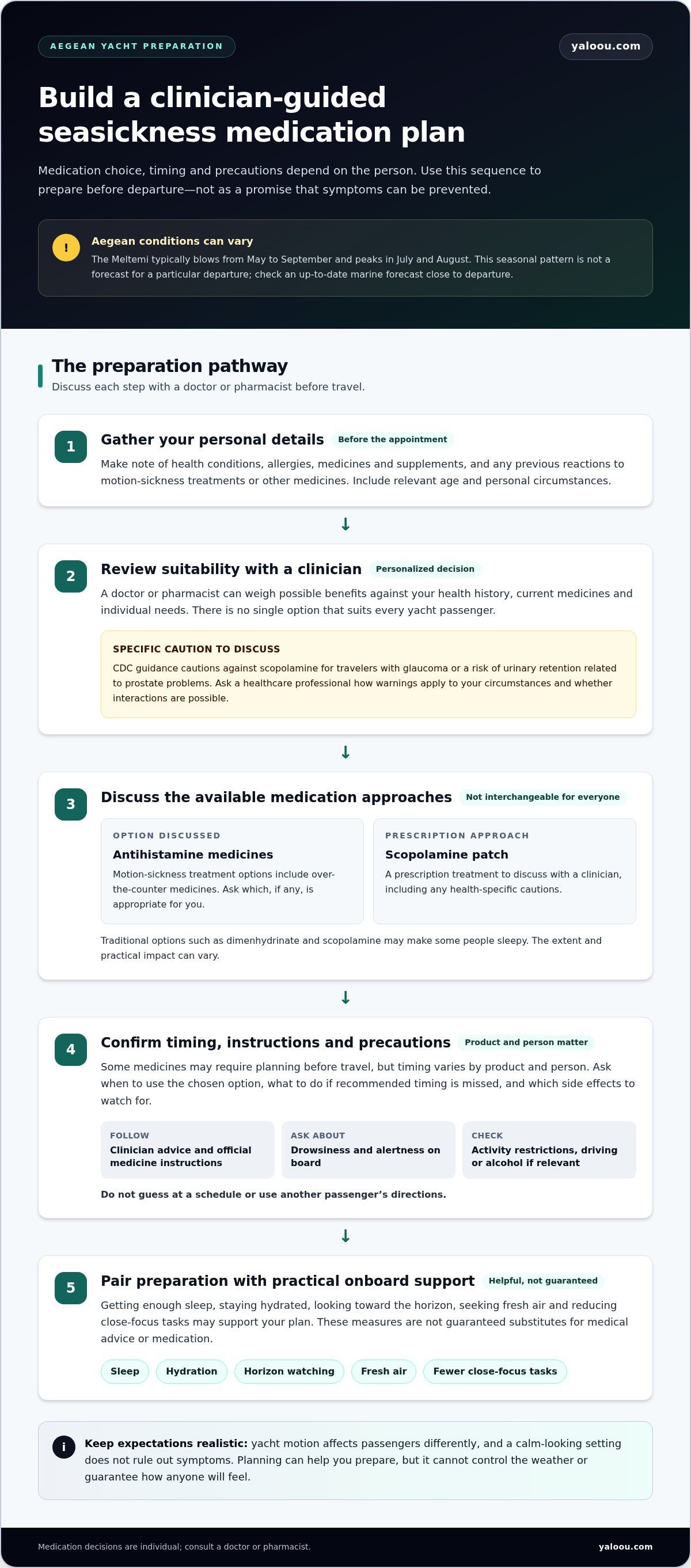
A little preparation can make a yacht journey feel more manageable, without assuming the sea will be calm or that symptoms can be ruled out. Treat medication decisions and onboard comfort as related but separate parts of your plan. For seasickness prevention medication for yacht passengers in Aegean waters, use this sequence to prepare and respond thoughtfully if how you feel changes.
- Assess personal needs. Consider past experiences with motion and note any health conditions, allergies, medicines, or previous reactions that may matter. Include relevant needs for children or other passengers in your group.
- Seek clinical advice. Speak with a doctor or pharmacist before departure, especially if health circumstances are complex or you take other medicines. Bring a current medicine list and ask which options, if any, are appropriate for you.
- Review the instructions. Read the official information for any medicine you plan to use and follow professional guidance. Don’t change how you use it or combine it with other medicines without checking first.
- Prepare for changing conditions. Check a current marine forecast close to departure and pay attention to itinerary or schedule updates. Don’t assume Aegean conditions will stay calm throughout the journey; they can vary.
Before departure, settle medical questions and review medicine instructions; onboard, use practical comfort measures and speak up if you feel unwell.
Before departure: prepare medication questions and expectations
Make the consultation useful. Have the names of your medicines and supplements ready, along with relevant health information, allergies, and details of any past reactions. Ask about possible side effects, how the medicine’s instructions apply to your journey, and what to do if you feel unwell. Don’t borrow someone else’s medication or assume a familiar product is suitable in different circumstances.
Set realistic expectations with your travel companions, too. Let them know about health needs they may need to be aware of and where you keep relevant medicine information. Agreeing in advance on what to share can make it easier to ask for support without feeling caught off guard.
Onboard: respond calmly if symptoms begin
If you start feeling unwell, tell a companion or crew member rather than trying to manage in silence. When it’s safe and feasible, consider moving to fresh air, finding a place with a view of the horizon, or taking a break from reading and screens. These steps are practical, not a guarantee that symptoms will stop. Follow any medicine instructions you’ve already discussed with a professional, and don’t take extra or different medication on impulse.
Seek urgent medical help for symptoms that are severe, unusual, or concerning. Don’t assume every episode of nausea or vomiting is seasickness. Calm communication helps others understand what’s happening and respond appropriately.
Thoughtful planning also starts with choosing an experience that suits your travel plans. Explore YAL’OOU’s private yacht experiences as you prepare for time on the water, while leaving medical decisions to a qualified healthcare professional.
Make Aegean Yacht Planning Part of a More Comfortable Experience
A private yacht journey is shaped by more than the route on a map. Thinking ahead about your comfort, sharing relevant preferences, and keeping an eye on changing conditions can make the experience feel more considered. Planning helps you prepare, but it can’t control the weather, predict exactly how the sea will feel, or guarantee that no passenger will experience symptoms.
YAL’OOU’s approach is personal and unhurried. Guests can share relevant preferences or concerns while shaping their private experience, so those details can inform the planning conversation. If motion sickness is a concern, mention what has helped or unsettled you on past journeys and discuss practical considerations for the day. Keep health decisions, including whether to use medication, with you and your healthcare professional.
Share comfort needs while shaping a private yacht experience
Clear communication supports better preparation. Before departure, let your travel companions know about health needs they may need to be aware of, and discuss practical preferences as plans take shape. You can also review the forecast close to departure and pay attention to itinerary updates. These steps help set realistic expectations, not secure a particular route, sea state, or symptom-free journey.
For example, the Mykonos Southern Coast - Private 5-hour yacht experience offers a specific itinerary and duration to consider as you prepare. Knowing the outline of your planned experience can help you think through personal preparations, such as discussing medication questions with a clinician beforehand and deciding which comfort measures you’d like to try onboard. It doesn’t predict the conditions you’ll encounter.
Explore Greek itineraries with preparation in mind
Destination planning can help you picture the journey and raise useful questions before you travel. The Santorini from Paros - Private 8-hour yacht experience is another listed itinerary. Its stated duration can help you understand the planned experience, but it isn’t a forecast or a promise about how comfortable the passage will feel. Wind, sea conditions, and each passenger’s sensitivity remain factors to consider.
As you compare possible destinations, explore Greek Islands destination planning with your personal needs in mind. Check marine forecasts close to departure, stay attentive to updates, and keep medical advice separate from itinerary decisions. Preparation for seasickness prevention medication for yacht passengers in Aegean waters is most useful when it’s based on your circumstances, not assumptions about a particular route.
Luxury can mean enjoying an experience at your own pace, with thoughtful planning and authentic Greek hospitality. No itinerary can guarantee calm water or prevent seasickness, but considered preparation can help you feel more ready to make the most of your time on board. For a calm next step, explore YAL’OOU’s listed private yacht experiences.
Choose Your Aegean Experience With Confidence
Make your next step a personal one. Think about the kind of day on the water you’d enjoy, then consider how to prepare in a way that feels comfortable and realistic. Discuss medication choices with a healthcare professional, and keep your own needs at the center of planning. The aim of seasickness prevention medication for yacht passengers in Aegean waters is not to promise a symptom-free trip, but to help you make informed decisions before setting out.
YAL’OOU’s listed private experiences include the Mykonos Southern Coast - Private 5-hour yacht experience and the Santorini from Paros - Private 8-hour yacht experience. Each offers a different way to plan time in Greece, with privacy, personal service, authentic Greek hospitality, and an unhurried approach at the heart of the experience.
YAL’OOU’s Greek travel focus includes Mykonos, Paros, Antiparos, Athens, Aegina, Poros, Spetses, Syros, Tinos, Sifnos, Serifos, Milos, Poliaigos, Kimolos, Santorini, Ios, Koufonisia, Amorgos, Crete, Corfu, and Zakinthos.
Explore YAL’OOU’s private yacht experiences and start imagining an Aegean journey that feels right for you. Prepare thoughtfully, stay open to the day as it unfolds, and look forward to discovering Greece from the water.
Frequently Asked Questions
Can I take seasickness medication after symptoms start?
Possibly, but whether it’s suitable once symptoms have begun depends on the specific medicine and your circumstances. Some options are intended for use before travel, so waiting may affect how useful they are. Don’t take an extra or different medicine to catch up. Check the official instructions and ask a pharmacist or doctor what to do if symptoms start while you’re already at sea.
Is seasickness medication safe for everyone on a yacht?
No. The right choice depends on factors such as medical conditions, other medicines, allergies, and age. For example, CDC guidance warns that scopolamine may be unsuitable for people with glaucoma or a risk of urinary retention related to prostate problems. If you’re considering seasickness prevention medication for yacht passengers in Aegean waters, discuss your personal health details with a doctor or pharmacist rather than relying on a general recommendation.
Can children take seasickness prevention medication before an Aegean yacht trip?
Some medicines may be suitable for children, but age limits and instructions vary by product. Don’t give a child an adult’s medicine or assume a product is appropriate because it helped another family member. Before travelling, ask a doctor or pharmacist about the child’s age, health, other medicines, and the specific product you’re considering. Follow the product’s official instructions and don’t estimate or adjust a child’s dose yourself.
Should I avoid alcohol when taking seasickness medication?
It’s prudent to avoid alcohol unless a healthcare professional or the medicine’s official instructions say otherwise. Some motion-sickness medicines can cause drowsiness, and alcohol may increase impairment or make it harder to stay alert. This matters on board, where passengers may need to move carefully. Check the specific medicine’s warnings, and ask a pharmacist whether alcohol should be avoided during its period of use.
What should I do if I feel seasick despite taking medication?
Tell a companion or crew member, and don’t take more medicine than the instructions allow. If it’s safe, try a fresh-air spot, look toward the horizon, and pause reading or screen use. Symptoms that are severe, unusual, or concerning call for urgent medical help. Don’t automatically assume vomiting or other symptoms are seasickness, especially if they continue or come with signs that worry you.
Can I use more than one seasickness remedy at the same time?
Don’t combine medicines or add supplements without checking with a doctor or pharmacist. Products can interact, share ingredients, or increase side effects such as drowsiness. Tell the professional about everything you plan to use, including prescription and over-the-counter medicines, supplements, and remedies. Ask which combinations are appropriate and follow the instructions for each product. If you’re already on board, get advice before adding another remedy.
Disclaimer
The YAL’OOU Travel Guide is curated with care to inspire and inform discerning travelers. While every effort is made to ensure the accuracy and relevance of the information provided, all content is offered for general guidance only and may evolve over time.
Details such as local regulations, availability, pricing, and services are subject to change without prior notice. We encourage guests to seek personalized advice and confirm arrangements directly when planning their journeys.
YAL’OOU accepts no liability for any inaccuracies, omissions, or outcomes arising from the use of this information. The Travel Guide may feature recommendations, insights, and selected third-party experiences, presented solely as a source of inspiration and not as formal endorsements.
By accessing this section of our website, you acknowledge and accept this disclaimer as part of your experience with YAL’OOU.