
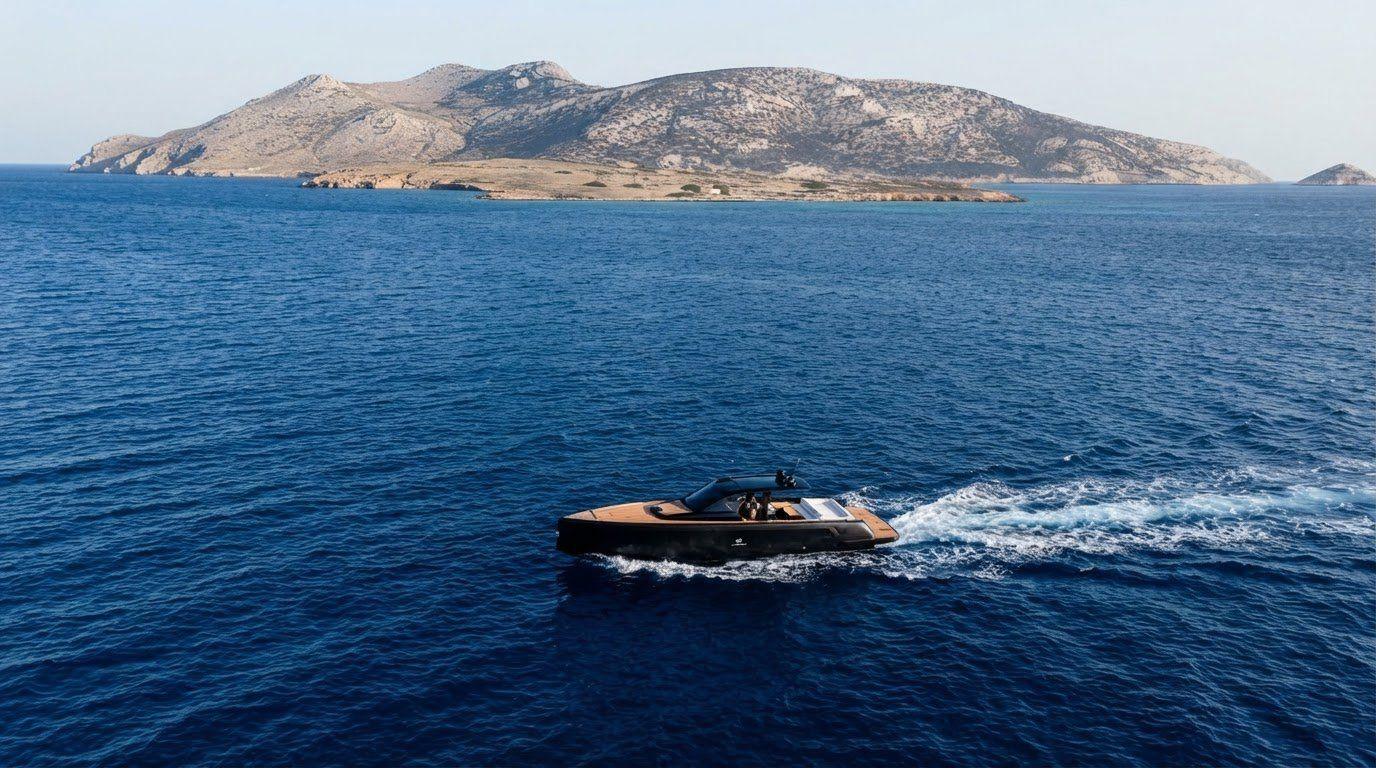
Keros is an island to sail past, not a place to stop for the beach. Sailing to the uninhabited island of Keros generally means viewing it from the water: visitors cannot land, and landing is permitted only for researchers with a permit. From Donousa, leaving in the morning can help avoid the stronger winds that may make the route more challenging around midday. Weather and sea conditions still shape the day’s course.
The appeal is clear: a remote island, Aegean waters and the freedom to shape a trip among the Minor Cyclades. The best plan is flexible, with safe sailing taking priority over a fixed landing or timetable. This guide explains how conditions affect route choices, how an itinerary through the Minor Cyclades can pass Keros, and what to expect when sailing near an uninhabited island. You’ll see where to allow for changes and why the skipper’s decision matters in remote waters.
Key Takeaways
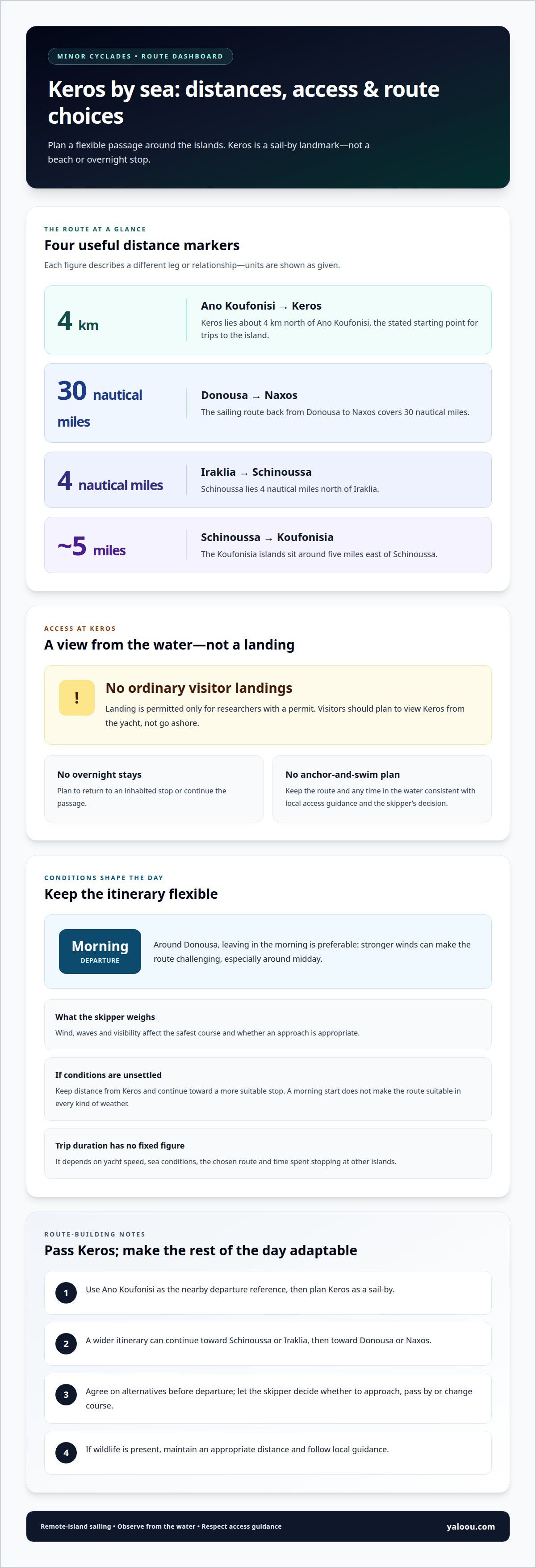
- Map a Minor Cyclades route around the day’s conditions, with Donousa to Naxos covering 30 nautical miles.
- Use Ano Koufonisi as a nearby reference point: it lies about 4 km north of Keros.
- Explore the region’s ancient story from the water, including Keros and the settlement on nearby Daskalio.
- Keep remote-island visits low-impact by respecting local access guidance and maintaining a suitable distance from wildlife.
1. Weather, sea conditions, and landing decisions
Plan each Minor Cyclades sailing day around wind and sea conditions, not a fixed stop. Summer conditions can make time on deck and sun exposure important during a cruise. Around Donousa, morning departures are preferable because strong winds can make the route challenging, especially around midday. A morning start gives the skipper more room to adjust the course as conditions develop. It does not make the route suitable in every kind of weather.
Wind, waves and visibility can affect the safest course and whether an approach is appropriate. Before nearing Keros, the skipper considers conditions along the route and around the island. If the sea is unsettled, the yacht can keep its distance and continue toward a more suitable stop. Treat flexibility as part of the itinerary, not as a last-minute disappointment. A trip to the uninhabited island of Keros is best planned as a pass-by, with the day’s conditions guiding any changes.
Do visitors need permits to visit Keros? Ordinary visitors cannot land on the island; landing is permitted only for researchers with a permit. Keros is off-limits to visitors while archaeological research is ongoing, so plan to view it from the water rather than go ashore.
Is anchoring or swimming allowed around Keros? The access restriction means visitors should not plan an anchor-and-swim stop as a way to reach the island. Keep the yacht’s route and any time in the water consistent with local access guidance and the skipper’s decision.
Seasonal visits call for realistic expectations. Summer brings heat and potentially challenging midday winds around Donousa, while daily conditions determine the route. Keep the itinerary adaptable: agree on alternatives before departure, then let the skipper decide whether to approach, pass by or change course. This preserves time for cruising without turning a hoped-for landing into a safety risk.
2. Sailing itinerary through the Minor Cyclades
For trips to Keros, Ano Koufonisi is the starting point. Keros lies about 4 km north of Ano Koufonisi, making the island a nearby reference for planning a coastal passage. Treat the visit as a sail-by, then use the rest of the itinerary to explore inhabited islands. That keeps the route focused without making a landing part of the plan.
What are the departure ports and sailing routes to Keros? Ano Koufonisi is the stated starting point for trips to Keros. A wider Minor Cyclades itinerary can also connect Donousa with Naxos; the sailing route back from Donousa to Naxos covers 30 nautical miles. These are different route scales: a close island approach or a longer passage between islands.
How long does a sailing trip to Keros take? The duration depends on the yacht’s speed, sea conditions, the chosen route and time spent stopping at other islands. A direct passage from Ano Koufonisi differs from an itinerary with several coastal stops. Plan around the intended route and conditions rather than assuming a fixed travel time.
Nearby islands offer natural options for extending the voyage. Schinoussa lies four nautical miles north of Iraklia, while the Koufonisia islands sit around five miles east of Schinoussa. These distances make the islands useful waypoints for a broader circuit. Choose stops to suit the trip’s pace, while allowing for changes in sailing conditions.
For example, a route can approach Keros from Ano Koufonisi, continue toward Schinoussa or Iraklia, and finish with a passage toward Donousa or Naxos. The exact sequence depends on the departure point and daily conditions. To shape the wider day around island visits, explore Minor Cyclades sailing experiences.
Whale-watching in the Azores depends in part on knowing when particular whale species pass through. For wildlife-focused outings, timing can help set expectations before choosing an activity. This is separate from planning a Minor Cyclades sailing route: it does not establish a sailing distance or passage duration, or provide details about Keros and nearby islands.
3. Sailing to remote uninhabited islands
Koufonisia includes Pano, Kato, and Keros, but only Pano is inhabited. That distinction matters when shaping a remote-island outing: Keros is a landmark to approach by yacht, not a place to treat like an inhabited harbour. Ano Koufonisi is the starting point for trips, and Keros lies about 4 km north. Use the harbour as your departure reference, then plan the passage around the yacht’s route and conditions.
Keep the purpose of the visit clear. Landing on Keros is permitted only for researchers with a permit, and overnight stays are not allowed. Visitors should plan to sail past, view the island from the water and return to an inhabited stop. A remote shoreline does not become an available beach stop simply because it is close to Ano Koufonisi.
For a practical itinerary, decide on the route before departure, plan to pass Keros and leave room to alter course. The skipper considers sea conditions, approach options and the next suitable stop rather than treating a remote island as a fixed destination. If wildlife is present, maintain an appropriate distance and follow local guidance. This keeps the visit focused on observation, not disturbance, and leaves shore access out of the plan.
Remote cruising also changes how you plan time ashore. Pano Koufonisi is an inhabited reference point within the group; Keros does not offer overnight stays. Build the day around the yacht’s return or onward passage, not an improvised camp or extended landing. With that distinction clear, sailing to an uninhabited island becomes a deliberate route choice: enjoy the seascape, respect access limits and keep the next destination in view.
A sailor reported spending a week on an uninhabited island off Malaysia's coast in 2011, showing how remote-island trips can differ from a short passage. A forum post estimates that there are over half a million islands on Earth and that about 2% are inhabited.
4. Sailing past the uninhabited island of Keros
Keros is best understood as an isolated landmark, not a stop ashore. The uninhabited island covers about 15 square kilometres and lies a few kilometres south of Koufonisia. Its highest point reaches 432 metres, giving it a distinct profile from the surrounding water. A pass-by lets you take in that landscape without treating the island as an accessible beach destination.
Are there facilities or services on Keros? There are no visitor services to plan around: Keros is uninhabited and currently off-limits while archaeological research continues. Landing is permitted only for researchers with a permit, and overnight stays are not allowed. Plan your refreshments, comfort and time ashore around an inhabited stop instead.
The island’s significance is archaeological as well as scenic. Keros was an important centre of Cycladic civilization about 4,500 years ago. At Kavos, marble figurines and vessels were broken and deposited between about 2700 and 2300 BC. Across the water, Daskalio held a settlement from about 2750 to 2300 BC. These sites make the coastline a place to observe respectfully, rather than explore on foot.
Make the pass-by purposeful. Choose an approach that offers a clear view from the yacht, keep the visit at sea and follow the skipper’s direction if conditions call for a route change. A quiet cove is not permission to land or stay overnight. The key decision is simple: include Keros for its landscape and history, and use an inhabited island for any shore visit.
For a sailing day shaped around remote scenery and nearby islands, plan a Minor Cyclades sailing experience. Keep Keros as a memorable view from the water, then build the rest of the route around places where visitors can spend time ashore.
YAL’OOU Exclusive Yachting & More
YAL’OOU Exclusive Yachting & More can help shape a Minor Cyclades sailing plan into a considered island escape. Daily Yacht Charters suit a focused day on the water, while Weekly Crewed Yacht Rentals allow more time to plan a wider itinerary. Since Keros is viewed from the water, plan shore time around inhabited destinations instead. High-End Villa Rentals and VIP Ground Transfers can support your stay beyond the sailing days, bringing accommodation and ground travel into the overall plan. Choose what fits your plans, from a day at sea to a longer island journey. To discuss a trip that balances remote scenery with comfortable time ashore, contact YAL’OOU Exclusive Yachting & More.
Shape Your Minor Cyclades Escape
Let the route reflect how you want to spend your time at sea. A day trip can focus on sailing and island views, while a longer stay leaves more room to enjoy inhabited destinations between passages. Treat sailing to the uninhabited island of Keros as a view from the water, then plan time ashore elsewhere in the Cyclades.
YAL’OOU Exclusive Yachting & More offers Daily Yacht Charters, Weekly Crewed Yacht Rentals and High-End Villa Rentals. These options can bring sailing and time on land together in one considered travel plan, whether you’re shaping a focused outing or a longer escape. Start with the pace and experience you have in mind, then explore the arrangements that fit.
Contact YAL’OOU Exclusive Yachting & More to discuss your Minor Cyclades plans. Your next island escape can begin with a thoughtful route and a little room for discovery.
Frequently Asked Questions
Can visitors legally land on Keros?
No. Landing on Keros is permitted only for researchers with a permit, and the island is off-limits to visitors while archaeological research continues. Being close by yacht does not permit a shore visit. Treat the island as a view from the water and plan time ashore at an inhabited destination such as Ano Koufonisi instead.
Are there boat tours or private charters to Keros?
A private yacht itinerary can include sailing past Keros, but not a visitor landing. Daily Yacht Charters and Weekly Crewed Yacht Rentals offer ways to plan time on the water around the Minor Cyclades. Keep the purpose of the itinerary clear: enjoy a view of Keros from the sea, then spend time ashore at an inhabited island.
What safety risks and weather conditions should sailors consider near Keros?
Wind and sea conditions can make an approach unsuitable and can change the planned route. In the Cyclades, summer temperatures average 35°C, and strong winds can make sailing from Donousa challenging, especially around midday. A practical plan leaves the skipper room to alter course rather than treating a close pass as essential. Protect against heat during exposed time on deck.
Disclaimer
The YAL’OOU Travel Guide is curated with care to inspire and inform discerning travelers. While every effort is made to ensure the accuracy and relevance of the information provided, all content is offered for general guidance only and may evolve over time.
Details such as local regulations, availability, pricing, and services are subject to change without prior notice. We encourage guests to seek personalized advice and confirm arrangements directly when planning their journeys.
YAL’OOU accepts no liability for any inaccuracies, omissions, or outcomes arising from the use of this information. The Travel Guide may feature recommendations, insights, and selected third-party experiences, presented solely as a source of inspiration and not as formal endorsements.
By accessing this section of our website, you acknowledge and accept this disclaimer as part of your experience with YAL’OOU.