
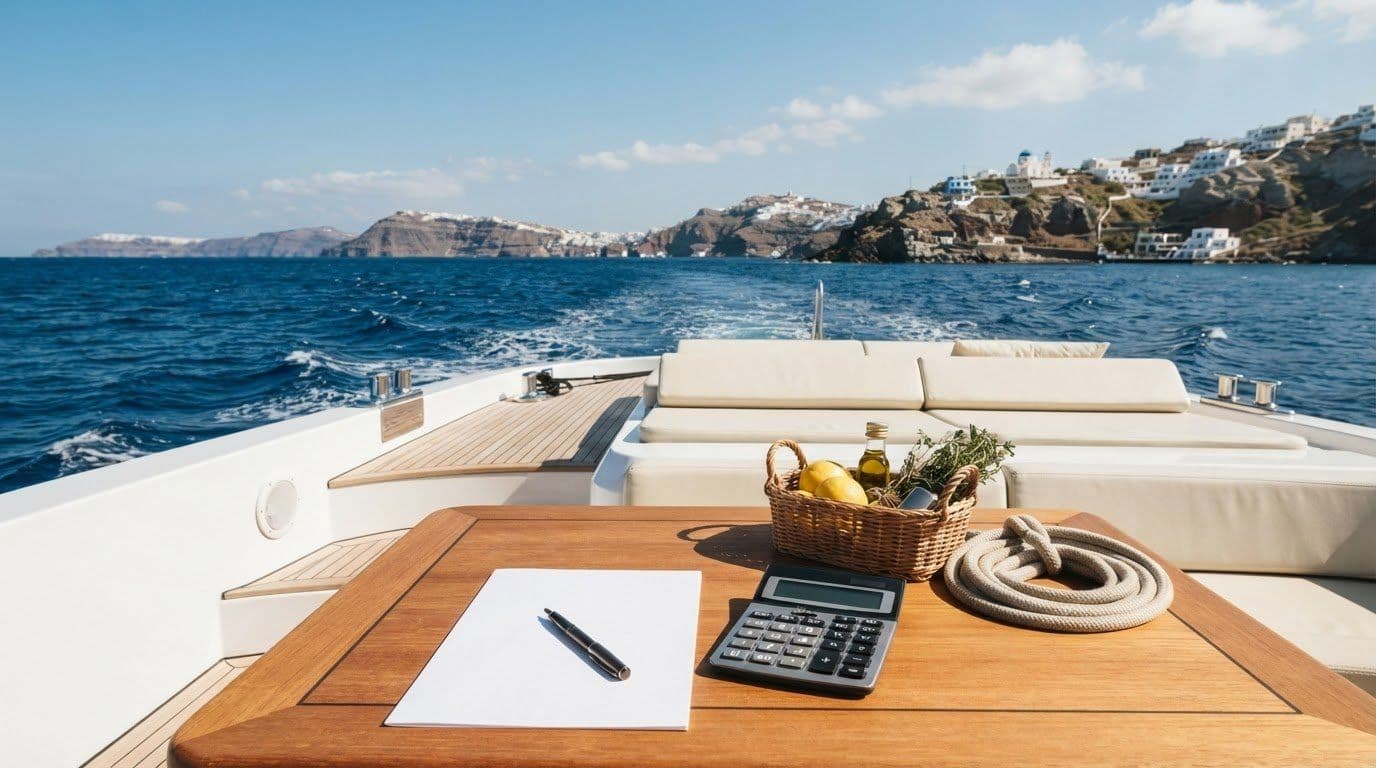
The charter rate is only one part of the budget. In an Ocean Independence Mediterranean charter vs local Greek yacht concierge comparison, the booking schedule is a practical starting point: in most cases, a 50% deposit is due when the charter agreement is signed. The remaining 50%, plus APA and any applicable taxes, delivery fees, and security deposit, is due one month before the charter begins.
It’s natural to focus first on the yacht and weekly rate. But the right choice also depends on how you want to experience Greece, from quiet island-hopping to a fuller itinerary with more time ashore.
This guide explains what can shape charter costs, how payments work, and which additional expenses may affect your total. It also covers how yacht type, holiday style, and coordination with the crew can influence a Greek itinerary, helping you compare the budget and the experience more clearly.
Key Takeaways
- Compare charter options by more than the weekly rate: yacht size, guest needs, and itinerary all shape the value.
- Build a fuller budget by accounting for expenses such as fuel, provisions, mooring, and crew gratuities.
- Choose a yacht and holiday pace that suit your group, then collaborate with the crew to shape the Greek itinerary.
- Assess a broker or concierge through clear contract terms, transparent cost breakdowns, and their understanding of your plans.
Yacht charter prices and booking payments
A Mediterranean charter quote depends on the yacht, season, itinerary, guest count, and included services. These details shape the proposed charter and its price. A bareboat charter is the least expensive option described for the Mediterranean, while a professionally crewed yacht includes crew service as part of the experience.
Compare similar yachts before weighing quotes. ETERNAL SPARK is a 50-meter motor yacht, while LAFAYETTE measures 36 meters and accommodates 10 guests. DAMARI is 29 meters and also accommodates 10 guests. These examples show why a weekly rate alone can’t tell you whether two options offer comparable space, capacity, or onboard service. Match the yacht’s size and guest accommodation to your group, then compare the itinerary and what the quoted rate covers.
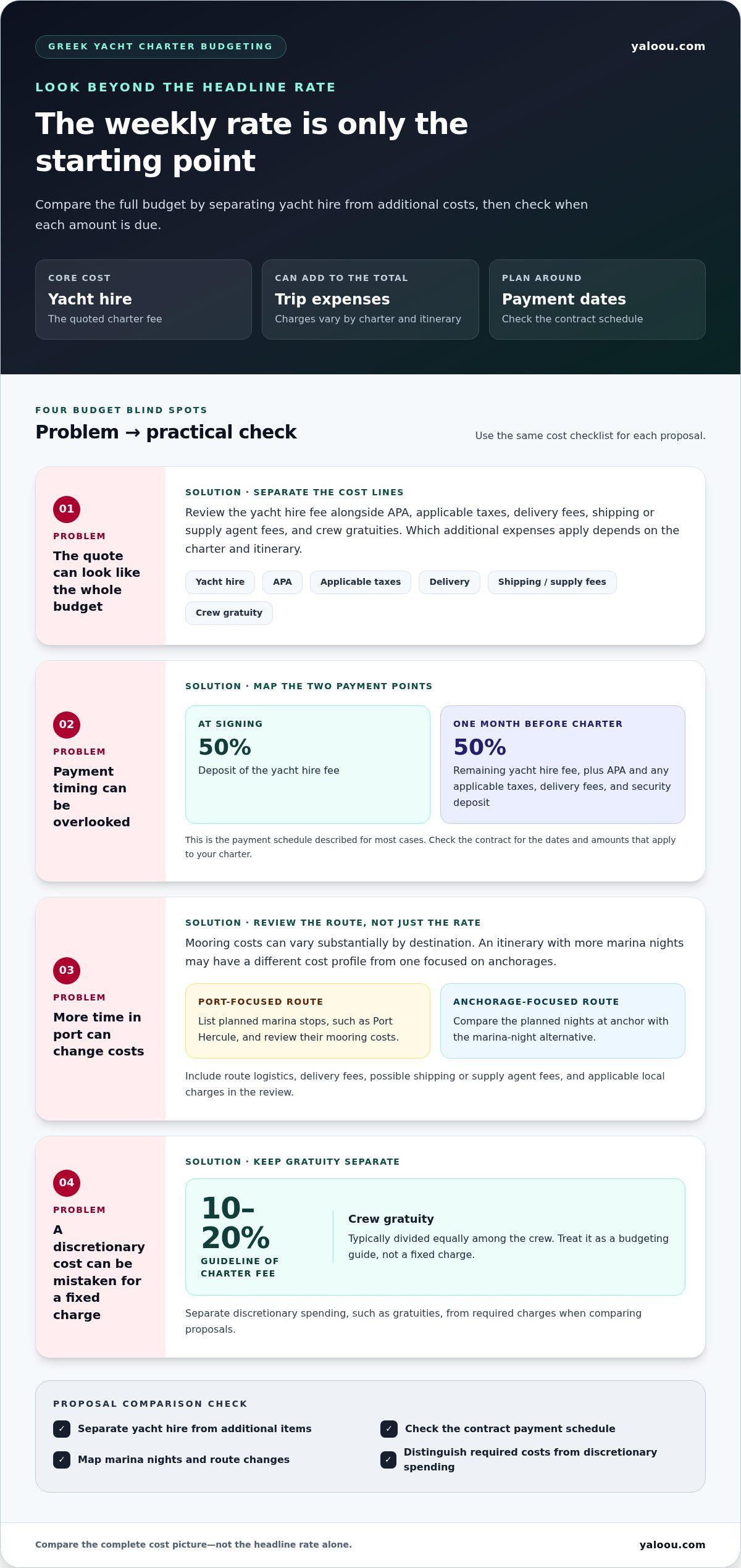
Payment timing is more consistent. In most cases, the charterer pays a 50% deposit of the yacht hire fee when signing the charter agreement. The remaining 50% is due one month before the charter begins. APA and any applicable taxes, delivery fees, and security deposit are also due at that time. Treat the contract schedule as a planning step: note the signing date, the start date, and each amount due.
- At signing: Pay the 50% deposit of the yacht hire fee.
- One month before departure: Pay the remaining 50%, plus APA and applicable additional charges.
When comparing an Ocean Independence Mediterranean charter with a local Greek yacht concierge, use the same checklist for each proposal: yacht dimensions, guest capacity, crew arrangement, itinerary, and contract payment schedule. MYBA agreements are commonly used for Mediterranean yacht charters, while AYCA agreements are primarily used in the United States and with U.S.-flagged vessels. Read the payment terms alongside the quote to understand the deposit and balance dates before signing.
Additional charter costs
The weekly hire rate is only one part of a Mediterranean charter budget. Additional costs may include APA, applicable taxes, delivery fees, shipping or supply agent fees, and crew gratuities. The expenses that apply depend on the charter and itinerary. Compare proposals by separating the yacht hire fee from additional items, then consider how each affects your planned route and time on board.
Mooring costs can vary substantially by destination, so time in port matters. An itinerary with more marina nights may have a different cost profile from one focused on anchorages.
- Port stays: Include the planned marina stops, such as Port Hercule, in your cost review.
- Route logistics: Account for delivery fees and possible shipping or supply agent fees.
- Local charges: Review applicable taxes alongside other trip expenses.
Crew gratuities are another consideration. A guideline is 10% to 20% of the charter fee, typically divided equally among the crew. Treat this as a budgeting guide, not a fixed charge. For example, a guest choosing to recognize the crew’s service can plan the gratuity separately from the yacht hire and other listed expenses.
Before settling on a Greek itinerary, map planned port nights and route changes against the added costs in the proposal. Then distinguish required charges from discretionary spending, such as gratuities. This makes it easier to compare alternatives without judging a charter on its headline rate alone. If a day on the water fits your plans better than a week aboard, explore Greek yacht experiences as another way to shape time at sea.
Review the proposal for shipping or supply agent fees, local taxes, and delivery fees, all of which may be additional yacht charter costs.
Choosing a charter yacht and holiday style
Start with the holiday you want, then match the yacht to it. A Greek island-hopping trip with frequent stops calls for different priorities than leisurely days aboard. Consider guest accommodation, shared deck space, and how your group wants to spend time together. Yachts larger than 50 meters offer guest accommodation, deck space, and crew ratios in another category. For a closer look at yacht charter options, compare the vessel’s layout with your group’s daily plans.
Next, choose your cruising rhythm. The Mediterranean charter season generally runs from April to the end of October, with July and August the busiest months. This seasonal pattern can shape the feel of a Greek itinerary. A route focused on quieter Greek islands may prioritize anchorages, while one centered on popular ports may leave more time ashore. Decide which experience matters most before choosing destinations.
- For active days: Prioritize a layout that supports time on deck and easy movement between stops.
- For a slower escape: Build in longer stays and fewer changes of location.
- For a mixed group: Balance time at anchor with shore visits that suit different interests.
Share your preferences with the crew early, including the places your group hopes to see, your preferred pace, and any must-have moments. Then work through the route together. The crew can use those priorities to shape a practical itinerary around the yacht and local conditions. Leave some flexibility in the plan, so you can spend longer at a favorite island or anchorage without making every day a transfer.
Finally, compare the proposed itinerary with the yacht itself. Check that the accommodation, deck space, and onboard layout suit your group, not just the destination list. In an Ocean Independence Mediterranean charter vs local Greek yacht concierge comparison, the key question is how clearly each option connects your holiday preferences with a yacht and a workable Greek route.
How can travelers verify a yacht broker or local Greek yacht concierge is reputable?
Keep a clear paper trail. Compare the written proposal with the charter agreement, yacht name, dates, guest capacity, and itinerary. The details should match across the documents. For example, if the proposal names a Greek island route, the agreement should identify the same charter period and vessel. Consistent records make it easier to understand what you’re booking.
Next, examine the payment terms and cost breakdown. The agreement should identify the yacht hire fee, payment dates, and any additional charges relevant to the trip. In most cases, Mediterranean charterers pay a 50% deposit when signing, with the balance and additional fees due one month before departure. Compare those terms with the schedule already discussed, rather than relying on a verbal summary.
- Match the yacht: Confirm the vessel’s name, dimensions, guest capacity, and stated onboard arrangement.
- Read the contract: Review the itinerary, charter dates, cancellation terms, and payment schedule together.
- Trace the costs: Separate the hire fee from APA, taxes, delivery, and other applicable charges.
- Assess the planning: Look for a route that reflects your priorities, not just a list of destinations.
The contract format offers useful context. The Mediterranean Yacht Brokers Association (MYBA) charter agreement is the most common agreement for yacht charters. The American Yacht Charter Association (AYCA) agreement is primarily used in the United States and with U.S.-flagged vessels. The relevant agreement depends on the charter arrangement, so read its terms and compare them with the proposal.
In an Ocean Independence Mediterranean charter versus local Greek yacht concierge comparison, use the same document checklist for both. Consistent details, transparent charges, and a coherent Greek itinerary help you assess how well each option fits your plans. To explore ways to shape time at sea around your trip, browse Greek yacht experiences.
YAL’OOU Exclusive Yachting & More: Daily Yacht Charters
YAL’OOU Exclusive Yachting & More offers Daily Yacht Charters for travelers who want to explore Greece by sea without planning a week aboard. Choose a focused day on the water, or consider Weekly Crewed Yacht Rentals for a longer itinerary shaped around the yacht. The right fit depends on how much of your holiday you want to spend cruising and how you want to balance time aboard with time ashore.
For a broader stay, High-End Villa Rentals and VIP Ground Transfers can complement your charter plans. Share your preferred pace, destinations, and holiday style to guide the choice between a day charter and a longer yacht stay.
To discuss a yacht holiday in Greece, contact YAL’OOU Exclusive Yachting & More or visit yaloou.com.
Shape a Greek charter around your kind of escape
Turn your ideas into a clear holiday brief. Note who’s traveling, what kind of days you enjoy, and whether you want time aboard, ashore, or both. This gives your charter planning a personal starting point, rather than making the yacht choice on specifications alone.
When deciding between an Ocean Independence Mediterranean charter and a local Greek yacht concierge, focus on the experience you want and the planning support you need. YAL’OOU Exclusive Yachting & More offers Daily Yacht Charters, Weekly Crewed Yacht Rentals, and High-End Villa Rentals. These options suit different ways of experiencing Greece, from a day at sea to a longer stay built around yacht or villa time.
When you’re ready to explore possibilities, discover Greek yacht experiences with YAL’OOU. Start with the places and moments that matter most to you, then let those priorities guide your next step toward a Greek escape.
Frequently Asked Questions
How do booking processes, deposits, and cancellation terms compare?
For most Mediterranean charters, the booking deposit is 50% of the yacht hire fee when the agreement is signed; the balance and additional charges are due one month before departure. Cancellation terms depend on the signed agreement. Before committing, read the cancellation clause alongside the payment schedule and identify how it addresses cancellation timing, amounts already paid, and any refund terms.
What are the pros and cons of using an international yacht broker versus a local Greek concierge?
An international broker can suit travelers comparing charter options across Mediterranean destinations. A local Greek concierge can focus planning on Greek island routes and experiences. The difference comes down to the coordination you need: a broad regional search may involve more destination planning, while a Greece-focused brief can keep attention on places such as Paros, Antiparos, and Mykonos. Compare each proposal’s yacht options, itinerary detail, and support.
What are the best times of year and typical weekly prices for Mediterranean yacht charters in Greece?
The Mediterranean charter season generally runs from April to the end of October, with July and August the busiest months. Weekly charter rates depend on yacht size, age, crew, guest capacity, season, and itinerary, so compare quotes for the same trip requirements. Check what each rate covers and how route choices affect additional expenses. Traveling outside peak summer offers a different atmosphere.
Disclaimer
The YAL’OOU Travel Guide is curated with care to inspire and inform discerning travelers. While every effort is made to ensure the accuracy and relevance of the information provided, all content is offered for general guidance only and may evolve over time.
Details such as local regulations, availability, pricing, and services are subject to change without prior notice. We encourage guests to seek personalized advice and confirm arrangements directly when planning their journeys.
YAL’OOU accepts no liability for any inaccuracies, omissions, or outcomes arising from the use of this information. The Travel Guide may feature recommendations, insights, and selected third-party experiences, presented solely as a source of inspiration and not as formal endorsements.
By accessing this section of our website, you acknowledge and accept this disclaimer as part of your experience with YAL’OOU.