

The most exclusive access in the Greek islands – from the vibrant Cyclades to the serene Ionian gems – isn't bought with a black card. It is earned through a genuine handshake and a deep understanding of local traditions. You've likely felt that slight hesitation when walking into a remote taverna or stepping into a historic church on islands like Patmos, wondering if your presence is seen as an intrusion. Learning how to respect local customs while on charter in Greece is the definitive way to bridge that gap. It transforms you from a mere spectator into a welcomed guest, ensuring your 2026 voyage with YAL’OOU Exclusive Yachting & More is as smooth as the Aegean Sea at dawn.
At YAL’OOU Exclusive Yachting & More, we believe that true luxury lies in seamless integration and mutual respect. This guide will teach you the nuances of Greek etiquette so you can unlock a more authentic and private yachting experience across destinations like Mykonos, Santorini, and Corfu. You'll discover the current 2026 standards for crew gratuities, the "hushpitality" secrets of the season, and the specific dress codes required for sacred sites on islands such as Tinos or Rhodes. By the end of this article, you'll have the confidence to navigate any social scenario, from high-end beach clubs to the quietest village squares in the Dodecanese, with effortless grace.
Key Takeaways
- Embrace the philosophy of Philoxenia to unlock the level of "hidden" hospitality that standard tourists never see.
- Discover the specific yachting protocols and marina etiquette required for knowing how to respect local customs while on charter in Greece.
- Master the transition from beach club glam to religious site respect with our 2026 guide to island-appropriate attire.
- Elevate your dining experience and build rapport with locals by adopting the communal Meze philosophy.
- Ensure a positive impact on the islands by prioritizing local artisans and sustainable sourcing for your on-board provisions.
The Philosophy of Philoxenia: Why Etiquette Matters in Greece
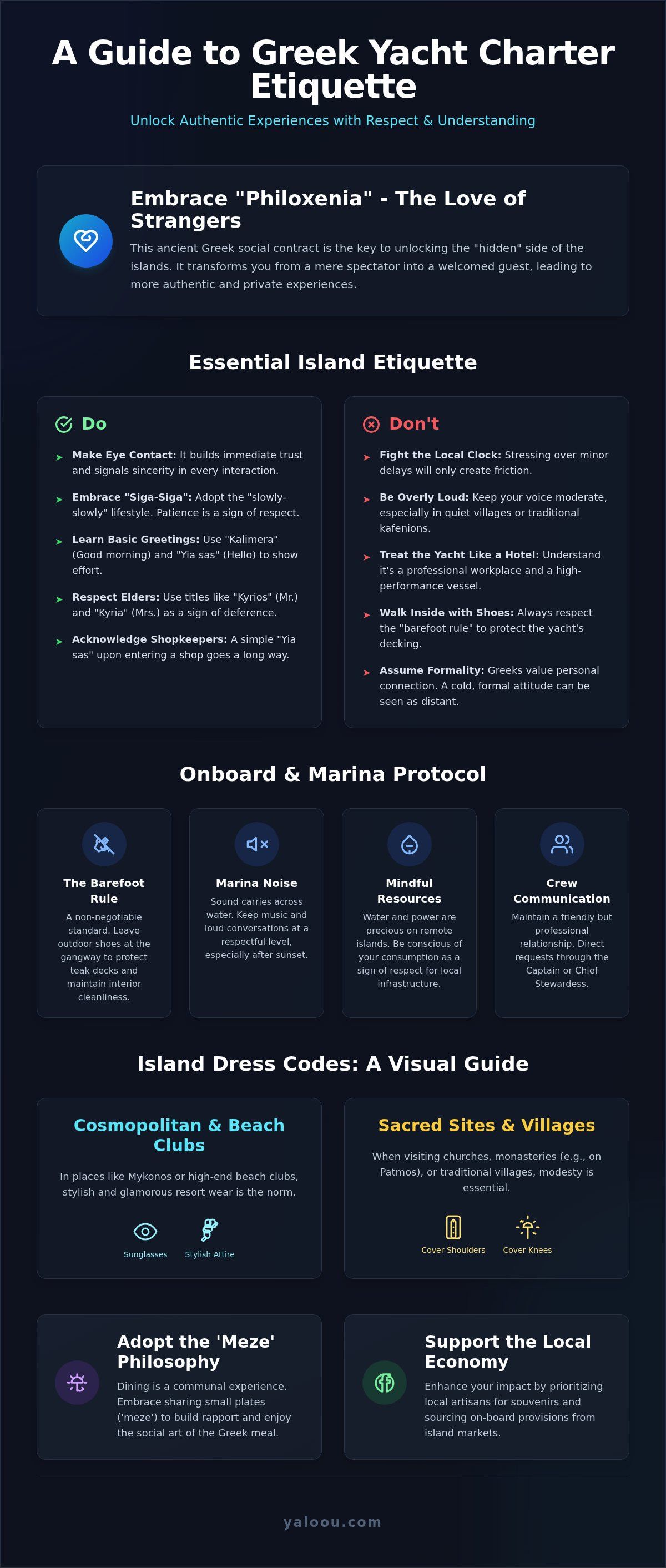
Philoxenia isn't just a marketing buzzword used by travel agencies. It is an ancient social contract that literally translates to "love of strangers." In Greek culture, hospitality is a sacred duty that dates back to the days of Homer. Your experience on a yacht changes based on your attitude. If you approach locals with genuine curiosity and warmth, you'll unlock the "hidden" side of the islands that ordinary tourists never see. Mastering this mindset is the first step in learning how to respect local customs while on charter in Greece.
Eye contact is non-negotiable in every interaction. It builds immediate trust and signals sincerity. Greeks value personal connection over formal coldness. When you speak to a dockhand or a taverna owner, look them in the eye. It shows you see them as a person, not just a service provider. This small gesture often leads to better service and perhaps an invitation to a private wine cellar or a secluded beach tip.
To better understand this concept, watch this helpful video:
Don't try to fight the local clock. The "siga-siga" (slowly-slowly) lifestyle is the heartbeat of the Cyclades. Stressing over a five-minute delay in a marina will only alienate you from the people trying to help. Embrace the rhythm of the islands. It's the key to a stress-free holiday and a more authentic connection with the land and its people.
Greetings and First Impressions
Master the basics to show you've done your homework. "Kalimera" (Good morning) is your best friend until about 3:00 PM. After that, switch to "Yia sas" for a polite "Hello." A firm handshake is the standard for first meetings. If you become an acquaintance, don't be surprised by the double-cheek kiss. Always acknowledge shop owners when entering small boutiques in Greek island destinations. A simple nod and a "Yia sas" go a long way in building rapport with local artisans.
The Social Hierarchy and Respect for Elders
Respect for elders is deeply ingrained in Greek society. Use the titles "Kyrios" (Mr.) and "Kyria" (Mrs.) followed by their first name for formal respect. In traditional villages like Marpissa or Lefkes, the elders are the cultural gatekeepers. If you visit a traditional kafenion (coffee house), remember it's their territory. Keep your voice at a moderate level and don't treat the space like a rowdy beach club. Showing this level of awareness is crucial for understanding how to respect local customs while on charter in Greece.
Yacht Etiquette: Respecting the Sea, the Crew, and the Marina
The yacht is your private sanctuary, but it's also a high-performance machine and a professional workplace. Respect starts the moment you step onto the passerelle. Leave your shoes in the basket at the gangway. The "barefoot rule" is a non-negotiable standard on luxury vessels. It protects the delicate teak decking and maintains the pristine interior. Walking inside with outdoor shoes is a major faux pas that signals a lack of respect for the crew's hard work and the vessel itself.
Marina life requires a specific social awareness. When docked in cosmopolitan ports, remember that sound carries across the water. Marina noise protocols dictate that loud music and boisterous parties should move inside or wind down after sunset. Your yacht's presentation also reflects on your group. Keep the decks tidy and follow the crew's lead on fender and line placement. A well-maintained vessel earns the respect of neighboring captains and port authorities alike. Acknowledging resource limits is equally vital. Even on a superyacht, water and power are precious commodities on remote islands. Using these resources mindfully is a core part of how to respect local customs while on charter in Greece.
Professionalism with Your Onboard Crew
Your crew is there to provide a seamless experience, but they aren't invisible staff. Establish a balance of friendliness and professional distance. Use the Chief Stewardess or the Captain as your primary contact for requests. This ensures clear communication and allows the team to manage their workflow efficiently. Respect their rest areas and "off-duty" hours. A well-rested crew provides safer and more attentive service. In 2026, the industry standard for gratuities remains 10 to 15 percent of the charter fee, reflecting the high level of bespoke care provided. You can discover our luxury yachts and their expert crews to see this professionalism in action.
Anchorage Decorum and Environmental Respect
Popular bays like Psarou or Panormos can get crowded during the peak July and August weeks. Avoid territorial behavior. Sharing the best swimming spots is part of the Mediterranean spirit. When using the tender, observe strict speed limits and minimize noise near other vessels or swimming areas. Protecting the marine ecosystem is a legal and cultural priority. Greek authorities have increased monitoring of Posidonia seagrass meadows in 2026. Anchoring in these protected areas is illegal and causes irreversible damage to the seabed. Always ensure your captain anchors in sandy patches to preserve the crystal-clear waters for future generations. For those seeking a truly tailored journey, our concierge team can help you design bespoke island itineraries that respect these delicate environments.
Island Dress Codes: From Cosmopolitan Beach Clubs to Sacred Sites
Style in the Greek islands is a language of its own. It's not just about aesthetics; it's about context. Understanding the shift between the deck of your yacht and the streets of a traditional Chora is essential for knowing how to respect local customs while on charter in Greece. The "Beach-to-Boutique" transition is where most visitors stumble. Swimwear belongs strictly on the boat or the sand. Entering a boutique, a gallery, or a taverna in a bikini or swim trunks is considered disrespectful to the locals who live and work there. Always throw on a high-quality linen shirt or a refined kaftan before you step off the passerelle.
Evening dining in Mykonos or Paros calls for "Island Chic." This isn't about being formal; it's about effortless quality. Think breathable fabrics, leather sandals, and understated jewelry. Avoid heavy high heels. The winding, whitewashed cobblestones of the Cyclades are beautiful but treacherous. Wedges or elegant flats are the mark of a seasoned traveler who understands the terrain. In more rural settings, modesty becomes more important. While Mykonos is avant-garde, a quiet village in the hills of Naxos expects a bit more coverage to maintain a respectful atmosphere.
Religious Protocol and Monastery Visits
Greek monasteries and churches are active places of worship, not just historic landmarks. Shoulders and knees must be covered for both men and women. Most monasteries provide wrap-around skirts or shawls at the entrance, but arriving prepared shows a deeper level of cultural awareness. Maintain silence once inside. Flash photography is usually forbidden to protect ancient icons and the quietude of the monks. Never pose for "influencer" style photos in front of an altar. It's a sacred space, and your behavior should reflect that solemnity.
Cosmopolitan vs. Traditional Island Vibes
Your wardrobe should adapt as you cruise through different Greek island destinations. In Mykonos or Santorini, bold fashion and designer labels are part of the scenery. However, if your itinerary includes Sifnos, Serifos, or Kimolos, pivot toward a more understated elegance. These islands value local tradition and a quieter sense of luxury. Over-the-top outfits can feel out of place in a village where life still revolves around the town square and the local bakery. Adapting your style to the specific island's energy is a key part of how to respect local customs while on charter in Greece.
Dining and Social Traditions: The Art of the Greek Meal
Greek dining isn't just a meal; it's a social performance. If you want to know how to respect local customs while on charter in Greece, start by abandoning the concept of the "individual entree." The Meze philosophy dominates the table. You order a variety of dishes for everyone to share. It's a collective experience. Don't worry about being too formal. A certain level of "messiness" is expected. Dipping bread into the remains of a Greek salad, known as the "papara," is a sign you're enjoying the food. When you toast, say "Yamas!" and maintain firm eye contact. It shows sincerity. Avoid the temptation to split the bill at the table. Greeks find this practice awkward. Usually, one person pays, or the group settles it later away from the waiter's eyes.
Tipping Etiquette for 2026
Tipping standards have evolved. For your onboard team, the 2026 benchmark for charter gratuity is 10 to 15 percent of the base charter fee. Deliver this in an envelope to the Captain at the end of your trip. In restaurants, look closely at your bill. A "cover charge" usually pays for bread and water, not service. Leave a 10 percent tip in cash for the staff to ensure it reaches them directly. For VIP ground transfers or bespoke concierge support, a small gesture of 20 to 50 Euros is appropriate for exceptional service.
The Siesta and Evening Timing
Respect the "Messimeri." Between 2 PM and 5 PM, the islands go quiet. This is the traditional siesta time. Making loud noise in village streets during these hours is a major offense. It's the perfect time to relax on your yacht's sun deck. Your evening should start late. Dinner rarely begins before 10 PM in cosmopolitan spots. Before you eat, join the "Volta." This is the traditional evening stroll through the Chora. It's where the community meets, talks, and enjoys the cooling air. Following these timings is a subtle yet powerful way of showing how to respect local customs while on charter in Greece. To truly live like a local, let us help you arrange exclusive restaurant reservations that align with these cultural rhythms.
Sustainable Chartering: Supporting the Local Greek Economy
Luxury yachting in 2026 is shifting toward meaningful impact. True respect involves more than just polite greetings; it requires a conscious effort to support the communities that host you. One of the most effective ways of knowing how to respect local customs while on charter in Greece is through your provisioning. Encourage your private chef to source ingredients from local island markets rather than relying on international distributors. Fresh Naxian potatoes, Santorinian cherry tomatoes, and artisanal cheeses from Paros don't just taste better. They directly support the farmers who have maintained these landscapes for generations.
Extend this support to your shopping habits. Skip the mass-produced souvenirs found in high-traffic ports. Look for small-scale artisans who preserve traditional techniques, such as the weavers of Anafi or the potters of Sifnos. Digital etiquette is equally important in maintaining a respectful presence. Always ask for permission before photographing locals or their private homes. A house is a sanctuary, not a backdrop for social media. Respecting this boundary is a core part of being a sophisticated guest.
Be mindful of the physical footprint your group leaves behind. Small island infrastructures are often stretched to their limits. Water, waste management, and energy are precious resources on islands like Mykonos and Paros. Your yacht is a self-contained unit, but your actions onshore still matter. Conscious travel ensures these destinations remain vibrant for years to come. It's about preserving the very beauty you came to see.
Engaging with Local Suppliers
Authentic insight comes from those who call the islands home. We recommend hiring local guides for island excursions instead of relying solely on digital maps. They provide depth and context that an algorithm simply can't match. Seek out tavernas that specifically support local fishermen. These spots offer the freshest catch and a more genuine atmosphere. At YAL’OOU, we partner with local experts across the Cyclades to ensure our guests enjoy sustainable luxury that benefits the entire community.
Planning Your Respectful Odyssey
A professional concierge is your best tool for cultural navigation. They can guide you through local festivals, known as Panigiria, with the appropriate level of respect. These celebrations are deeply communal and religious. Knowing when to join the dance and when to observe quietly is essential for how to respect local customs while on charter in Greece. Consider customizing your itinerary to include "quiet" islands like Poliaigos or Sikinos. These spots offer a raw, untouched beauty that rewards those who travel with a light touch and a respectful heart. Design your culturally immersive Greek experience with YAL’OOU today.
Unlock the Soul of the Aegean
Mastering the nuances of Greek etiquette transforms a standard vacation into a lifelong memory. By embracing the rhythm of "siga-siga" and showing genuine respect for local traditions, you move beyond the role of a tourist. You become a participant in the island's living history. Knowing how to respect local customs while on charter in Greece ensures every interaction, from the crew on deck to the artisan in a mountain village, is rooted in mutual appreciation. It's about creating a footprint that benefits the community as much as it delights your group.
Our team specializes in bridging the gap between high-end luxury and authentic island life. We provide bespoke 2026 itineraries, local Greek expertise, and VIP concierge support to help you navigate every destination with effortless confidence. Let us handle the complex logistics while you focus on the experience. The islands are ready to share their secrets with those who approach them with a respectful spirit.
Curate Your Exclusive Greek Island Experience
The Aegean is waiting for you. Step off the deck and into the heart of Greece with confidence and grace.
Frequently Asked Questions
What is the most important Greek custom for yacht guests to remember?
Philoxenia is the foundation of every interaction. It is the ancient concept of hospitality toward strangers. Guests should remember that a warm greeting and sincere eye contact go further than any luxury perk. This mindset is the core of how to respect local customs while on charter in Greece. Locals value your presence more when you acknowledge their culture with a simple nod and a genuine smile.
How much should I tip the yacht crew after a week-long charter in Greece?
The industry standard for 2026 remains 10 percent to 15 percent of the base charter fee. This gratuity is usually pooled among the entire crew, from the captain to the deckhands. It's best to deliver the total amount in a single envelope to the captain at the end of your journey. This ensures fair distribution and acknowledges the high level of bespoke service provided throughout your week.
Can I wear my swimsuit into a seaside taverna if I'm on a yacht charter?
No, swimwear is strictly for the water and the sun deck. Entering a taverna in a bikini or trunks is considered a major breach of etiquette. Even in casual seaside spots, you should throw on a linen shirt or a refined kaftan. This small gesture shows you respect the staff and the local families dining nearby. It marks the difference between a respectful guest and an oblivious tourist.
Is it rude to refuse a drink or food offered by a local islander?
Refusing can be seen as slightly offensive if you don't have a polite reason. If a local offers you a glass of raki or a small treat, try to accept at least a small portion. It's an expression of their hospitality. If you truly cannot partake, explain your situation with a warm smile and use "Efcharisto" to show your appreciation for the generous gesture.
What should I avoid doing in a Greek Orthodox church or monastery?
Avoid showing too much skin or making excessive noise. Shoulders and knees must be covered. Monasteries are sacred spaces, not photo studios. Refrain from using flash or posing for staged social media shots in front of altars. Silence is the expected norm. Following these simple rules is a vital part of knowing how to respect local customs while on charter in Greece during your 2026 voyage.
How do I handle the 'siesta' hours while docked in a small island harbor?
Maintain absolute quiet between 2 PM and 5 PM. This is the "Messimeri" period. Avoid playing loud music on the aft deck or having boisterous conversations if you're docked near local residences. Many shop owners and residents use this time to rest before the late-night culture begins. Respecting this silence is one of the most appreciated gestures a yacht guest can make in a traditional community.
Is it okay to take photos of the blue-domed churches and local houses?
Public landmarks like blue-domed churches are generally fine for photography. However, you should never enter private courtyards or climb on roofs for a better angle. If you want to photograph a local artisan at work or an elder in a village, always ask for permission first. Most Greeks are happy to oblige if you approach them with a polite "Yia sas" and a genuine request.
Do I need to learn Greek to be respected on the islands?
You don't need to be fluent, but effort is highly valued. Most Greeks in the tourism sector speak excellent English. However, using basic words like "Kalimera" or "Parakalo" changes the energy of an interaction. It shows you've made a sincere effort to understand their culture. This small step is a powerful way to build rapport and unlock a more authentic island experience.
Disclaimer
The YAL’OOU Travel Guide is curated with care to inspire and inform discerning travelers. While every effort is made to ensure the accuracy and relevance of the information provided, all content is offered for general guidance only and may evolve over time.
Details such as local regulations, availability, pricing, and services are subject to change without prior notice. We encourage guests to seek personalized advice and confirm arrangements directly when planning their journeys.
YAL’OOU accepts no liability for any inaccuracies, omissions, or outcomes arising from the use of this information. The Travel Guide may feature recommendations, insights, and selected third-party experiences, presented solely as a source of inspiration and not as formal endorsements.
By accessing this section of our website, you acknowledge and accept this disclaimer as part of your experience with YAL’OOU.