
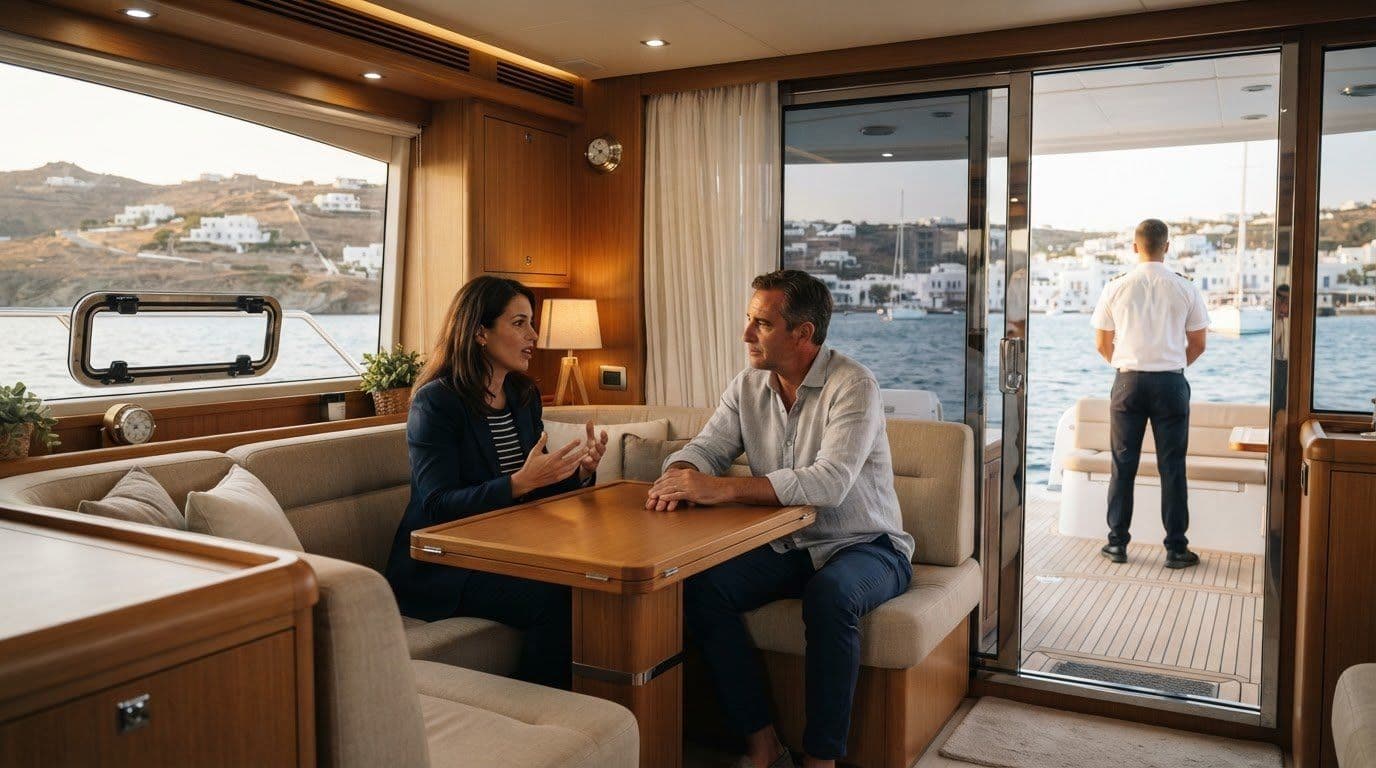
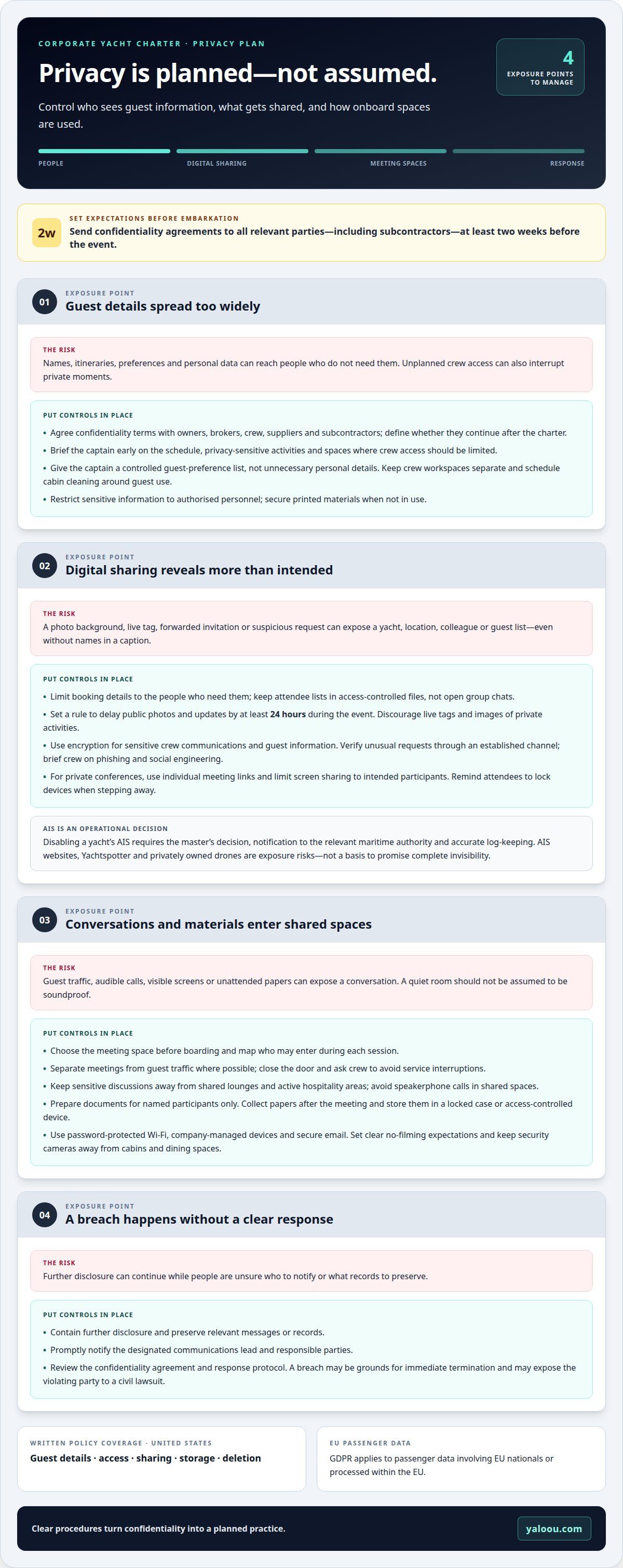
A yacht’s privacy depends on more than its setting. Ensuring confidentiality on a corporate yacht charter starts with clear crew procedures, controlled communication and thoughtful use of onboard spaces. Send confidentiality agreements to all relevant parties, including subcontractors, at least two weeks before the event.
A private setting may feel discreet, but the details matter: who can access guest information, when crew enter guest areas and what gets shared online. A clear plan helps protect sensitive discussions while keeping the event comfortable and well organised.
Coordinate with the captain and crew, limit digital exposure, choose suitable meeting spaces and shape hospitality around your goals. From private conversations to networking and guest experiences, every decision can support a more considered approach to privacy onboard.
Key Takeaways
- Set confidentiality expectations with everyone involved, including crew and suppliers, before the event begins.
- Limit digital exposure by controlling who shares guest details, location updates and onboard content.
- Choose meeting spaces carefully and agree on crew access so sensitive conversations have room to stay private.
- Plan hospitality around the event’s purpose, balancing networking and guest comfort with the level of discretion required.
1. How Can You Ensure Privacy on a Charter Yacht with Crew Onboard?
In the United States, set written privacy policies covering guest details, access, sharing, storage and deletion. For passenger data involving EU nationals or processed within the EU, the GDPR applies, according to the European Union.
Coordinate with the captain early. Share the event schedule, catering requirements, preferred drinks, privacy-sensitive activities and spaces where crew access should be limited. A clear briefing helps the crew plan service without interrupting meetings or entering guest areas unnecessarily.
Give owners, brokers, crew, suppliers and subcontractors a confidentiality agreement at least two weeks before the event. It can cover guest identities, itineraries, onboard activities, personal data, social media posts and location updates. State whether confidentiality continues after the charter. Yacht owners can consider making confidentiality agreements a condition of crew employment.
Review crew employment contracts and role credentials during preparation. Contracts should define each person’s responsibility for protecting guest information, while credential checks should match the duties and applicable requirements of the role. Keep crew workspaces separate from guest areas, and schedule cabin cleaning around guest use.
To protect confidential corporate discussions and documents, restrict sensitive information to authorised personnel. Secure printed materials when they are not in use, and use encrypted messaging for sensitive crew communications. Assign one communications lead to share approved guest details, schedule changes and location updates.
For catering, give the captain a controlled guest preference list instead of circulating unnecessary personal details. This supports tailored service while limiting who sees the information. Crew should respect privacy areas and enter only when necessary.
If a breach occurs, contain further disclosure, preserve relevant messages or records, and promptly notify the designated communications lead and responsible parties. Review the agreement and response protocol. A breach may be grounds for immediate termination and may expose the violating party to a civil lawsuit. Clear procedures make ensuring confidentiality on a corporate yacht charter a planned practice, not an assumption.
2. What digital privacy practices enhance yacht event security?
Build digital discretion into the booking, not just the onboard schedule. Ask the broker to limit guest names, meeting agendas and contact details to the booking team. Share operational details only with those who need them. Keep attendee lists in access-controlled files, not open group chats.
Before embarkation, set a posting rule: delay public photos and updates by at least 24 hours during the event. Remind guests that backgrounds can reveal a vessel, location or colleague, even without names in captions. Discourage live tags, visible conference screens and images of private activities. Discretion also means avoiding forwarded invitations and guest lists.
AIS changes are not a casual privacy setting. Disabling a yacht’s AIS requires the master’s decision, notification to the relevant maritime authority and accurate log-keeping. AIS websites, Yachtspotter and privately owned drones can make yachts and their guests more visible. Treat these as exposure risks, not as reasons to promise complete invisibility.
Brief crew on phishing, social engineering and unusual behaviour before guests arrive. A convincing message may appear to come from an executive or broker and request an itinerary or contact list. Train staff to pause, verify requests through an established channel and report suspicious messages. Use encryption to protect sensitive guest information stored or transmitted onboard, and establish a clear protocol for privacy concerns or data breaches.
For a private conference, use individual meeting links and limit screen sharing to the intended participants. Remind attendees to lock devices when stepping away and avoid discussing sensitive matters near shared guest areas. During leisure time, crew should avoid unnecessary photography and give guests space, while remaining attentive to genuine security concerns. For an event that combines business with considered guest activities, explore private yacht experiences as part of the planning.
3. Meeting facilities and onboard conversations
Choose a meeting space before boarding, then map who can enter during each session. On a superyacht, separate the meeting from guest traffic where possible, close the door and ask crew to avoid service interruptions. A quiet setting supports discretion, but do not assume a room is soundproof. Keep sensitive discussions away from shared lounges and active hospitality areas.
Prepare documents for named participants only. Clearly mark confidential papers, distribute only the copies needed, and collect them after the meeting. Store files in a locked case or access-controlled device when they are not in use. These steps reduce exposure if other parties move through the onboard space or a meeting changes location.
For Wi-Fi, use a password-protected connection and avoid sharing credentials beyond the meeting parties. Keep business accounts on company-managed devices. Use secure email for documents, and avoid speakerphone calls in shared areas. Being able to connect onboard should not turn a private conversation into one audible to nearby guests or crew.
Prevent unwanted photography by telling guests which areas and activities are off-limits for recording. Ask attendees to disable geotags and avoid posting identifiable images or live location updates. Drones can also capture people or reveal a yacht’s position, so set a clear no-filming expectation before arrival. Restrict access to sensitive systems and guest information to authorised personnel. Keep security cameras away from sensitive guest areas, including cabins and dining spaces.
Discussing business in exposed spaces risks overheard negotiations, copied documents or images that reveal confidential plans. A brief pre-meeting reminder helps everyone choose a suitable space and protect materials.
Costs depend on the systems, installation work and security measures involved. The price is determined for each case and provided after a quote request.
For private meetings and secure document handling, reserve a defined room, limit entry to invited attendees, collect printed materials afterward and store them securely. These practical controls help keep conversations focused, whether the event includes board discussions, partner briefings or other business gatherings.
4. Corporate hospitality aboard a yacht
Start with the event’s purpose. A luxury yacht can host high-level networking, deal-making, VIP entertainment, a product launch or an advertising shoot. Each format calls for a different balance of privacy and social time. For a launch, plan the reveal and guest flow; for executive discussions, protect uninterrupted time and keep hospitality unobtrusive.
Shape the guest journey around that purpose. Schedule arrival, welcome, meeting, dining and leisure periods, then assign a clear function to each space. A reception may suit an open deck, while a private conversation needs a quieter room. This structure helps guests move naturally without turning every moment aboard into a formal business session.
Comfort supports good hosting, and thoughtful service also protects discretion. Share relevant dietary and access needs with the captain and catering team, while limiting guest information to those arranging service. Decide when refreshments should be served during meetings and whether crew should wait for a host’s cue before entering. These details make hospitality feel polished without disrupting conversation.
Put the event scope in the booking contract and planning brief. Describe the intended activities, guest experience, meeting periods, photography expectations and any restricted areas. A shared plan gives hosts, crew and suppliers the same understanding of the event. It also distinguishes a relaxed incentive cruise from a confidential corporate gathering, even aboard the same vessel.
A week-long corporate yacht charter can serve as an employee incentive, while a shorter gathering can focus on networking or VIP entertainment. Choose the format according to the event’s goals, guest schedule and desired pace. The yacht creates a distinctive setting, but a strong impression comes from thoughtful hosting, not claims of an unparalleled experience.
Planning a gathering that blends business with time at sea? Explore yacht experiences for corporate hospitality and shape the setting around your event’s purpose.
YAL’OOU Exclusive Yachting & More: Daily Yacht Charters
YAL’OOU Exclusive Yachting & More offers Daily Yacht Charters and Weekly Crewed Yacht Rentals for corporate gatherings at sea. Choose one of these options for a yacht setting for a meeting, client reception or team event, then build your privacy plan around the day’s purpose.
Before the charter, outline the event schedule, guest needs and privacy expectations with the captain and crew. Decide which spaces suit business conversations, how hospitality should fit around meetings, and what information should remain restricted. A clear brief helps align the onboard experience with your confidentiality priorities, without treating the setting alone as a privacy measure.
For a corporate event at sea, visit yaloou.com to explore the next step.
Make Privacy Part of the Event Design
During planning, assign clear ownership: who sets the privacy expectations, briefs the crew and handles questions during the event. This makes ensuring confidentiality on a corporate yacht charter a practical part of the guest experience, rather than an afterthought. It also gives hosts room to shape the atmosphere around the meeting, celebration or client gathering.
YAL’OOU Exclusive Yachting & More offers Daily Yacht Charters, Weekly Crewed Yacht Rentals and High-End Villa Rentals for corporate occasions and related stays. Choose the setting that best fits your plans, then build privacy expectations into the event brief from the start.
Take the next step toward a well-planned gathering at sea. Explore YAL’OOU experiences and start shaping an event that feels considered, comfortable and distinctly yours.
YAL’OOU Exclusive Yachting & More for Corporate Yacht Charters
YAL’OOU Exclusive Yachting & More offers Daily Yacht Charters and Weekly Crewed Yacht Rentals. When you are ready to plan a corporate yacht charter, turn to YAL’OOU to explore these options and begin arranging your time onboard.
For plans that extend beyond the yacht, YAL’OOU also offers High-End Villa Rentals, VIP Ground Transfers, Private Chef Services and Exclusive Event Planning.
Frequently Asked Questions
How Can You Ensure Privacy on a Charter Yacht with Crew Onboard?
Ensuring confidentiality on a corporate yacht charter means planning guest interactions as carefully as meeting arrangements. Give the event host a discreet way to handle guest questions and unexpected schedule changes. For example, brief reception staff to direct inquiries to the host instead of announcing executive names or meeting details in shared areas. This keeps routine coordination from revealing more than guests intended to share.
What digital privacy practices enhance yacht event security?
Reduce accidental exposure by reviewing what devices display during the event. Ask attendees to hide message previews, silence voice assistants and avoid connecting personal cloud accounts to shared screens. Before a presentation, close unrelated browser tabs and remove meeting details from visible calendars. These small steps help prevent a passing guest or crew member from seeing sensitive information, even when nobody intends to share it.
What confidentiality and non-disclosure agreements should guests and crew sign for a corporate yacht charter?
Use an agreement that clearly defines confidential information, who may use it, permitted purposes and restrictions on onward disclosure. Address guest identities, conversations, photographs and event materials separately, so expectations are clear. Include how information should be returned or deleted, how long confidentiality continues and how to report a suspected disclosure. Have the terms reviewed for the relevant parties and event circumstances.
What cybersecurity measures are available on charter yachts for secure Wi-Fi, devices, and communications?
Plan for secure access with unique Wi-Fi credentials, multifactor authentication and company-approved encrypted communications. Keep sensitive files on managed devices, lock screens when unattended and use the organisation’s approved VPN for remote access. Avoid unknown USB drives and personal email for business documents. Assign a technical lead to help attendees connect safely and handle access issues without sharing credentials across the group.
How should a company vet yacht charter operators and crew for confidentiality and security?
Evaluate written privacy procedures, crew confidentiality terms, information-access controls and incident response. Ask the organising team to document who receives guest data and for what purpose, then align that plan with the event schedule and itinerary. For an itinerary through Mykonos, Paros or Athens, include arrival, dockside and onboard arrangements in the same privacy review, rather than focusing only on meetings.
Disclaimer
The YAL’OOU Travel Guide is curated with care to inspire and inform discerning travelers. While every effort is made to ensure the accuracy and relevance of the information provided, all content is offered for general guidance only and may evolve over time.
Details such as local regulations, availability, pricing, and services are subject to change without prior notice. We encourage guests to seek personalized advice and confirm arrangements directly when planning their journeys.
YAL’OOU accepts no liability for any inaccuracies, omissions, or outcomes arising from the use of this information. The Travel Guide may feature recommendations, insights, and selected third-party experiences, presented solely as a source of inspiration and not as formal endorsements.
By accessing this section of our website, you acknowledge and accept this disclaimer as part of your experience with YAL’OOU.