
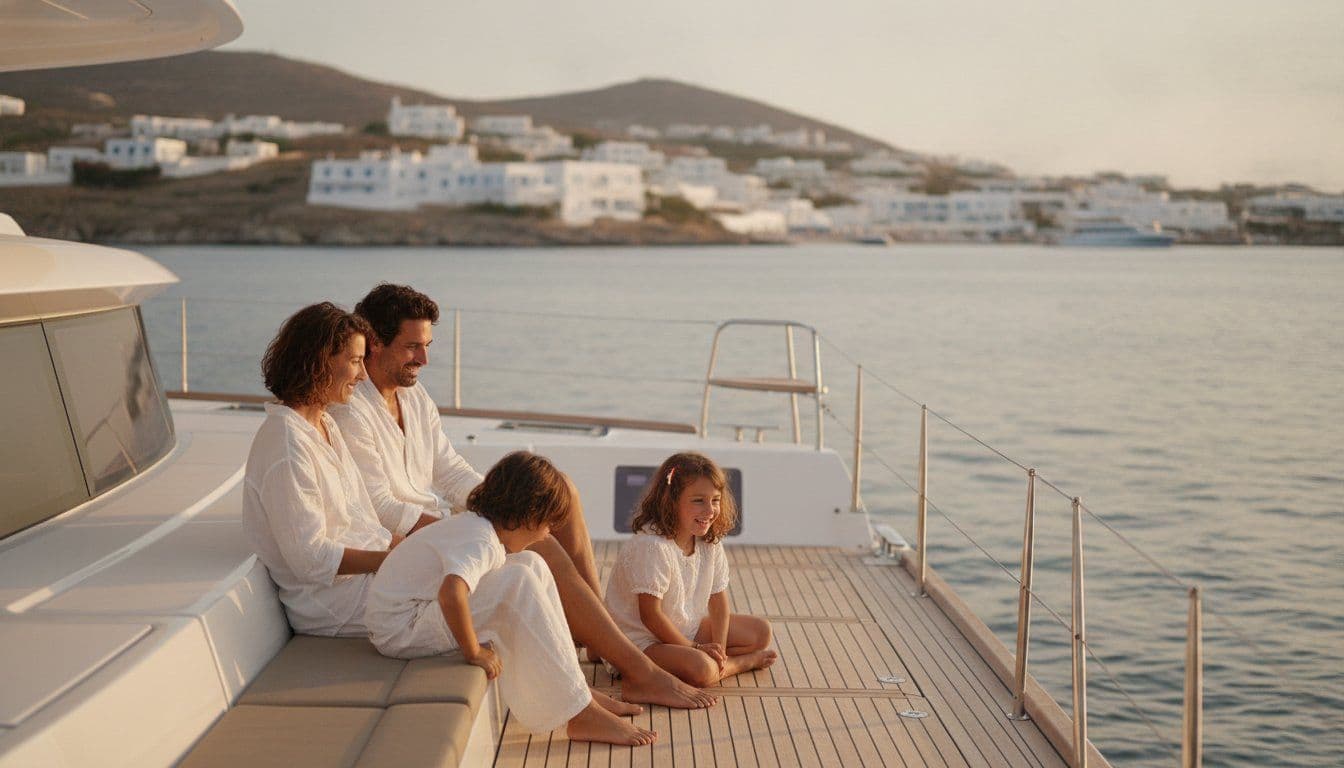
Imagine watching the sun dip below the horizon in Mykonos while your children play happily on deck, completely undisturbed by the gentle rhythm of the Aegean. You've planned this luxury escape down to the last detail, but the fear of motion sickness can quickly turn excitement into anxiety. No parent wants to see their child in distress, especially when you're miles from the shore on a curated holiday. Understanding how to handle seasickness with children on a yacht is the key to transforming a potential disaster into a seamless family adventure.
This 2026 guide provides the ultimate strategy to ensure your journey is defined by joy rather than nausea. You'll discover which high-tech yacht designs offer the most stability, how our expert crews proactively adjust routes for calmer waters, and the latest medical and natural prevention plans. We'll show you how modern technology and professional expertise work together to protect your family's comfort. Get ready to replace your worries with the freedom of the open sea and the confidence that your children are safe, happy, and sickness-free. Your dream of a carefree Greek island escape is just a few expert steps away.
Key Takeaways
- Master the biological reasons why children are more susceptible to motion sickness and how to prevent sensory conflict before it starts.
- Choose the right vessel by prioritizing dual-hull catamarans and high-tech zero-speed stabilizers for maximum on-water stability.
- Discover exactly how to handle seasickness with children on a yacht using professional crew strategies like anti-nausea menus and proactive hydration.
- Learn the "Horizon Fix" and other immediate relief techniques to quickly calm physical distress if nausea strikes during your sail.
- Explore how a curated luxury charter ensures a sickness-free holiday through expert route planning and boutique concierge yacht screening.
The Science of Smiles: Why Children Get Seasick on Boats
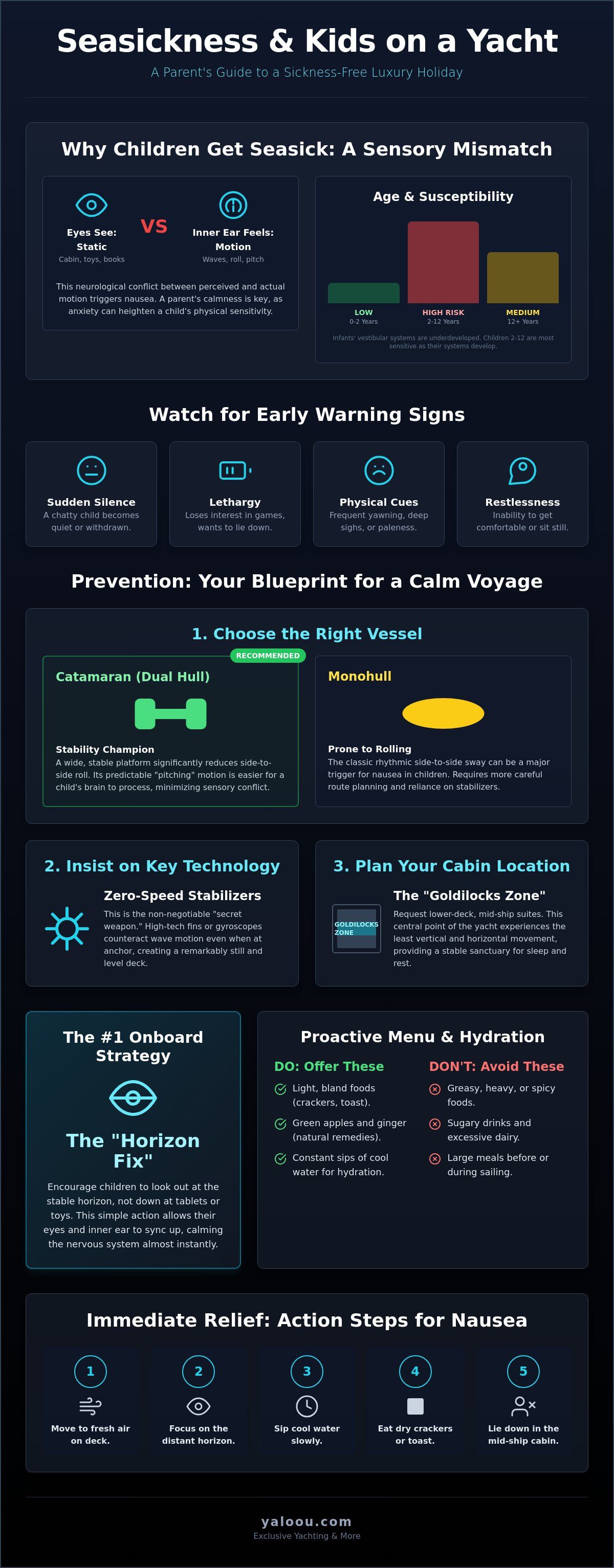
Kids are built for adventure. Their energy and curiosity make them the perfect sailing companions, but their bodies sometimes need a moment to catch up with the Mediterranean lifestyle. Understanding The Science of Smiles starts with recognizing that seasickness isn't a failure of will. It's a biological response to a sensory conflict. While you're relaxing on the deck of a luxury vessel, your child's brain is working overtime to decode conflicting signals. Their eyes might be fixed on a static toy or the cabin interior, telling the brain they're stationary. Simultaneously, their inner ear feels every roll and pitch of the waves. This neurological mismatch creates the physical distress we call motion sickness.
Your own energy matters more than you think. Children are emotional sponges. If they sense your anxiety about the weather or the waves, it triggers a psychological feedback loop. This stress heightens their physical sensitivity, making them more likely to feel ill. Staying calm and confident is the first step in learning how to handle seasickness with children on a yacht effectively. You set the tone for the entire trip.
Don't wait for them to say they feel sick. Proactive parents watch for early warning signs before nausea even begins. Keep an eye out for these subtle shifts:
- Sudden silence: A normally chatty child becomes unusually quiet or withdrawn.
- Lethargy: They lose interest in games or suddenly want to lie down.
- Physical cues: Frequent yawning, deep sighing, or a pale complexion around the mouth.
- Restlessness: An inability to get comfortable despite the luxury surroundings.
The Inner Ear vs. The Horizon
Visualizing movement is crucial for the developing brain. When a child looks at a tablet or a book, they lock their vision onto a fixed point that doesn't move with the boat. This is the primary trigger for distress onboard. Seasickness is a temporary neurological mismatch between perceived and actual motion. To resolve this, encourage them to look at the horizon. This allows their visual and physical signals to finally align, calming the nervous system almost instantly.
Age Factors and Susceptibility
Infants under two rarely get seasick because their vestibular systems are still very basic. However, children aged 2 to 12 are in the high-risk zone. Their developing systems are highly sensitive to wave frequencies that adults might not even notice. As they grow, their brains learn to filter these signals better, which is why most adults eventually find their sea legs. On your first day at sea, keep activities light and focus on gentle acclimation to the water's rhythm.
Pre-Departure Planning: Choosing the Right Yacht and Route
Prevention starts before your luggage even touches the teak dock. Most general travel guides focus only on over-the-counter remedies, but they overlook the most powerful tool in your arsenal: the yacht itself. Modern engineering has changed the game for families. When researching how to handle seasickness with children on a yacht, your first priority should be the technical specifications of your vessel. Hardware matters as much as health prep.
Zero-Speed Stabilisers are the secret weapon for a sickness-free holiday. These high-tech systems work even when the yacht is at anchor, counteracting the swell to keep the deck level. It's a non-negotiable feature for any luxury charter in the Cyclades. Beyond technology, cabin placement is your next strategic move. Always request lower-deck, mid-ship suites for the children. This area is the "Goldilocks zone" for sleep. It experiences the least amount of vertical movement, providing a stable sanctuary. While health experts provide advice on Immediate Relief, choosing the right vessel often makes those medical countermeasures unnecessary.
Catamaran vs. Monohull for Kids
The hull design fundamentally changes how a child's body perceives motion. Monohulls tend to "roll" from side to side in a rhythmic sway. While traditional, this movement is a major trigger for sensory conflict. In contrast, catamarans offer a "pitching" motion that is far more predictable for the developing inner ear. The wide dual hulls provide a massive, stable platform. This extra beam width allows children to move safely and keep their eyes on the horizon at all times. You can browse our fleet of luxury yachts to see stable multi-hull options perfectly suited for families.
Navigating the Greek Winds
The Aegean is spectacular, but it requires local expertise to navigate comfortably. During the Meltemi season in July and August, north winds can create challenging conditions in the open sea. A smart route avoids these gusts by staying in protected zones. The Argo-Saronic Gulf is a fantastic alternative, offering famously smoother waters. We often suggest an "Island Hopping" strategy with short hops between spots like Paros and Antiparos. This keeps kids engaged and minimizes time spent in deeper, more active waters. Check our Greek destinations guide for itineraries designed specifically for calm water sailing.
Planning these details ensures your focus stays on the horizon, not the medicine cabinet. For a truly tailored journey, explore our bespoke sailing experiences designed for discerning families.
The Crewed Charter Advantage: Proactive Onboard Management
A private yacht isn't just a vessel. It's a fully staffed sanctuary where guest wellness is the top priority. When you're learning how to handle seasickness with children on a yacht, the most significant advantage is the professional crew. Unlike a bareboat rental where you manage every detail, a crewed charter allows you to focus entirely on your family while experts handle the logistics of comfort. This Proactive Onboard Management transforms a medical concern into a managed lifestyle choice. Hardware matters. People matter more.
The human element of a luxury charter provides a level of care that gadgets alone cannot match. From the moment you step on deck, the crew begins a silent assessment of your children's comfort. They are trained to spot the subtle "yachting yawn" or the sudden quietness that precedes physical distress. By managing the environment and the itinerary in real-time, they ensure the adventure stays on track without the need for constant parental intervention.
Dietary Prevention for Little Sailors
Nutrition is the first line of defense. Our private chef services include creating stomach-friendly menus designed specifically for younger guests. Before a morning sail, the chef avoids heavy fats, high sugars, and acidic juices that can irritate a child's sensitive stomach. Instead, they focus on light proteins like grilled chicken and complex carbohydrates that provide steady energy.
The "Green Apple" secret is a professional yachting staple. Many crews keep them chilled and sliced. The combination of pectin and natural acidity helps settle the stomach more effectively than many over-the-counter options. When customising your provisioning list, we ensure ginger-based snacks and electrolyte-rich drinks are always available. The crew monitors a child's hydration levels strictly. Dehydration is a primary catalyst for motion sickness, so keeping fluids balanced is essential.
Optimising the Onboard Environment
The physical environment on deck is equally important. A clean, scent-free atmosphere is vital for sensitive systems. Stewardesses ensure cabins remain "crisp" by managing high-performance AC systems and ensuring fresh air flow. They proactively avoid using heavy perfumes or cleaning agents that might trigger nausea in an enclosed space. Fresh Air Zones on the flybridge or aft deck are the best places for children to spend time while the yacht is underway.
The Captain plays a technical role in this comfort. By adjusting the yacht's speed and heading, they can minimize "slamming" in choppy water. They often choose paths that follow the coastline to provide a constant visual reference point. Distraction is the final tool. Whether it's a "lookout" game for dolphins or preparing water toys for the next stop, keeping kids looking forward and engaged is a proven psychological remedy. It's about turning the movement of the boat into part of the game rather than a source of stress.
Immediate Relief: Actionable Steps for When Nausea Strikes
Even the most advanced zero-speed stabilizers can't always account for a sudden shift in the Mediterranean swell. When a child begins to show signs of distress, your reaction time is the most critical factor. Knowing how to handle seasickness with children on a yacht in the heat of the moment prevents a minor physiological mismatch from escalating into a difficult day. Speed is your ally. Act fast. Stay calm. Your confidence is the anchor your child needs when their world feels like it's shifting.
The "Horizon Fix" remains the most effective immediate remedy. Move the child to the highest, most central point of the vessel. This is usually the flybridge or the main deck aft. This position offers the most stable pivot point and provides a clear, unobstructed view of the horizon. By looking at the distant line where the sky meets the sea, the child's eyes can finally confirm the motion their inner ear is feeling. If they are too distressed to look out, have them lie flat on their back in a mid-ship cabin with their eyes closed. This shuts down the conflicting visual data and allows the vestibular system to reset.
The 5-Minute Recovery Protocol
When symptoms hit, follow this rapid-response sequence to stabilize your young traveler:
- The Sweet Spot: Immediately move the child mid-ship at eye level with the horizon. This area experiences the least vertical movement.
- Strategic Hydration: Offer small, frequent sips of cold, clear liquids. Ginger ale or mineral water works best. Avoid large gulps which can trigger a gag reflex.
- Thermal Regulation: Place a cool, damp compress on the back of the neck. Lowering the core temperature slightly helps suppress the nausea signals in the brain.
Natural vs. Pharmaceutical Remedies
Acupressure wristbands, often called Sea-Bands, are a staple for a reason. To be effective, you must align the plastic stud exactly on the P6 (Nei-Kuan) point, located three finger-breadths below the wrist crease. For many children, the psychological "placebo" effect of wearing these "brave sailor bands" is just as powerful as the physical pressure. Pair these with ginger chews or peppermint tea, which are proven to relax the stomach muscles without side effects.
If natural methods aren't enough, pharmaceutical options are available. For children aged 2 and older, over-the-counter options like Dimenhydrinate (Dramamine) or Diphenhydramine (Benadryl) are standard, though they often cause drowsiness. A newer prescription option, Tradipitant (Nereus), was approved by the FDA in December 2025 specifically to prevent vomiting from motion sickness. Always consult your pediatrician before departure to create a personalized medical plan for your child. Create a journey where safety and luxury meet by exploring our tailored family sailing experiences.
Sailing Without Stress: Why YAL’OOU Exclusive Yachting & More is the Ultimate Family Solution
Choosing YAL’OOU Exclusive Yachting & More means choosing a partner who understands the delicate nuances of luxury family travel. We know that the question of how to handle seasickness with children on a yacht is often the biggest hurdle for parents planning a Greek escape. It shouldn't be. Our boutique concierge service takes the guesswork out of the equation by pre-screening every vessel in our fleet for the most advanced stabilizer technology. We don't just provide a boat; we provide a vetted environment where innovation serves your comfort. Our focus on zero-speed stabilizers and superior hull designs ensures your holiday stays elegant and undisturbed by the rhythm of the sea.
The YAL’OOU Exclusive Yachting & More promise is simple: we manage every technical and logistical detail so you can focus on making memories. Our family-focused crews are the heart of this experience. Our captains are experts at reading the water and interpreting weather patterns to ensure a smooth ride for children. They know when to adjust the heading and when to tuck into a sheltered cove before the swell even begins to build. Whether you choose the expansive, rock-solid stability of the Baglietto 100 or the nimble, high-performance platform of the Tesoro 40 Inboard, you are stepping onto a vessel designed for total peace of mind.
Tailored Itineraries for Sensitive Sleepers
Our VIP concierge team designs low-impact routes specifically through the Saronic Gulf. This region is famous for its naturally sheltered waters, making it the ideal choice for families with younger children or first-time sailors. We prioritize calm anchorages over long, open-water passages. This strategy ensures everyone sleeps soundly and wakes up ready for the next island adventure. We provide 24/7 support for any family needs during your charter, ensuring you have a direct line to assistance at any hour of the day.
Ready for Your Next Adventure?
Planning your 2026 Greek yachting experience today is the best way to secure your family's comfort. Demand for vessels equipped with the latest stabilizer technology is high. Booking early ensures you have the first pick of the most stable, family-friendly yachts in our fleet. Don't let the fear of motion sickness define your holiday. Let us show you how technology, expertise, and authentic Greek hospitality can create a seamless journey. Explore our family-friendly yacht experiences here and start your story with confidence.
Set Sail for Your Calmest Family Adventure
A luxury holiday should be defined by the laughter of your children and the beauty of the Aegean, not the search for a medicine cabinet. You now have the blueprint for how to handle seasickness with children on a yacht by combining high-tech hardware with expert route planning. From choosing a vessel with zero-speed stabilizers to utilizing our crew’s proactive management, you can turn potential distress into a seamless maritime experience. The Mediterranean is yours to explore without hesitation.
At YAL’OOU Exclusive Yachting & More, we’ve mastered the art of stable sailing. Our expertly curated fleet features advanced stabilizer technology that works even at anchor. Your journey is supported by professional crews trained in family-first hospitality and tailored Greek itineraries designed for maximum comfort. We handle every technical detail so you can focus on the freedom of the open water and the joy of shared discovery. Every mile is managed for your peace of mind.
Ready to experience the Greek islands without the stress? Book Your Stress-Free Family Yacht Charter with YAL’OOU Exclusive Yachting & More and discover a new standard of luxury travel. The horizon is waiting, and it has never looked clearer.
Frequently Asked Questions
Can children outgrow seasickness on a yacht?
Children often outgrow high sensitivity as their vestibular systems mature. Between the ages of 2 and 12, the brain is hyper-responsive to motion signals. As they enter their teens, their "sea legs" usually become more permanent. Regular exposure to the water helps the brain adapt more quickly to the sensory mismatch. Habituation is a natural process that improves with every voyage.
What is the best type of yacht for someone prone to motion sickness?
A large catamaran is widely considered the best option due to its dual-hull stability. These vessels offer a wider beam and minimize the side-to-side rolling motion typical of traditional monohulls. Additionally, yachts equipped with zero-speed stabilizers provide a level platform even when anchored in a bay. This technology is a game-changer for maintaining comfort in all conditions.
Are there any specific Greek islands that are 'safer' for kids who get seasick?
The islands within the Argo-Saronic Gulf are generally safer because they are sheltered from the strong Meltemi winds. Waters around Aegina or Poros are famously calmer than the open Aegean. This makes them the perfect starting point for parents learning how to handle seasickness with children on a yacht. Shorter passages in these protected zones minimize the risk of physical distress.
How long does it usually take for a child to get their 'sea legs'?
Most children adapt to a boat's motion within 24 to 48 hours. This process occurs as the brain begins to reconcile the conflicting signals from the eyes and the inner ear. Keeping the first day’s itinerary short and staying close to the coastline helps speed up this natural adjustment. Once they habituate, they can usually move around the deck with total confidence.
Is it safe to give children motion sickness medication before sailing?
It is safe if you follow age-specific guidelines and consult your pediatrician first. Over-the-counter options like Dimenhydrinate are suitable for children aged 2 and older. For maximum effectiveness, these should be administered 30 to 60 minutes before the yacht leaves the dock. This prevents symptoms before they start rather than trying to chase them once the child feels ill.
What should a child eat before going on a yacht trip?
Stick to light, bland proteins and complex carbohydrates like crackers or plain toast. Avoid heavy fats, high sugars, and acidic juices that can irritate the stomach lining. Our onboard chefs often suggest green apples or ginger-based snacks as natural ways to keep a child's stomach settled. Proper hydration is also vital, as dehydration is a major catalyst for motion sickness symptoms.
Does the size of the yacht matter for preventing seasickness?
Size does play a role, as larger yachts generally have more mass to dampen the impact of waves. However, hull design and stabilizer technology are more important than length alone. A 40-foot catamaran with advanced stabilizers often feels more stable to a child than a much larger monohull without them. Focus on the technical specs of the vessel rather than just the size.
What happens if my child gets sick in the middle of a charter?
Our professional crews handle this immediately by adjusting the yacht's heading and seeking the nearest calm anchorage. They deploy crisis management protocols like providing cool compresses and adjusting cabin airflow. Your captain will prioritize your child's physical comfort. This might mean modifying the day's route to find smoother waters. You are never alone in managing their wellness during the journey.
Disclaimer
The YAL’OOU Travel Guide is curated with care to inspire and inform discerning travelers. While every effort is made to ensure the accuracy and relevance of the information provided, all content is offered for general guidance only and may evolve over time.
Details such as local regulations, availability, pricing, and services are subject to change without prior notice. We encourage guests to seek personalized advice and confirm arrangements directly when planning their journeys.
YAL’OOU accepts no liability for any inaccuracies, omissions, or outcomes arising from the use of this information. The Travel Guide may feature recommendations, insights, and selected third-party experiences, presented solely as a source of inspiration and not as formal endorsements.
By accessing this section of our website, you acknowledge and accept this disclaimer as part of your experience with YAL’OOU.