
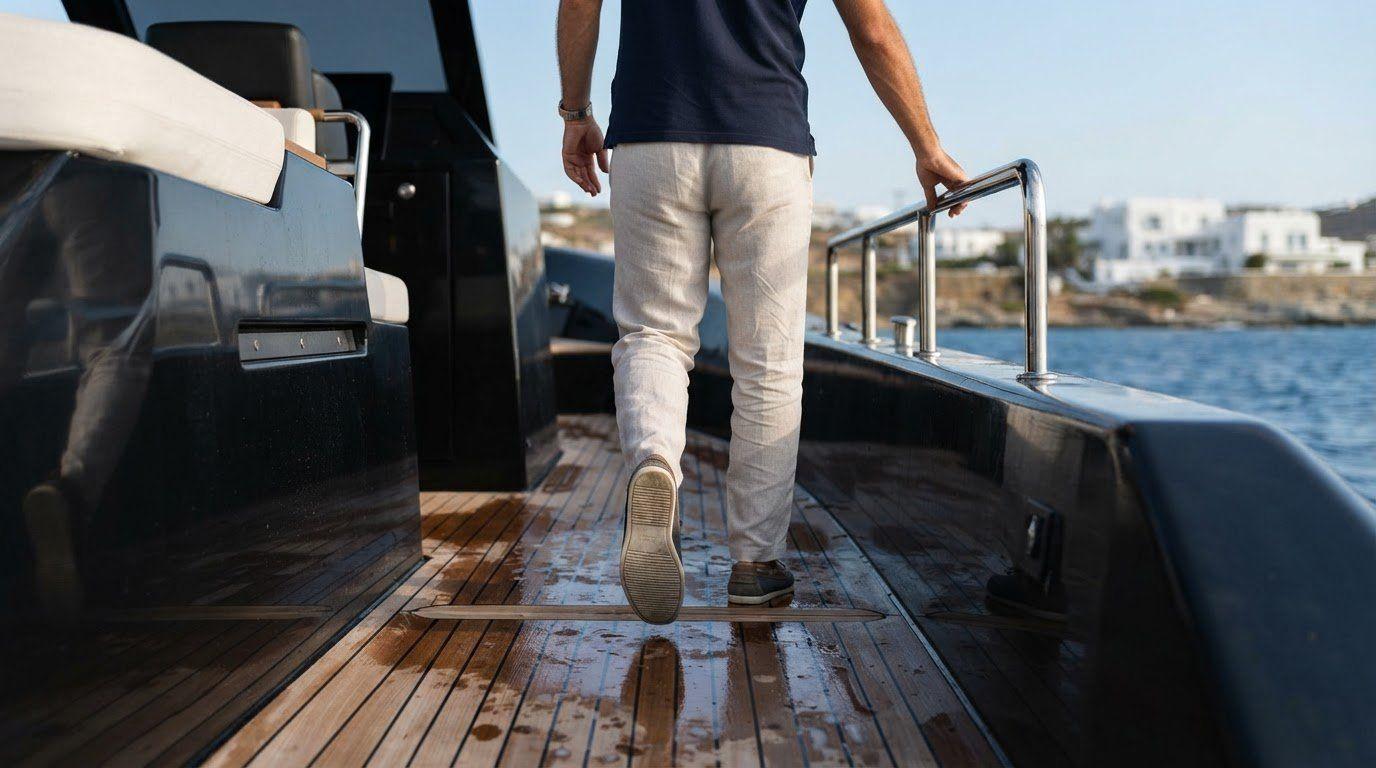
Everyday sneakers may be a better choice aboard a yacht than polished dress shoes. Appropriate footwear for a private yacht should fit securely, provide dependable grip, and have a clean, non-marking sole. Go barefoot only when the crew’s directions and onboard conditions allow. A pale sole alone does not guarantee it will leave the deck unmarked.
It’s easy to focus on a shoe’s appearance, but comfort and stability matter just as much when the deck moves or gets wet. Learn when to wear shoes or go barefoot, how boat shoes and deck shoes differ, and what to look for in grip, drainage, quick-drying materials, and all-day comfort. A few practical choices can help you feel at ease on deck while reducing the risk of scuffs or slips.
Key Takeaways
- Choose shoes for secure footing and a clean, non-marking sole, not just their appearance.
- Learn when going barefoot may suit onboard etiquette and why the crew’s directions matter.
- Find out which materials and construction help shoes drain water and dry comfortably.
- Use fit, traction, and cushioning to narrow down footwear that feels steady on deck.
1. What’s the difference between boat shoes and deck shoes?
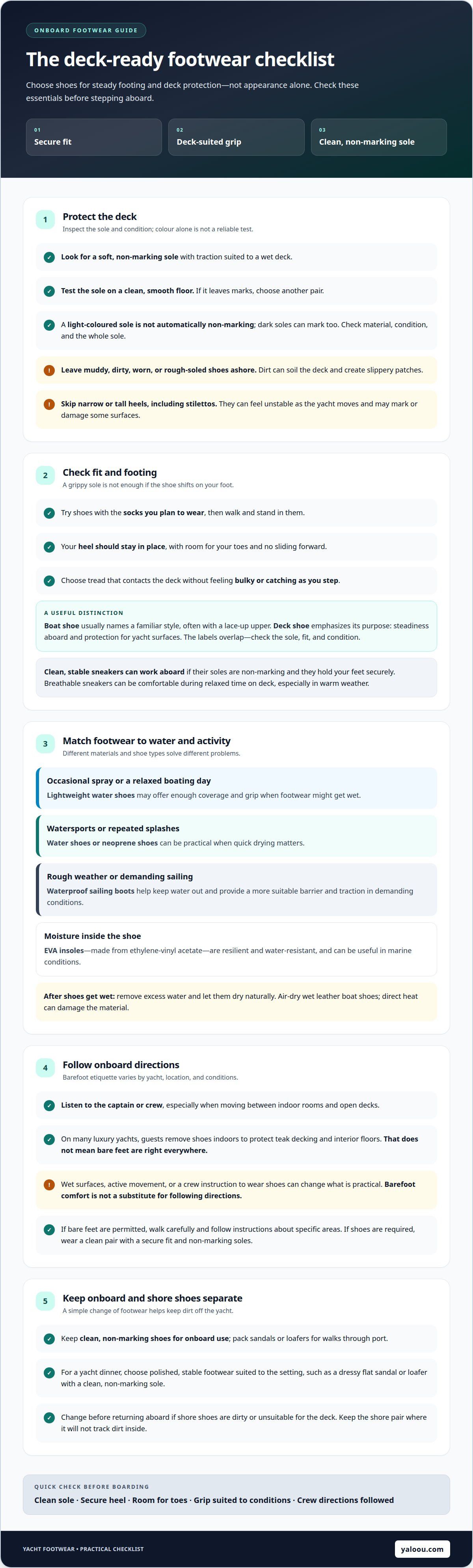
Boat shoes usually describe a familiar style, while deck shoes emphasize performance aboard. Traditional leather boat shoes often have lace-up uppers and a relaxed, polished look that works on deck or ashore. A deck shoe, by contrast, is defined more by its purpose: helping you stay steady while protecting the yacht’s surfaces. The labels overlap, so don’t rely on the name alone. For appropriate footwear for a private yacht, check the sole, fit, and condition before choosing a boat shoe.
Look for a soft, non-marking sole with traction suited to a wet deck. A light-colored sole isn’t automatically non-marking, so check its material and condition. Test the shoes on a clean, smooth floor at home. If the sole leaves marks, choose another pair. Clean, stable sneakers can also work aboard if their soles are non-marking and they hold your feet securely. Breathable sneakers can be comfortable during relaxed time on deck, especially in warm weather.
Skip narrow or tall heels, including stilettos. They can feel unstable as a yacht moves and may mark or damage some surfaces. Dark-soled shoes can leave marks too, so inspect the sole rather than judging by the upper. Muddy or dirty footwear can bring debris aboard and create slippery patches. Before boarding, clean the soles, check for worn or rough areas, and leave any pair that marks a smooth floor ashore.
Yes, bring separate shoes for boarding and shore excursions. Keep clean, non-marking footwear for onboard use, then pack sandals or loafers for a walk through port. This separation helps limit dirt and marks on deck while giving you shoes better suited to shore. If leather boat shoes get wet, let them air-dry naturally; direct heat can damage the material.
2. Going barefoot and following crew directions
Going barefoot aboard can feel relaxed, but there isn’t one barefoot rule for every yacht or charter. Follow the captain’s or crew’s directions, especially when moving between indoor rooms and open decks. On many luxury yachts, guests remove shoes indoors to protect teak decking and interior floors. That doesn’t mean bare feet are right everywhere. Wet surfaces, active movement, or a crew instruction to wear shoes can change what’s practical. Keep lightweight, clean footwear close so you can put it on without tracking dirt through the yacht.
Before stepping aboard, listen to the crew’s footwear guidance. Leave muddy or dirty shoes off the yacht: they can soil the deck and make it slippery. If the crew permits bare feet, walk carefully and follow instructions about specific areas. If shoes are required on deck, choose a clean pair with a secure fit and non-marking soles. Simple sandals may suit a casual stroll ashore, but loose slides can shift as you walk. Barefoot comfort is a choice, not a substitute for following directions.
For a yacht dinner or formal event, choose polished, stable footwear suited to the setting. A dressy flat sandal or loafer with a clean, non-marking sole is a practical onboard option; avoid stilettos on a moving deck. For dinner ashore, sleek leather sandals or slip-ons work well for walking through a port town. Pack shoes suited to the evening, then change before returning aboard if they’re dirty or unsuitable for the deck.
Make the transition simple: keep onboard shoes separate from shore footwear, and place the shore pair where it won’t track dirt inside. For an evening that combines time at sea with a special occasion, explore private yacht experiences and plan footwear around the crew’s directions and your itinerary.
3. Water drainage and quick-drying materials
Waterproof protection and quick drying solve different problems. Waterproof sailing boots help keep water out during rough weather or high-performance sailing, while quick-drying shoes suit activities where footwear may get wet. For a relaxed boating day, consider how much time you’ll spend in spray or water before choosing. Waterproof footwear can be useful in demanding conditions, but may be unnecessary if you’ll spend most of the day aboard in calm weather.
For water-based activities, water shoes combine traction with quick drying. Neoprene shoes are another option for watersports or situations where fast drying matters. Both can be more practical than classic leather shoes if they’ll be splashed repeatedly. Think about the activity first: a swim stop calls for different protection than walking around the yacht. Choose footwear that won’t become heavy and uncomfortable when wet.
Check the insole, too. Ethylene-vinyl acetate, or EVA, is a resilient, water-resistant material used in insoles for marine conditions. It can be useful when moisture is part of the day. Quick-drying sailing footwear can also help prevent waterlogging, which may leave shoes sodden long after a splash. If shoes get wet, remove excess water and let them dry naturally before wearing them again.
Match your shoes to the day’s conditions. For a short outing with occasional spray, lightweight water shoes may offer enough coverage and grip. For rough weather or more demanding sailing, waterproof boots provide a more suitable barrier and traction. Neoprene footwear suits watersports, while EVA insoles add a water-resistant layer inside a shoe. These are different solutions, not interchangeable features. Choose based on expected exposure, activity, and how quickly you need your footwear to dry.
4. Secure fit, traction, and comfort on a yacht deck
A shoe can have a grippy sole and still feel insecure if it slips at the heel. Try deck shoes with the socks you plan to wear, then walk and stand in them. Your heel should stay in place, and your toes should have room without sliding forward. A secure fit helps you move naturally when the yacht shifts, rather than gripping with your toes or shortening your stride.
Next, consider the sole’s traction and purpose. The tread should provide contact with the deck without feeling bulky or catching as you step. Check the whole sole, not just the heel. Non-marking soles help protect the yacht, while stable tread supports walking on deck. Don’t assume a shoe will work because it feels comfortable on a dry floor; a boat deck may be damp and moving.
Comfort matters during cruising, when you may spend long stretches standing or walking. Supportive insoles can help reduce foot fatigue. Arch support and even pressure across the footbed can make extended wear more comfortable. Moisture-wicking insole materials can also reduce sweat buildup. If a shoe feels tight at the arch or presses on one spot while you stand, that discomfort may become harder to ignore over time.
Sandals and espadrilles can suit a yacht excursion if they fit securely and provide good grip. Loose slides and flip-flops can shift or come off as you walk, making them less secure. Test your intended pair on stairs and while changing direction, not just in a straight line. This reveals whether the straps hold and the sole stays steady underfoot. Choose for fit, traction, and comfort first; style comes after those practical checks.
Ready to put your deck-ready plans into motion? Explore private yacht experiences and prepare for a comfortable day aboard.
YAL’OOU Exclusive Yachting & More: Private Chef Services
YAL’OOU Exclusive Yachting & More offers Private Chef Services for guests who want dining to be part of their time at sea. Once you’ve chosen footwear suited to the deck, consider how a chef service could complement a yacht day or a longer stay. Pair it with a Daily Yacht Charter or Weekly Crewed Yacht Rental for a private escape.
A private chef can make a meal part of your trip, leaving you free to enjoy your time aboard. It’s a natural option for guests planning a yacht outing around a shared meal or special occasion. Choose an arrangement that fits your plans, and keep your footwear practical for moving around the yacht.
To plan a yacht experience with Private Chef Services, contact YAL’OOU Exclusive Yachting & More.
Make your time on the water feel effortless
Your footwear is one small part of a well-planned yacht experience. Let the day’s itinerary guide what you pack, from practical deck wear to a change of shoes for time ashore. If you’re shaping a wider escape, YAL’OOU Exclusive Yachting & More offers Daily Yacht Charters, Weekly Crewed Yacht Rentals, and High-End Villa Rentals. Choose the setting that fits your plans, then prepare for the details that make it feel like your own.
Keep the key choice simple: appropriate footwear for a private yacht should support your comfort and suit the crew’s directions. With that decision made, you can focus on the views, conversation, and time together.
Ready to explore your options? Contact YAL’OOU Exclusive Yachting & More and start planning a memorable escape.
Frequently Asked Questions
Can’t I just wear non-sailing shoes?
Yes, shoes don’t need a sailing label to work aboard. Clean everyday sneakers can suit a relaxed charter if they stay secure during turns and feel steady underfoot. Walk in them before departure, including while changing direction, to spot heel slip or pressure points. The right choice depends on construction and condition, not the name printed on the shoe.
Are guests expected to go barefoot on a yacht?
There’s no single barefoot expectation for every yacht. Some crews may ask guests to remove shoes in certain spaces, while other areas call for footwear. Keep a clean pair within easy reach while boarding, then follow crew directions as you move around. This avoids guessing about etiquette and makes transitions between deck and interior straightforward.
Are shoes ever allowed indoors on a luxury yacht?
Indoor footwear policies vary, and many luxury yachts ask guests to remove shoes inside. Follow the crew’s instructions, including any directions about a particular room or activity. If shoes are permitted, keep a separate clean pair for indoor use rather than bringing in footwear worn ashore. This simple distinction helps you respect the yacht’s interior without assuming every vessel follows the same etiquette.
Boat Shoes, Sneakers, or Sandals: Which Works Best on a Yacht?
Choose based on your plans for the day. Boat shoes can bridge time aboard and ashore; secure sneakers suit longer stretches of walking or standing. Sandals may work for a relaxed outing if they stay firmly in place. If the day combines deck time and a port visit, packing separate pairs can make changing between activities easier.
How can shoes look polished without sacrificing practicality?
Choose a streamlined silhouette and a color that works with your outfit, then prioritize comfort and a deck-suitable sole. A neat loafer or understated flat can look composed at dinner without relying on a tall heel. Keep the pair clean, and reserve shoes worn on shore for walking ashore. A little planning keeps your look intentional and your movements comfortable.
What about bare feet?
Bare feet can suit a quiet moment aboard if the crew permits them and the surface is comfortable to walk on. Before moving around, consider whether the deck is wet, whether you need to use steps, and whether the crew has asked guests to wear shoes. Barefoot comfort is personal, but following onboard directions helps you choose the right option for each part of the yacht.
Disclaimer
The YAL’OOU Travel Guide is curated with care to inspire and inform discerning travelers. While every effort is made to ensure the accuracy and relevance of the information provided, all content is offered for general guidance only and may evolve over time.
Details such as local regulations, availability, pricing, and services are subject to change without prior notice. We encourage guests to seek personalized advice and confirm arrangements directly when planning their journeys.
YAL’OOU accepts no liability for any inaccuracies, omissions, or outcomes arising from the use of this information. The Travel Guide may feature recommendations, insights, and selected third-party experiences, presented solely as a source of inspiration and not as formal endorsements.
By accessing this section of our website, you acknowledge and accept this disclaimer as part of your experience with YAL’OOU.